
Discussion
The structures of the major products W and X in the following synthetic scheme are
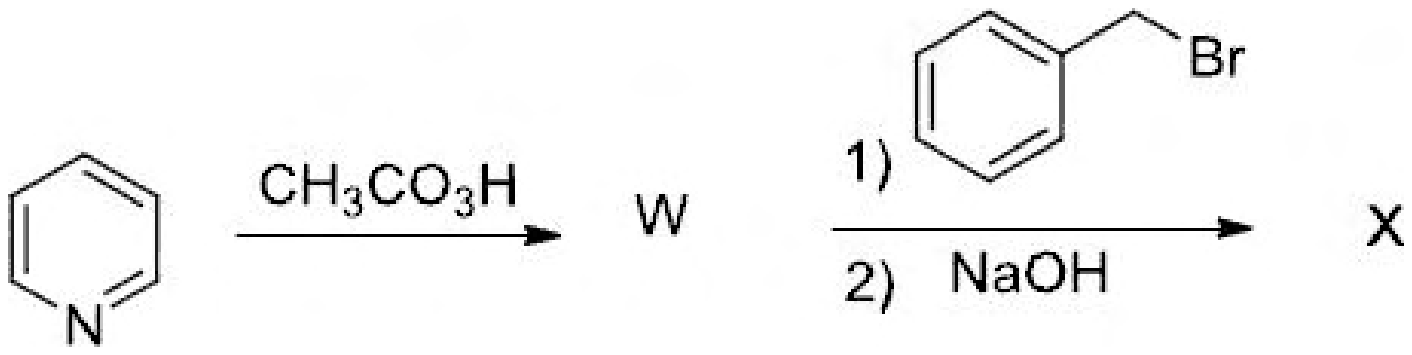
- A.
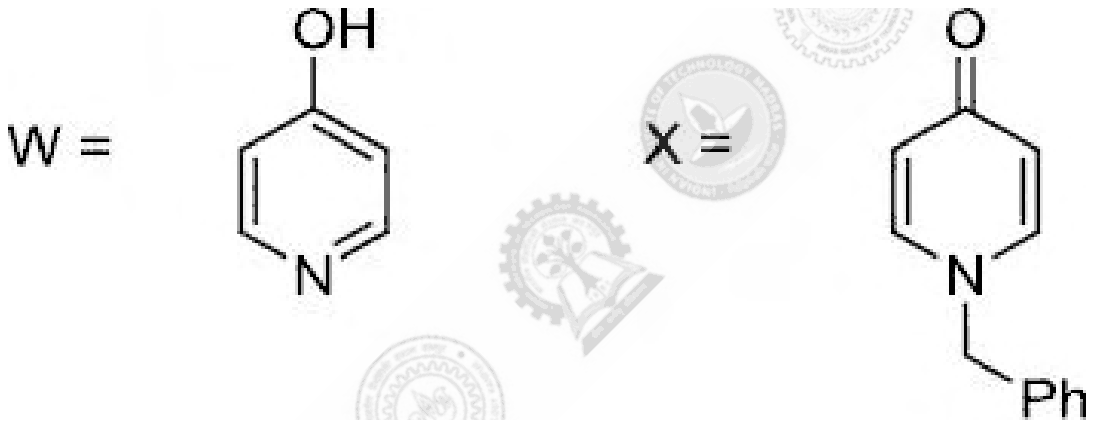
- B.
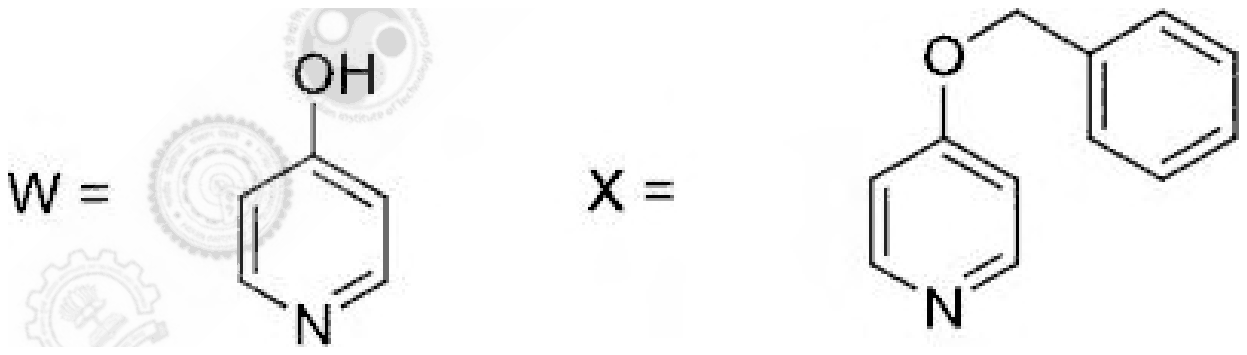
- C.
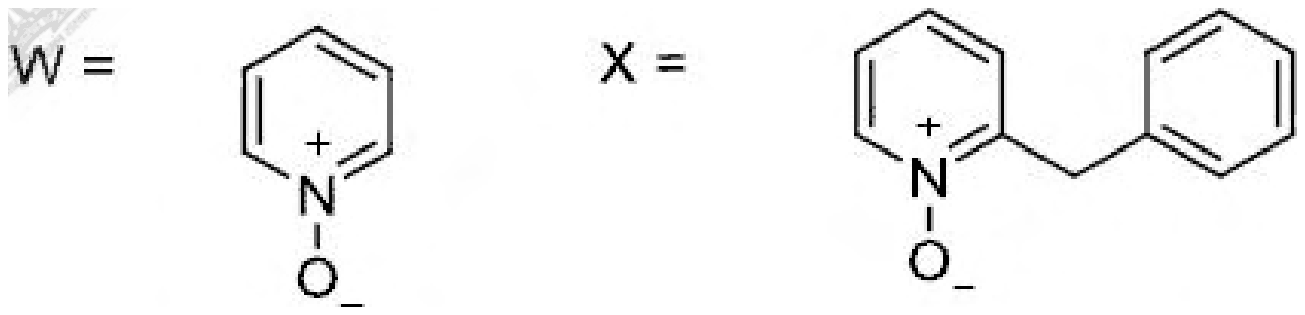
- D.
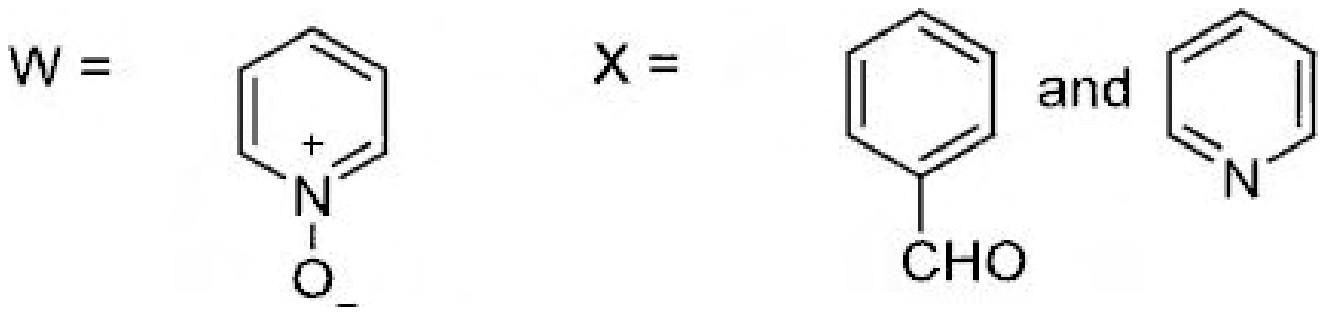
Answer: D
The products are (D): W is pyridine N-oxide and X is benzaldehyde together with pyridine.
Peracetic acid oxidises the pyridine nitrogen to give pyridine N-oxide, W. The N-oxide oxygen is nucleophilic and is benzylated by benzyl bromide, giving an N-benzyloxypyridinium salt. Sodium hydroxide then removes a benzylic proton; the electrons move to form a C=O bond while the weak N-O bond breaks, releasing pyridine and leaving benzaldehyde. The N-oxide has acted as an oxidant, converting the benzyl halide to the aldehyde.
A peracid does not hydroxylate the ring, so W is not 4-hydroxypyridine, which rules out (A) and (B). (C) would need benzylation at a ring carbon, but the benzyl group goes onto oxygen, and the base then fragments that intermediate.
Post your comment
Please log in or register to post a comment.
Examination Categories
- SSC Exams
- Banking Exams
- Teaching Exams
- Civil Services Exams
- Railways Exams
- Engineering Recruitment Exams
- Defence Exams
- State Government Exams
- Police Exams
- Insurance Exams
- Nursing Exams
- Other Government Exams
- NRA CET
- PG Entrance Exams
- Campus Placement
- MBA Entrance Exams
- CUET and UG Entrance
- Judiciary Exams
- Regulatory Body Exams
- Software Development