
Discussion
The major products Y and Z in the following reaction sequence are

- A.
- B.

- C.

- D.

Answer: A
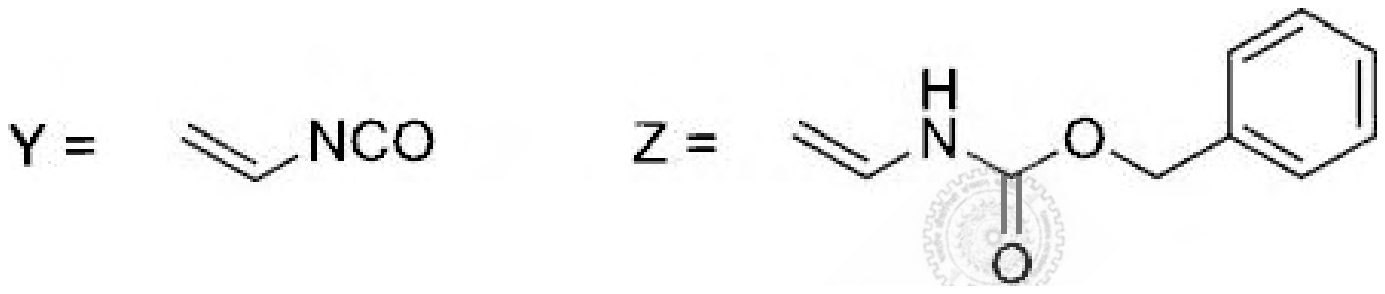
The products are (A): Y is vinyl isocyanate and Z is benzyl N-vinylcarbamate.
Sodium azide replaces the chloride of acryloyl chloride to give acryloyl azide. On heating, the acyl azide undergoes the Curtius rearrangement: nitrogen gas is lost and the vinyl group migrates from carbon to nitrogen, giving vinyl isocyanate, CH2=CH-N=C=O (Y). Benzyl alcohol then adds across the C=N bond of the isocyanate to give the carbamate CH2=CH-NH-C(O)-OCH2Ph (Z).
(B) assumes azide adds to the C=C bond (conjugate addition) instead of replacing the chloride, and ignores the heating step. (C) is a 1,3-dipolar cycloaddition product, a triazoline. (D) keeps the acyl azide after heating, which is the condition that makes it rearrange, and then has benzyl alcohol add to the alkene instead of reacting with the isocyanate.
Post your comment
Please log in or register to post a comment.
Examination Categories
- SSC Exams
- Banking Exams
- Teaching Exams
- Civil Services Exams
- Railways Exams
- Engineering Recruitment Exams
- Defence Exams
- State Government Exams
- Police Exams
- Insurance Exams
- Nursing Exams
- Other Government Exams
- NRA CET
- PG Entrance Exams
- Campus Placement
- MBA Entrance Exams
- CUET and UG Entrance
- Judiciary Exams
- Regulatory Body Exams
- Software Development