
Discussion
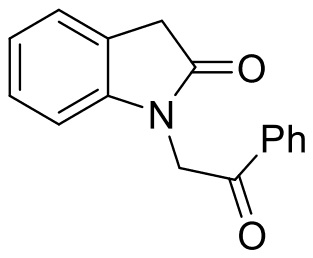
The major product formed in the given reaction sequence is
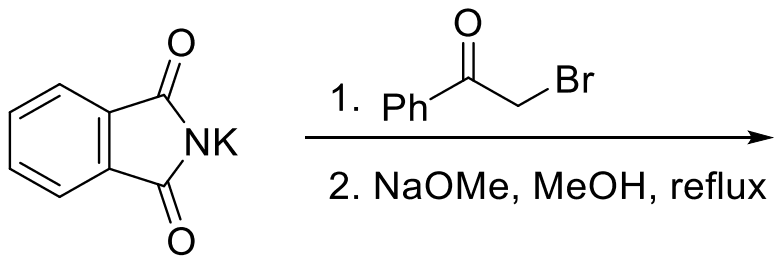
- A.
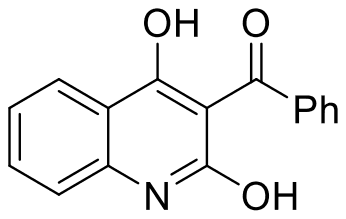
- B.
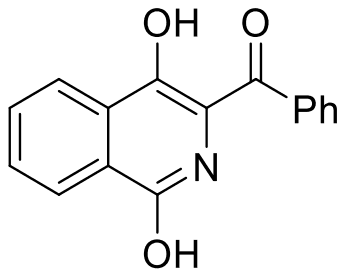
- C.
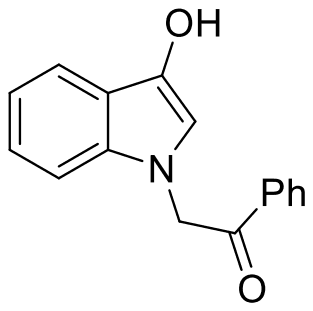
- D.
Answer: B
The major product is (B), 3-benzoylisoquinoline-1,4-diol.
Step 1 is a Gabriel alkylation: potassium phthalimide displaces bromide from phenacyl bromide to give N-phenacylphthalimide. Step 2 is the Gabriel-Colman rearrangement. Methoxide opens one imide carbonyl, and the enolate of the now acidic CH2 (flanked by nitrogen and the benzoyl group) attacks the remaining ester carbonyl, closing a six-membered ring. The result is the isoquinoline skeleton with OH groups at C1 and C4 (the enol and lactam tautomers drawn as diols) and the benzoyl group at C3.
(A) is a quinoline, with the nitrogen attached to the benzene ring, which this ring expansion cannot give since nitrogen stays between the two former carbonyl carbons. (C) and (D) are indole and oxindole products with an N-phenacyl group, which would need loss of a carbon from the phthalimide.
Post your comment
Please log in or register to post a comment.
Examination Categories
- SSC Exams
- Banking Exams
- Teaching Exams
- Civil Services Exams
- Railways Exams
- Engineering Recruitment Exams
- Defence Exams
- State Government Exams
- Police Exams
- Insurance Exams
- Nursing Exams
- Other Government Exams
- NRA CET
- PG Entrance Exams
- Campus Placement
- MBA Entrance Exams
- CUET and UG Entrance
- Judiciary Exams
- Regulatory Body Exams
- Software Development