
Discussion
In the reaction shown below, the major product(s) formed is/are
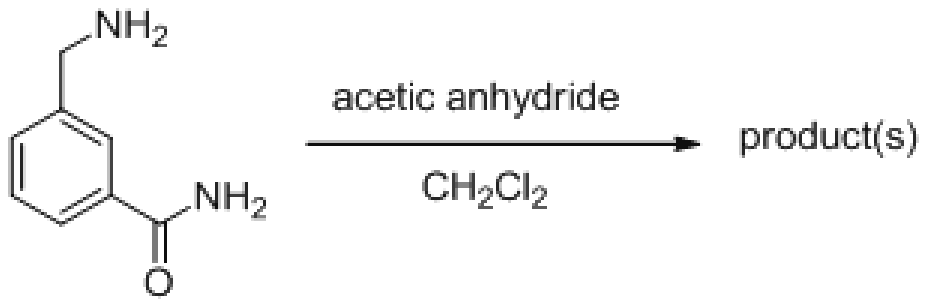
- A.
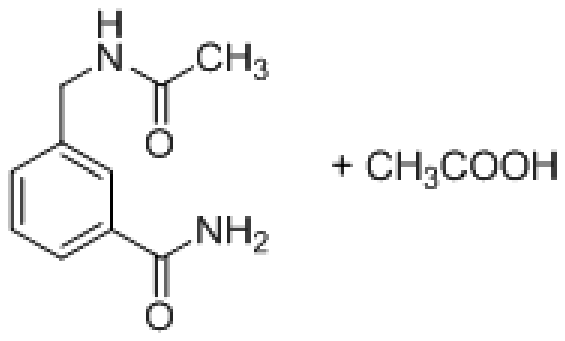
- B.

- C.
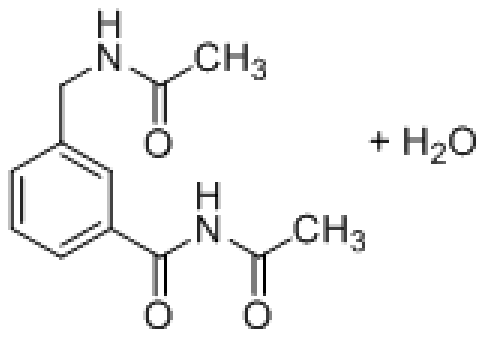
- D.
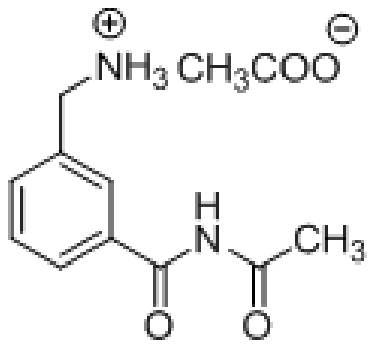
Answer: A
The major product is (A): the CH2NH2 group is acetylated, giving CH2NHCOCH3, with acetic acid as by-product.
Acetic anhydride acylates the most nucleophilic nitrogen. The benzylic amine nitrogen has a free lone pair and is strongly nucleophilic. The amide nitrogen of CONH2 is not: its lone pair is delocalised into the C=O group, so it does not react under these mild conditions. One equivalent of acetic anhydride therefore gives the N-acetylated amine and CH3COOH.
(B) acetylates the wrong nitrogen. (C) acetylates both and also gives water, which is not a by-product of acylation by an anhydride. (D) again acetylates the amide nitrogen while leaving the more basic amine as a salt.
Post your comment
Please log in or register to post a comment.
Examination Categories
- SSC Exams
- Banking Exams
- Teaching Exams
- Civil Services Exams
- Railways Exams
- Engineering Recruitment Exams
- Defence Exams
- State Government Exams
- Police Exams
- Insurance Exams
- Nursing Exams
- Other Government Exams
- NRA CET
- PG Entrance Exams
- Campus Placement
- MBA Entrance Exams
- CUET and UG Entrance
- Judiciary Exams
- Regulatory Body Exams
- Software Development