
Discussion
The major product T formed in the following reaction is

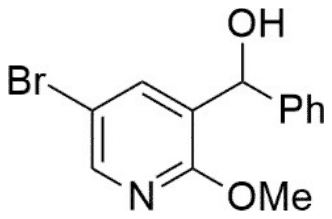
- A.
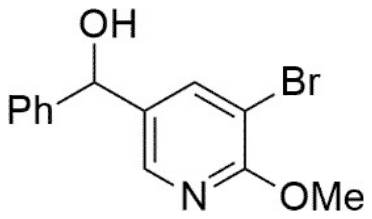
- B.
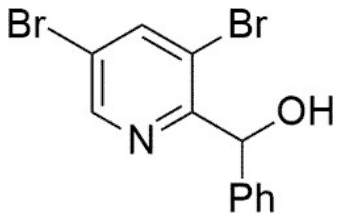
- C.
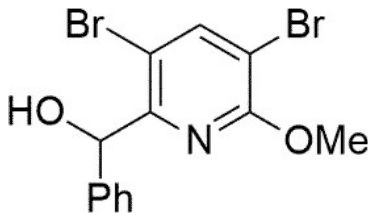
- D.
Answer: A
T is (A), the alcohol at C3 next to the methoxy group, with Br kept at C5.
At -100 °C, nBuLi performs a fast bromine-lithium exchange, not a deprotonation. Of the two bromines, the one at C3 is exchanged selectively because the adjacent 2-methoxy oxygen coordinates the lithium and stabilises the 3-pyridyllithium (an ortho-directing effect). Adding benzaldehyde then traps that organolithium as the secondary alcohol ArCH(OH)Ph at C3.
(B) puts the new group at C5, the bromine without a neighbouring donor. (C) and (D) keep both bromines and put the CH(OH)Ph group next to nitrogen, which would need deprotonation of a ring C-H rather than halogen exchange; (C) also loses the methoxy group.
Post your comment
Please log in or register to post a comment.
Examination Categories
- SSC Exams
- Banking Exams
- Teaching Exams
- Civil Services Exams
- Railways Exams
- Engineering Recruitment Exams
- Defence Exams
- State Government Exams
- Police Exams
- Insurance Exams
- Nursing Exams
- Other Government Exams
- NRA CET
- PG Entrance Exams
- Campus Placement
- MBA Entrance Exams
- CUET and UG Entrance
- Judiciary Exams
- Regulatory Body Exams
- Software Development