
Discussion
The major product P in the following reaction is

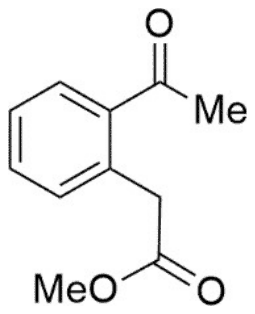
- A.
- B.
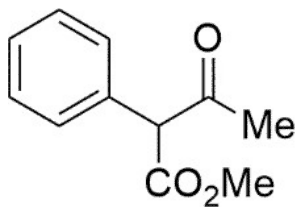
- C.
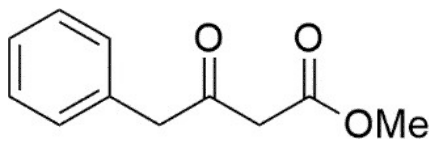
- D.
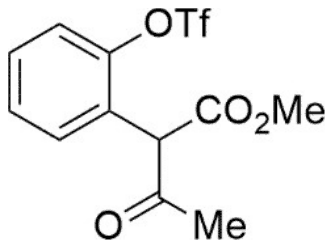
Answer: A
P is (A), methyl 2-(2-acetylphenyl)acetate.
CsF removes the silyl group from 2-(trimethylsilyl)phenyl triflate, and loss of triflate gives benzyne. The enolate of methyl acetoacetate adds its central carbon to one end of the aryne. The aryl anion formed at the adjacent carbon then attacks the ketone carbonyl, closing a four-membered ring (a benzocyclobutenoxide). That strained alkoxide fragments, breaking the bond between the former ketone carbon and the central carbon, so the aryne has been inserted into the C-C single bond of the beta-keto ester: the acetyl group and the CH2CO2Me group end up ortho to each other.
(B) is the simple alpha-arylation product, formed if the aryl anion were protonated before it could attack the ketone. (C) is arylation at the methyl ketone end, which is not the nucleophilic carbon. (D) keeps the triflate, but the triflate is the leaving group that must go for benzyne to form.
Post your comment
Please log in or register to post a comment.
Examination Categories
- SSC Exams
- Banking Exams
- Teaching Exams
- Civil Services Exams
- Railways Exams
- Engineering Recruitment Exams
- Defence Exams
- State Government Exams
- Police Exams
- Insurance Exams
- Nursing Exams
- Other Government Exams
- NRA CET
- PG Entrance Exams
- Campus Placement
- MBA Entrance Exams
- CUET and UG Entrance
- Judiciary Exams
- Regulatory Body Exams
- Software Development