
Discussion
The major product formed in the following reaction sequences is

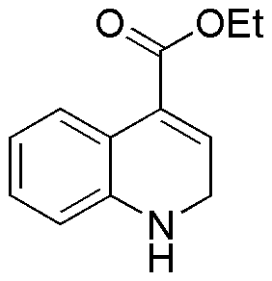
- A.
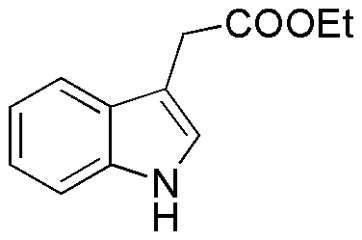
- B.
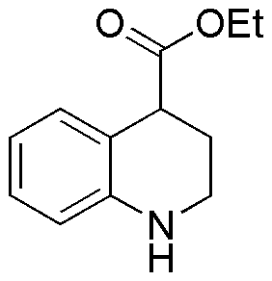
- C.
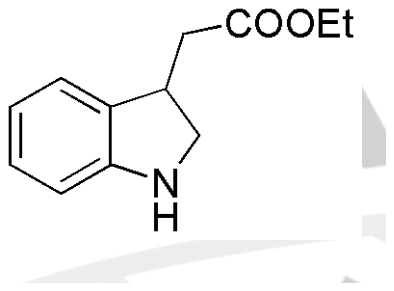
- D.
Answer: B
The major product is (B), ethyl indole-3-acetate.
(i) K2CO3 lets the secondary amine displace the allylic bromide, giving the N-benzyl-N-(4-ethoxycarbonylbut-2-enyl) aryl iodide. (ii) Pd(0) adds oxidatively to the C-I bond, and an intramolecular Heck reaction closes a five-membered ring (5-exo); beta-hydride elimination and isomerisation give the aromatic indole with a CH2CO2Et group at C3. (iii) H2 over Pd/C in acetic acid removes the N-benzyl group by hydrogenolysis, giving the free N-H indole.
The quinoline-type products (A) and (C) would need a six-membered (6-endo) cyclisation, which the intramolecular Heck reaction does not favour here. (D), the indoline, would need the aromatic indole C2=C3 bond to be hydrogenated, which these mild conditions do not do.
Post your comment
Please log in or register to post a comment.
Examination Categories
- SSC Exams
- Banking Exams
- Teaching Exams
- Civil Services Exams
- Railways Exams
- Engineering Recruitment Exams
- Defence Exams
- State Government Exams
- Police Exams
- Insurance Exams
- Nursing Exams
- Other Government Exams
- NRA CET
- PG Entrance Exams
- Campus Placement
- MBA Entrance Exams
- CUET and UG Entrance
- Judiciary Exams
- Regulatory Body Exams
- Software Development