
Discussion
The major product formed in the following reaction is

- A.

- B.

- C.

- D.
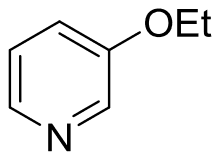
Answer: C
The product is (C), 3-chloropyridine.
Potassium pyrrolide with chloroform and a base is the Ciamician-Dennstedt ring expansion. The base generates dichlorocarbene from CHCl3; the electron-rich pyrrole carbon adds to it, giving a dichlorocyclopropane that opens by loss of chloride and expands the five-membered ring to a six-membered one. The new ring carbon carries one chlorine and sits at the 3-position of the pyridine.
The 2-substituted pyridines in (A) and (B) would need the carbene carbon to end up next to nitrogen, which it does not. The ethoxy compounds (B) and (D) would need ethoxide to substitute the chlorine, which does not happen under these conditions.
Post your comment
Please log in or register to post a comment.
Examination Categories
- SSC Exams
- Banking Exams
- Teaching Exams
- Civil Services Exams
- Railways Exams
- Engineering Recruitment Exams
- Defence Exams
- State Government Exams
- Police Exams
- Insurance Exams
- Nursing Exams
- Other Government Exams
- NRA CET
- PG Entrance Exams
- Campus Placement
- MBA Entrance Exams
- CUET and UG Entrance
- Judiciary Exams
- Regulatory Body Exams
- Software Development