
Discussion
The magnetization (M) - magnetic field (H) curves for four different materials are given below. Which one of these materials is most suitable for use as a permanent magnet?
- A.
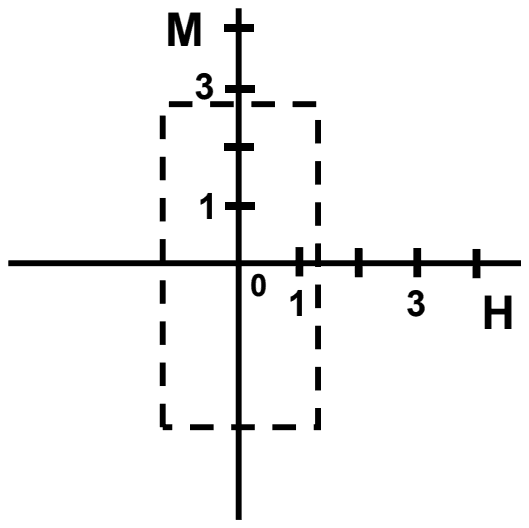
- B.
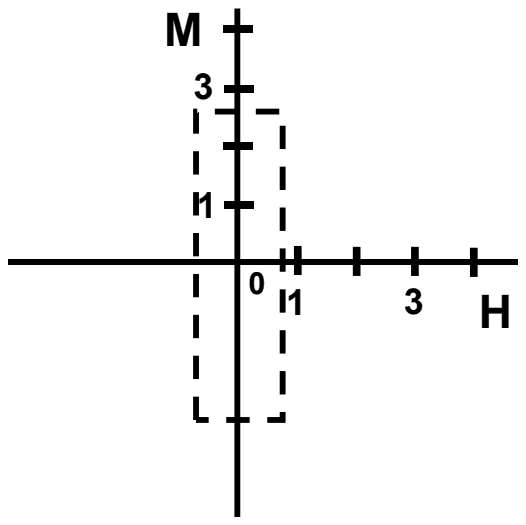
- C.
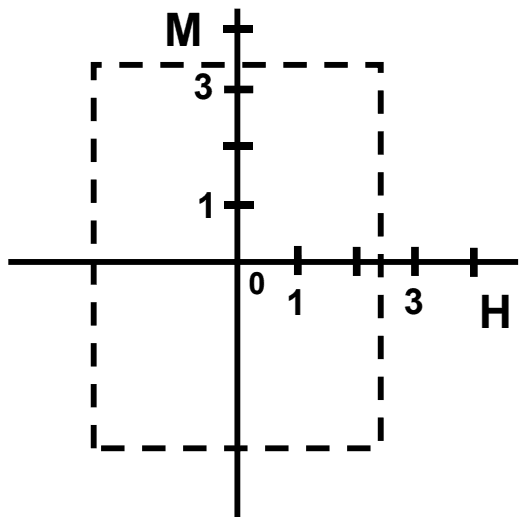
- D.
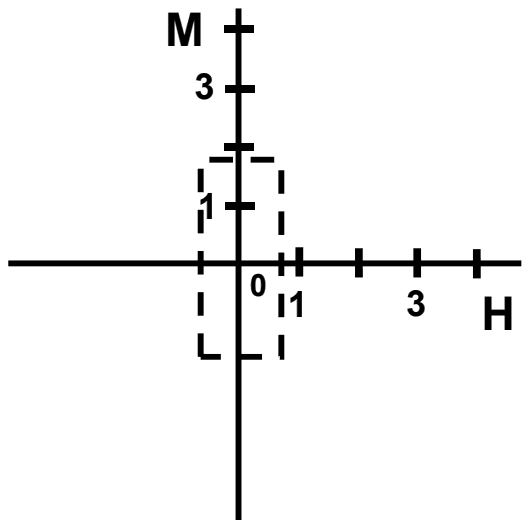
Answer: C
The material best suited to a permanent magnet is (C).
A permanent magnet must keep a large magnetization when the field is removed (high remanence, where the loop crosses the M axis) and must resist being demagnetized (high coercivity, where it crosses the H axis). Such hard magnetic materials have broad, square loops enclosing a large area.
Loop (C) is the widest, crossing the H axis at about 2.5 units, and also the tallest, so it has both the largest coercivity and the largest remanence. Loops (A), (B) and (D) are progressively narrower: a few tenths to just over one unit of field would demagnetize them. Narrow loops suit soft magnetic materials, such as transformer cores, where low hysteresis loss matters.
Post your comment
Please log in or register to post a comment.
Examination Categories
- SSC Exams
- Banking Exams
- Teaching Exams
- Civil Services Exams
- Railways Exams
- Engineering Recruitment Exams
- Defence Exams
- State Government Exams
- Police Exams
- Insurance Exams
- Nursing Exams
- Other Government Exams
- NRA CET
- PG Entrance Exams
- Campus Placement
- MBA Entrance Exams
- CUET and UG Entrance
- Judiciary Exams
- Regulatory Body Exams
- Software Development