
Discussion
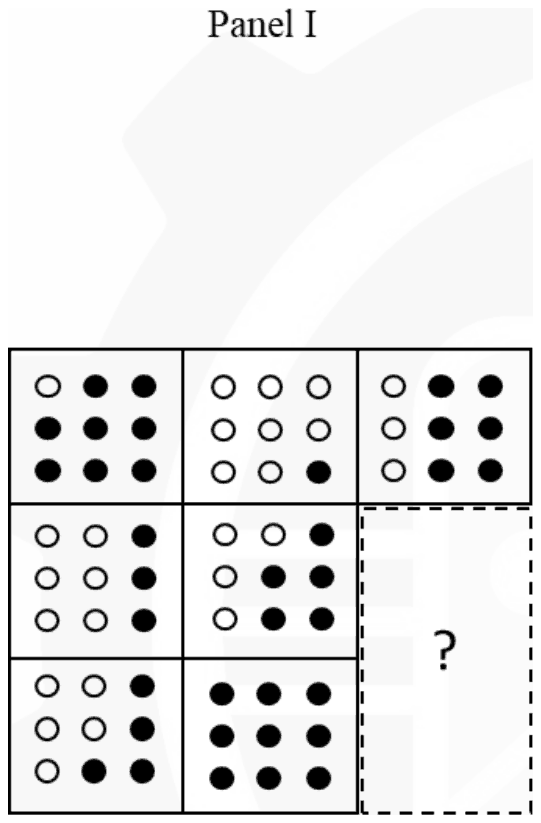
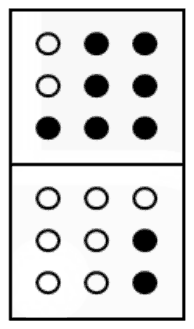
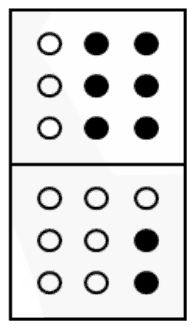
Two tiles are missing in Panel I. Which one of the options in Panel II is the appropriate choice for the missing tiles?
- A.
- B.
- C.

- D.
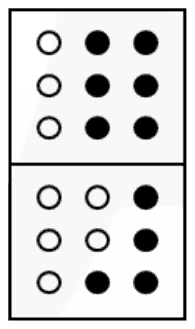
Answer: A
The missing tiles are option (i).
Count the filled dots in each tile of Panel I. The grid reads:
| 8 | 1 | 6 |
| 3 | 5 | ? |
| 4 | 9 | ? |
The first row sums to 15, and so do the first two columns (8 + 3 + 4 and 1 + 5 + 9). This is the 3 by 3 magic square, every row and column totalling 15. So the missing tiles must have 15 - 8 = 7 filled dots (middle row) and 15 - 13 = 2 (bottom row), which also makes the last column 6 + 7 + 2 = 15.
Option (i) has 7 filled dots above and 2 below. Option (ii) has 6 and 2, option (iii) 7 and 3, and option (iv) 6 and 4, so none of them completes the square.
No comment is present. Be the first to comment.
Loading…
Post your comment
Please log in or register to post a comment.
Examination Categories
- SSC Exams
- Banking Exams
- Teaching Exams
- Civil Services Exams
- Railways Exams
- Engineering Recruitment Exams
- Defence Exams
- State Government Exams
- Police Exams
- Insurance Exams
- Nursing Exams
- Other Government Exams
- NRA CET
- PG Entrance Exams
- Campus Placement
- MBA Entrance Exams
- CUET and UG Entrance
- Judiciary Exams
- Regulatory Body Exams
- Software Development