
Discussion
The phosphazene compound that acts as a superbase is
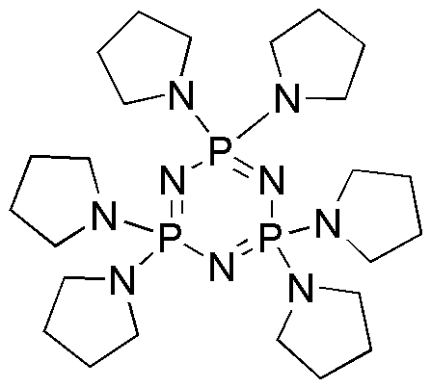
- A.
- B.
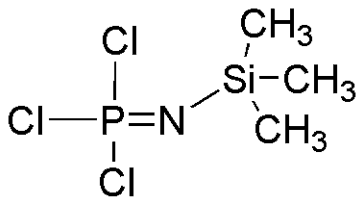
- C.
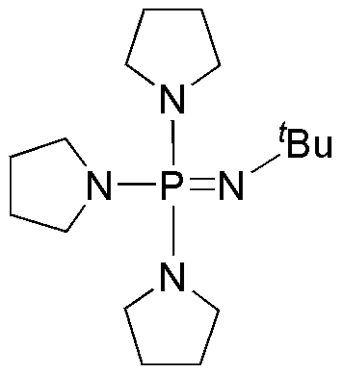
- D.
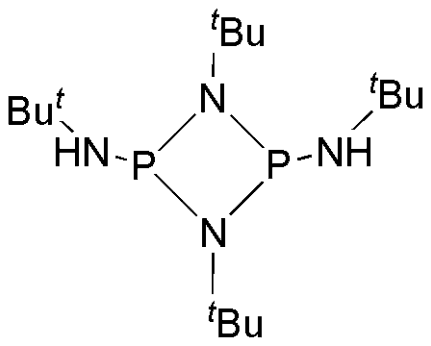
Answer: C
The superbase is structure (C), the phosphazene tBuN=P(NC4H8)3.
This is a Schwesinger-type P1 phosphazene base. Protonation occurs at the imino nitrogen of P=N, and the resulting cation is strongly stabilised because the positive charge is spread over phosphorus and the three electron-donating pyrrolidino nitrogens. The bulky tert-butyl group keeps it non-nucleophilic. Such bases are far stronger than amines such as DBU.
(A) is a cyclotriphosphazene: its ring nitrogens are part of a delocalised P-N ring and are only weakly basic. (B) carries three electron-withdrawing chlorines on phosphorus and a silyl group on nitrogen; it is a monomer used to make polyphosphazenes, not a base. (D) is a cyclodiphosphazane with P-N single bonds and no imino nitrogen to protonate.
Post your comment
Please log in or register to post a comment.
Examination Categories
- SSC Exams
- Banking Exams
- Teaching Exams
- Civil Services Exams
- Railways Exams
- Engineering Recruitment Exams
- Defence Exams
- State Government Exams
- Police Exams
- Insurance Exams
- Nursing Exams
- Other Government Exams
- NRA CET
- PG Entrance Exams
- Campus Placement
- MBA Entrance Exams
- CUET and UG Entrance
- Judiciary Exams
- Regulatory Body Exams
- Software Development