
Discussion
The figure shows two 4-tile patterns.
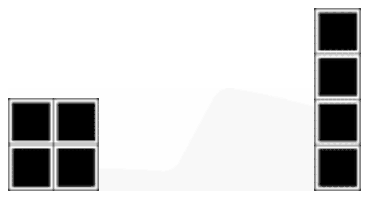
Either one or both of the patterns can be used any number of times and in any orientation to construct a new pattern. Which one of the options below cannot be constructed by using only these two 4-tile patterns assuming there are no overlaps among them?
- A.
- B.
- C.
- D.
Answer: C
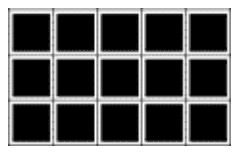
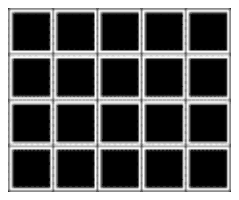
The pattern that cannot be built is (C), the 3 by 5 rectangle.
Both building blocks contain exactly 4 tiles, and pieces may not overlap, so any pattern made only from them must contain a multiple of 4 tiles. Count the tiles in each option:
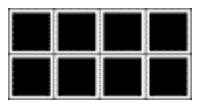
- (A) 2 × 4 = 8 tiles: two 2 × 2 squares side by side, or two lines of 4 stacked.
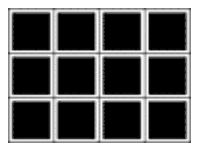
- (B) 3 × 4 = 12 tiles: three horizontal lines of 4.
- (C) 3 × 5 = 15 tiles: not a multiple of 4.
- (D) 4 × 5 = 20 tiles: five vertical lines of 4.
Since 15 is not divisible by 4, no combination of the two patterns can cover the 3 by 5 rectangle exactly, while each of the others is built as shown.
No comment is present. Be the first to comment.
Loading…
Post your comment
Please log in or register to post a comment.
Examination Categories
- SSC Exams
- Banking Exams
- Teaching Exams
- Civil Services Exams
- Railways Exams
- Engineering Recruitment Exams
- Defence Exams
- State Government Exams
- Police Exams
- Insurance Exams
- Nursing Exams
- Other Government Exams
- NRA CET
- PG Entrance Exams
- Campus Placement
- MBA Entrance Exams
- CUET and UG Entrance
- Judiciary Exams
- Regulatory Body Exams
- Software Development