
Discussion
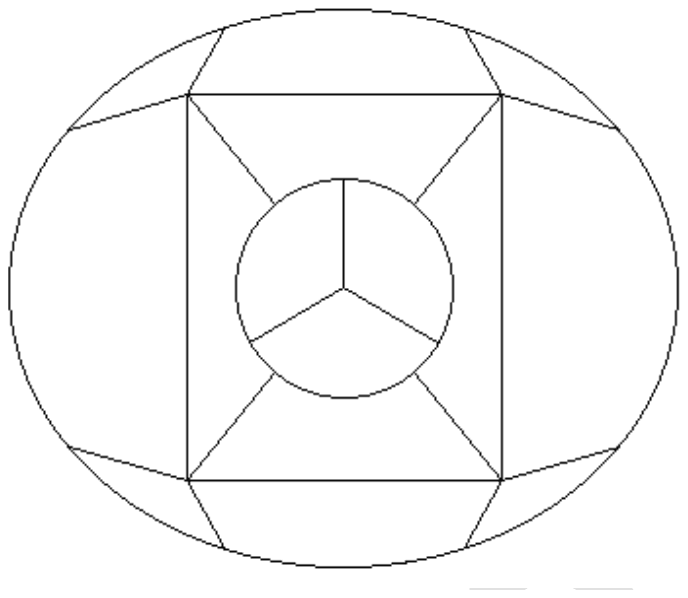
The 15 parts of the given figure are to be painted such that no two adjacent parts with shared boundaries (excluding corners) have the same color. The minimum number of colors required is
Answer: A
The minimum number of colours is 4.
The three sectors of the central circle all touch one another, so they need three different colours, say 1, 2 and 3. Each of the four parts in the ring between the circle and the square touches the sectors it borders. The ring parts that straddle a sector boundary touch two sectors and so are forced to take the third sector's colour: the top part, the left part and the right part are therefore forced to three different colours.
The bottom ring part touches the left and right ring parts and the bottom sector, which between them already use all three colours, so a fourth colour is unavoidable. Four colours are enough for the remaining outer parts, so the answer is 4; 3 is too few, and 5 or 6 are more than needed.
Post your comment
Please log in or register to post a comment.
Examination Categories
- SSC Exams
- Banking Exams
- Teaching Exams
- Civil Services Exams
- Railways Exams
- Engineering Recruitment Exams
- Defence Exams
- State Government Exams
- Police Exams
- Insurance Exams
- Nursing Exams
- Other Government Exams
- NRA CET
- PG Entrance Exams
- Campus Placement
- MBA Entrance Exams
- CUET and UG Entrance
- Judiciary Exams
- Regulatory Body Exams
- Software Development