
Discussion
Three different views of a dice are shown in the figure below.
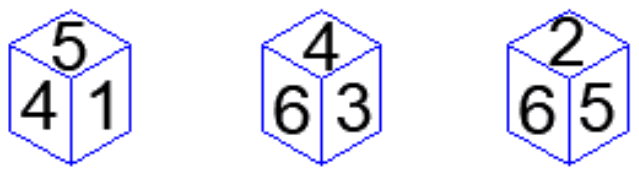
The piece of paper that can be folded to make this dice is
- A.
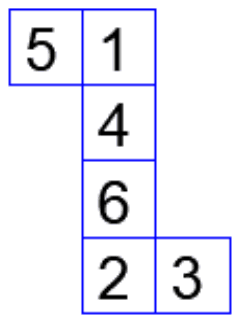
- B.
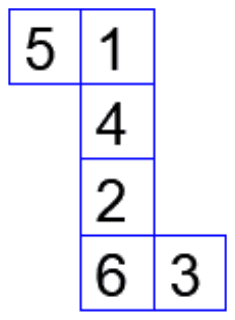
- C.
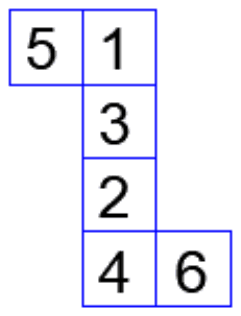
- D.
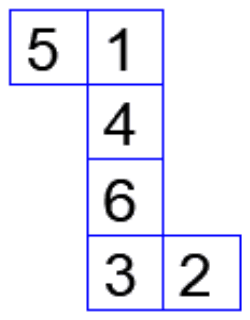
Answer: A
The net that folds into this die is (A).
From the three views, 4 is adjacent to 5, 1, 6 and 3, so it is opposite 2. 5 is adjacent to 4, 1, 2 and 6, so it is opposite 3. 6 is adjacent to 4, 3, 2 and 5, so it is opposite 1. The opposite pairs are therefore 4-2, 5-3 and 6-1.
In each net the four squares in a column fold so that alternate squares are opposite, and the two side flaps on opposite sides of the column end up opposite each other. Net (A) has the column 1, 4, 6, 2, giving 1-6 and 4-2, with flaps 5 and 3 opposite: all three pairs match. Net (B) makes 1 opposite 2, net (C) makes 1 opposite 2 and 3 opposite 4, and net (D) makes 4 opposite 3, so they all contradict the views.
Post your comment
Please log in or register to post a comment.
Examination Categories
- SSC Exams
- Banking Exams
- Teaching Exams
- Civil Services Exams
- Railways Exams
- Engineering Recruitment Exams
- Defence Exams
- State Government Exams
- Police Exams
- Insurance Exams
- Nursing Exams
- Other Government Exams
- NRA CET
- PG Entrance Exams
- Campus Placement
- MBA Entrance Exams
- CUET and UG Entrance
- Judiciary Exams
- Regulatory Body Exams
- Software Development