
Discussion
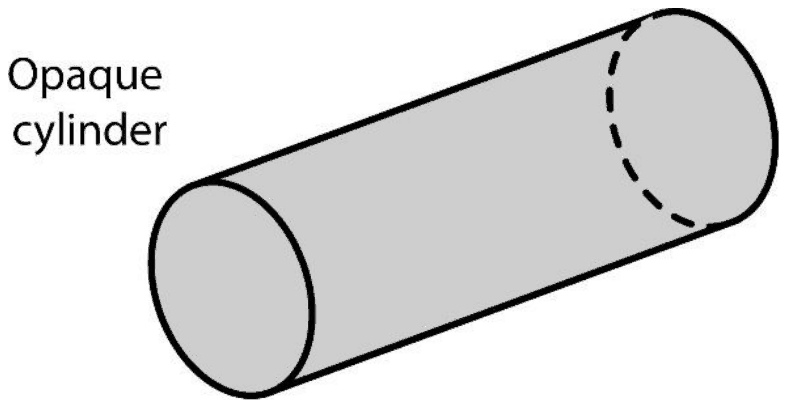
An opaque cylinder (shown below) is suspended in the path of a parallel beam of light, such that its shadow is cast on a screen oriented perpendicular to the direction of the light beam. The cylinder can be reoriented in any direction within the light beam. Under these conditions, which one of the shadows P, Q, R, and S is NOT possible?
- A.
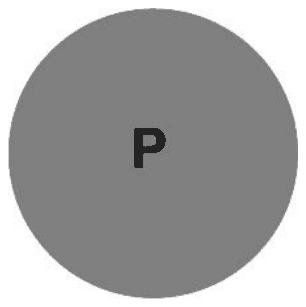
- B.
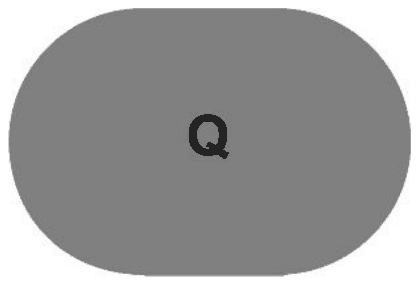
- C.

- D.
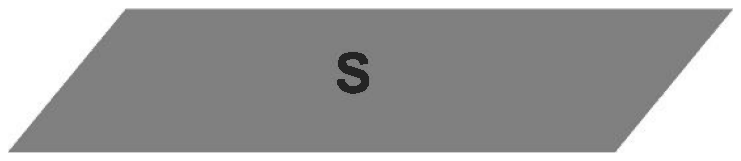
Answer: D
The impossible shadow is S.
With a parallel beam, the shadow is the projection of the cylinder onto the screen. Pointing the axis along the beam gives a circle (P). Turning the axis perpendicular to the beam gives a rectangle (R). At any angle in between, each circular end projects to an ellipse, and the shadow is a band joining two half-ellipses, a rounded shape like Q.
Straight ends appear only when the end circles project edge-on to segments, which happens only when the axis is perpendicular to the beam, and then those segments are perpendicular to the sides, giving a rectangle. A parallelogram with slanted straight ends, S, can therefore never be cast.
Post your comment
Please log in or register to post a comment.
Examination Categories
- SSC Exams
- Banking Exams
- Teaching Exams
- Civil Services Exams
- Railways Exams
- Engineering Recruitment Exams
- Defence Exams
- State Government Exams
- Police Exams
- Insurance Exams
- Nursing Exams
- Other Government Exams
- NRA CET
- PG Entrance Exams
- Campus Placement
- MBA Entrance Exams
- CUET and UG Entrance
- Judiciary Exams
- Regulatory Body Exams
- Software Development