
Discussion
In the cyclization reaction given below, the most probable product formed is

- A.
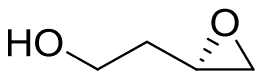
- B.
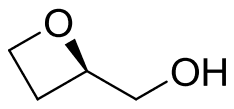
- C.
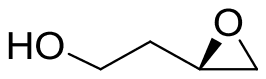
- D.
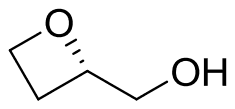
Answer: C
The product is the epoxide formed with inversion at the C-Br carbon, 2-(oxiran-2-yl)ethanol with the ring C-O bond wedged (C).
NaH deprotonates a hydroxyl group, and the alkoxide displaces bromide intramolecularly by an SN2 reaction. The CH2O- on the carbon next to C-Br closes a three-membered ring, and 3-exo ring closure is much faster than the 4-exo closure the other OH would need to make an oxetane. So the epoxide forms, not the oxetane of B and D.
Because SN2 attack comes from the side opposite the leaving group, the hashed C-Br bond is replaced by a wedged C-O bond: the configuration at that carbon is inverted. A shows the same epoxide with retention, which an SN2 closure cannot give.
Post your comment
Please log in or register to post a comment.
Examination Categories
- SSC Exams
- Banking Exams
- Teaching Exams
- Civil Services Exams
- Railways Exams
- Engineering Recruitment Exams
- Defence Exams
- State Government Exams
- Police Exams
- Insurance Exams
- Nursing Exams
- Other Government Exams
- NRA CET
- PG Entrance Exams
- Campus Placement
- MBA Entrance Exams
- CUET and UG Entrance
- Judiciary Exams
- Regulatory Body Exams
- Software Development