
Discussion
Consider the reaction sequence shown below:

TsCl = p-toluenesulfonyl chloride
The product is
- A.
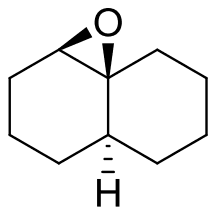
- B.
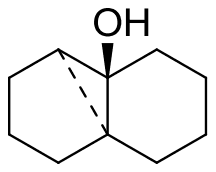
- C.
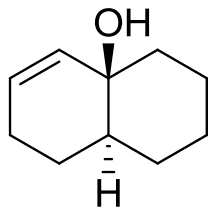
- D.
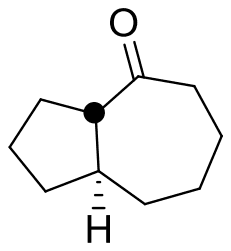
Answer: D
The product is the ring-contracted and ring-expanded ketone, a cyclopentane fused to a cycloheptanone (D).
t-BuOK deprotonates the tertiary OH. The resulting alkoxide pushes a bond on its own carbon across to the neighbouring carbon, which loses tosylate: a semipinacol (pinacol-type) rearrangement. The bond that migrates is the one anti-periplanar to the C-OTs bond. With the tosylate equatorial on the trans-decalin, that is the ring-fusion C-C bond.
When the ring-fusion bond shifts, the ring that held the tosylate loses a member and becomes a cyclopentane, the other ring gains one and becomes a seven-membered ring, and the alkoxide carbon becomes the C=O: a hydroazulenone, structure D.
An epoxide (A) would need the alkoxide to attack from the back of the C-OTs bond, which the cis arrangement prevents. B and C are not products of a base-promoted reaction of this hydroxy tosylate; the anti-periplanar migration outcompetes elimination.
Post your comment
Please log in or register to post a comment.
Examination Categories
- SSC Exams
- Banking Exams
- Teaching Exams
- Civil Services Exams
- Railways Exams
- Engineering Recruitment Exams
- Defence Exams
- State Government Exams
- Police Exams
- Insurance Exams
- Nursing Exams
- Other Government Exams
- NRA CET
- PG Entrance Exams
- Campus Placement
- MBA Entrance Exams
- CUET and UG Entrance
- Judiciary Exams
- Regulatory Body Exams
- Software Development