
Discussion
In a polymer recycling plant, polymer “X” was depolymerized by glycolysis in the presence of ethylene glycol and a suitable catalyst. The glycolysis reaction yielded the following compound:
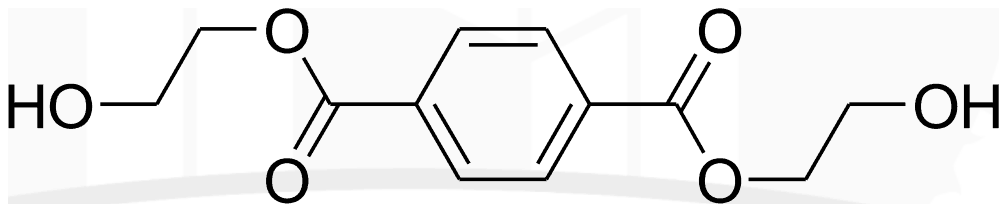
Identify the polymer “X” from the following options.
Answer: A
Polymer X is poly(ethylene terephthalate).
The product shown is bis(2-hydroxyethyl) terephthalate (BHET): a benzene ring carrying two ester groups in the para positions, each esterified with a 2-hydroxyethyl group. PET is the polyester of terephthalic acid and ethylene glycol, and glycolysis with excess ethylene glycol breaks its ester links by transesterification, returning exactly this monomer-like diester. BHET can be repolymerised to PET, which is why glycolysis is a standard chemical recycling route for bottles.
Polystyrene and ABS are addition polymers with all-carbon backbones and no ester groups to cleave, and PVC contains chlorine, which appears nowhere in the product.
Post your comment
Please log in or register to post a comment.
Examination Categories
- SSC Exams
- Banking Exams
- Teaching Exams
- Civil Services Exams
- Railways Exams
- Engineering Recruitment Exams
- Defence Exams
- State Government Exams
- Police Exams
- Insurance Exams
- Nursing Exams
- Other Government Exams
- NRA CET
- PG Entrance Exams
- Campus Placement
- MBA Entrance Exams
- CUET and UG Entrance
- Judiciary Exams
- Regulatory Body Exams
- Software Development