
Discussion
Compound K displayed a strong band at 1680 cm-1 in its IR spectrum. Its 1H-NMR spectral data are as follows: δ (ppm) 7.30 (d, J = 7.2 Hz, 2H), 6.8 (d, J = 7.2 Hz, 2H), 3.8 (septet, J = 7.0 Hz, 1H), 2.2 (s, 3H), 1.9 (d, J = 7.0 Hz, 6H). The correct structure of compound K is
- A.
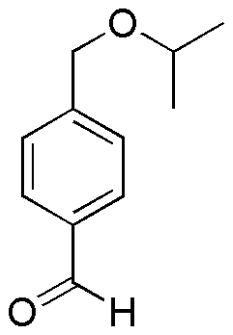
- B.
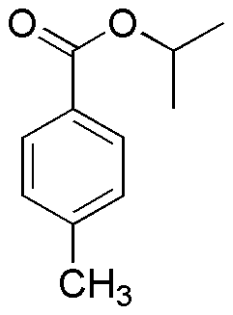
- C.
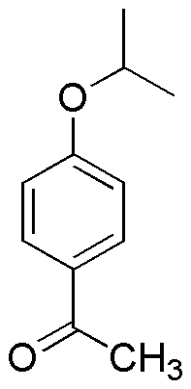
- D.
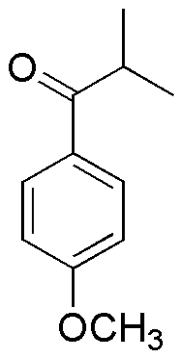
Answer: C
Compound K is (C), 4-isopropoxyacetophenone.
The strong band at 1680 cm-1 is a ketone conjugated with an aromatic ring. In the NMR, two 2H doublets show a para-disubstituted ring with one electron-donating group (the doublet at 6.8 lies ortho to oxygen). A 1H septet coupled to a 6H doublet is an isopropyl group, and its CH at 3.8 is deshielded, so it is bonded to oxygen: an O-CH(CH3)2 ether. The 3H singlet at 2.2 is then the acetyl methyl. The paper's shift values are rounded, but the multiplicities and integrals fit only (C).
(A) is an aldehyde, which would show a CHO singlet near 10 ppm. (B) is an ester, absorbing near 1720 cm-1. (D) would show its OCH3 as a 3H singlet near 3.8 and an isopropyl CH not attached to oxygen.
Post your comment
Please log in or register to post a comment.
Examination Categories
- SSC Exams
- Banking Exams
- Teaching Exams
- Civil Services Exams
- Railways Exams
- Engineering Recruitment Exams
- Defence Exams
- State Government Exams
- Police Exams
- Insurance Exams
- Nursing Exams
- Other Government Exams
- NRA CET
- PG Entrance Exams
- Campus Placement
- MBA Entrance Exams
- CUET and UG Entrance
- Judiciary Exams
- Regulatory Body Exams
- Software Development