
Discussion
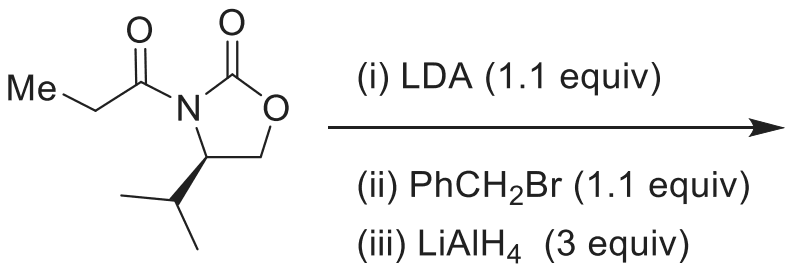
The major product formed in the following reaction
is:
- A.
- B.
- C.
- D.
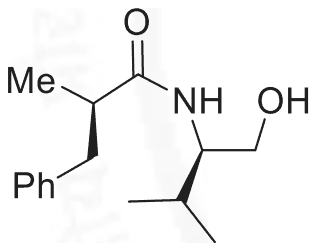
Answer: A
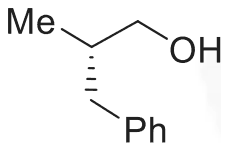
The product is (A), (S)-2-methyl-3-phenylpropan-1-ol.
This is an Evans asymmetric alkylation. The auxiliary drawn, with the isopropyl group on a wedge, is (R)-4-isopropyloxazolidin-2-one. LDA forms the (Z)-enolate, held rigid by lithium chelated between the enolate oxygen and the ring carbonyl oxygen. The isopropyl group then covers one face of the enolate, and benzyl bromide alkylates it from the other face, giving essentially one diastereomer.
Excess LiAlH4 reduces the exocyclic imide carbonyl and releases the auxiliary, giving the primary alcohol with the new stereocentre intact. With this auxiliary the stereocentre is (S), drawn in (A) with the benzyl bond hashed.
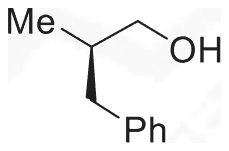
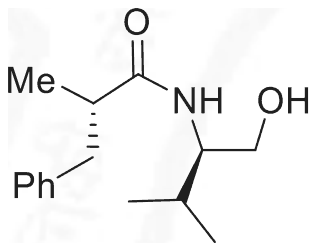
(B) is the enantiomer, the product of the (S)-auxiliary. (C) and (D) are amides from attack on the ring carbonyl, which is not the course of a hydride cleavage.
Post your comment
Please log in or register to post a comment.
Examination Categories
- SSC Exams
- Banking Exams
- Teaching Exams
- Civil Services Exams
- Railways Exams
- Engineering Recruitment Exams
- Defence Exams
- State Government Exams
- Police Exams
- Insurance Exams
- Nursing Exams
- Other Government Exams
- NRA CET
- PG Entrance Exams
- Campus Placement
- MBA Entrance Exams
- CUET and UG Entrance
- Judiciary Exams
- Regulatory Body Exams
- Software Development