
Instruction
- Total number of questions : 20
- Time allotted : 30:00 Minutes:Seconds.
- Each question carry 1 mark, no negative marks.
- DO NOT refresh the page.
- All the best
Biochemistry [ Question No: 1 To 20 ] :
Which of the following is not a type of steroid?
Electromagnetic radiation consists of discrete packets of energy which are called as :
Which of the following intermediates is shared between the urea cycle and the TCA cycle?
Which one of the following is a fat soluble vitamin?
Coenzyme A is a co-factor of vitamin
In eukaryotic cells, a mutation reduces the enzymatic activity of pyruvate dehydrogenase by 90%, without affecting expression. Under aerobic conditions, which one of the following metabolic changes is most expected in cells with the mutation compared to cells without?
Which one of the following metabolic intermediates is common to glycolysis, nucleotide synthesis and glycogen synthesis?
Intracellular concentrations of ATP, ADP, and inorganic phosphate in four cell types are given below. Which one of these cell types has the most negative ΔG for ATP hydrolysis?
| Cell type | ATP (mM) | ADP (mM) | Inorganic phosphate (mM) |
|---|---|---|---|
| L | 3.0 | 1.8 | 5.0 |
| K | 3.9 | 1.3 | 3.0 |
| B | 2.7 | 0.7 | 2.7 |
| M | 7.2 | 0.9 | 8.0 |
The actual free energy change of a given biochemical reaction carried out under standard conditions with 1 M initial concentration of each of the reactants and products will be
The Kennedy pathway of cellular phospholipid biosynthesis is associated with ______ .
10 micrograms of the enzyme carbonic anhydrase (molecular weight = 30,000 g/mole) removes 300 milligrams of carbon dioxide per minute from the cells. The turnover number of the enzyme is
Which of the following is not an essential amino acid?
Match the entries in Group I with those in Group II
| Group I | Group II |
|---|---|
| P) Proline | 1) Artificial sweetener |
| Q) Oxytocin | 2) Cyclic amino acid |
| R) Aspartame | 3) β-Lactam |
| S) Penicillin | 4) Peptide hormone |
Upon hydrolysis of the pentapeptide Glu-Arg-Gly-Phe-Ala (represented from N- to C- terminus) with trypsin, the peptide fragments obtained are
Metabolic intermediates provide the backbone for the synthesis of amino acids. Match the metabolic intermediates listed in Column I with their corresponding amino acids given in Column II.
| Column I | Column II |
|---|---|
| P. α-Ketoglutarate | i. Histidine |
| Q. Ribose 5-phosphate | ii. Glutamate |
| R. 3-Phosphoglycerate | iii. Aspartate |
| S. Phosphoenolpyruvate | iv. Phenylalanine |
| v. Serine |
The C-2 epimer of D-glucose is
Which one of the following statements is NOT TRUE of glycosaminoglycans?
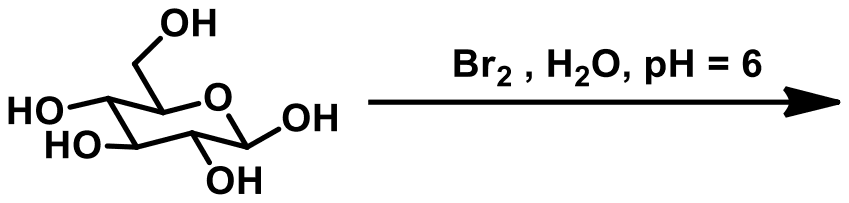
What is the major product formed in the given reaction?
Which of the following is the CORRECT statement about hexoses?
The following diagram represents energy states of different protein folding steps, which includes-
1. Folded
2. Transition
3. Molten globule
4. Unfolded
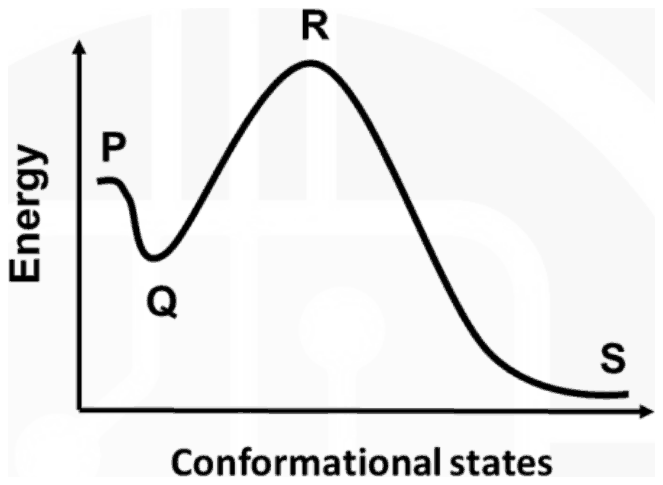
Find the correct match of folding steps (1 to 4) with the energy state (P to S) in the diagram.
Total number of questions : 20
Number of answered questions : 0
Number of unanswered questions : 20
Biochemistry [ Question No: 1 To 20 ] :
Which of the following is not a type of steroid?
Your Answer : (Not Answered)
Correct Answer : C
The one that is not a steroid is insulin.
Insulin is a peptide hormone made of two polypeptide chains, A and B, joined by disulphide bonds, secreted by the beta cells of the pancreas.
Steroids share the four-ring steroid nucleus. Cholesterol is the parent steroid, bile acids are made from cholesterol in the liver, and vitamin D is a secosteroid formed from a cholesterol derivative in the skin. So all three of the other options are steroids.
Electromagnetic radiation consists of discrete packets of energy which are called as :
Your Answer : (Not Answered)
Correct Answer : B
The discrete packets of energy are called photons.
Planck proposed that radiation is emitted in quanta, and Einstein's explanation of the photoelectric effect (1905) showed that light itself consists of particles of energy \(E = h\nu\), where h is Planck's constant and \(\nu\) the frequency. These quanta of electromagnetic radiation are photons; they have no rest mass and travel at the speed of light.
Quarks are the particles that make up protons and neutrons. Electrons are charged particles of matter, and positrons are their antiparticles. None of them is a packet of electromagnetic radiation.
Which of the following intermediates is shared between the urea cycle and the TCA cycle?
Your Answer : (Not Answered)
Correct Answer : B
The shared intermediate is fumarate.
In the urea cycle, argininosuccinate is split by argininosuccinate lyase into arginine and fumarate. Fumarate enters the TCA cycle, where it is converted to malate and then oxaloacetate, which can form aspartate to re-enter the urea cycle. This link is called the aspartate-argininosuccinate shunt, or the Krebs bicycle.
Citrulline, ornithine and arginine are intermediates of the urea cycle only and do not take part in the TCA cycle.
Which one of the following is a fat soluble vitamin?
Your Answer : (Not Answered)
Correct Answer : D
The fat-soluble vitamin is retinol.
Retinol is vitamin A. The fat-soluble vitamins are A, D, E and K; they are absorbed with dietary fat and stored in the liver and fatty tissue.
Thiamine (B1), riboflavin (B2) and nicotinamide (a form of niacin, B3) are B-complex vitamins, which are water soluble.
Coenzyme A is a co-factor of vitamin
Your Answer : (Not Answered)
Correct Answer : B
Coenzyme A is derived from pantothenic acid (vitamin B5).
Coenzyme A is built from pantothenic acid, cysteamine (from cysteine) and a 3'-phosphorylated ADP. Its terminal thiol forms thioesters such as acetyl-CoA, which carry acyl groups in the citric acid cycle and in fatty acid synthesis and oxidation.
The other vitamins make different coenzymes: riboflavin (B2) gives FAD and FMN, folic acid gives tetrahydrofolate for one-carbon transfers, and pyridoxine (B6) gives pyridoxal phosphate for amino acid metabolism.
In eukaryotic cells, a mutation reduces the enzymatic activity of pyruvate dehydrogenase by 90%, without affecting expression. Under aerobic conditions, which one of the following metabolic changes is most expected in cells with the mutation compared to cells without?
Your Answer : (Not Answered)
Correct Answer : A
The mutated cells will accumulate pyruvate and increase lactate production, despite oxygen being available.
Pyruvate dehydrogenase converts pyruvate to acetyl-CoA, the step that feeds glycolysis into the Krebs cycle. With 90 percent of its activity gone, pyruvate from glycolysis cannot be cleared into the mitochondria fast enough and builds up. Lactate dehydrogenase then reduces the surplus pyruvate to lactate, which also regenerates the NAD+ that glycolysis needs. The cell therefore makes lactate even though oxygen is present.
Flux through the Krebs cycle falls rather than rises, since less acetyl-CoA enters it, so NADH yield drops. A 90 percent loss of a key enzyme cannot leave metabolism unchanged, and pyruvate and lactate rise rather than fall.
Which one of the following metabolic intermediates is common to glycolysis, nucleotide synthesis and glycogen synthesis?
Your Answer : (Not Answered)
Correct Answer : C
The common intermediate is glucose 6-phosphate.
Glucose 6-phosphate is the first product of glycolysis (hexokinase). It is also the entry point of the pentose phosphate pathway, which makes ribose 5-phosphate for nucleotide synthesis, and it is converted to glucose 1-phosphate and then UDP-glucose for glycogen synthesis.
Citrate and oxaloacetate belong to the citric acid cycle, not to glycolysis or glycogen synthesis. Glycerol 3-phosphate comes from dihydroxyacetone phosphate and is used for lipid synthesis, not for nucleotides or glycogen.
Intracellular concentrations of ATP, ADP, and inorganic phosphate in four cell types are given below. Which one of these cell types has the most negative ΔG for ATP hydrolysis?
| Cell type | ATP (mM) | ADP (mM) | Inorganic phosphate (mM) |
|---|---|---|---|
| L | 3.0 | 1.8 | 5.0 |
| K | 3.9 | 1.3 | 3.0 |
| B | 2.7 | 0.7 | 2.7 |
| M | 7.2 | 0.9 | 8.0 |
Your Answer : (Not Answered)
Correct Answer : C
The cell type is B.
\[ \begin{aligned} \Delta G &= \Delta G^{\circ\prime} \\ &+ RT \ln\frac{[ADP][P_{i}]}{[ATP]} \end{aligned} \]
Since \(\Delta G^{\circ\prime}\) is the same for all four, \(\Delta G\) is most negative where the mass-action ratio is smallest. In mM:
- L: \(1.8 \times 5.0 / 3.0 = 3.0\)
- K: \(1.3 \times 3.0 / 3.9 = 1.0\)
- B: \(0.7 \times 2.7 / 2.7 = 0.7\)
- M: \(0.9 \times 8.0 / 7.2 = 1.0\)
B has the smallest ratio, so the logarithm term is most negative there. M has the most ATP, but its high phosphate level brings its ratio up to that of K; L has the largest ratio and the least negative \(\Delta G\).
The actual free energy change of a given biochemical reaction carried out under standard conditions with 1 M initial concentration of each of the reactants and products will be
Your Answer : (Not Answered)
Correct Answer : B
The actual free energy change is equal to standard free energy change for the reaction.
The actual free energy change is related to the standard value by
\[ \Delta G = \Delta G^{\circ} + RT\ln Q \]
where Q is the ratio of product to reactant concentrations. With every reactant and product at 1 M, Q = 1 and \(\ln 1 = 0\), so \(\Delta G = \Delta G^{\circ}\) at the start of the reaction.
\(\Delta G\) is zero only at equilibrium, when Q equals the equilibrium constant, which these conditions do not describe. It would be less or greater than \(\Delta G^{\circ}\) only if Q were below or above 1.
The Kennedy pathway of cellular phospholipid biosynthesis is associated with ______ .
Your Answer : (Not Answered)
Correct Answer : D
The Kennedy pathway is associated with the endoplasmic reticulum.
The Kennedy pathway is the CDP-choline and CDP-ethanolamine route by which cells make phosphatidylcholine and phosphatidylethanolamine. Choline or ethanolamine is phosphorylated, activated to its CDP derivative, and finally transferred onto diacylglycerol by a phosphotransferase bound to the ER membrane, where most membrane phospholipid is assembled.
Peroxisomes carry out the first steps of ether-lipid (plasmalogen) synthesis, mitochondria make cardiolipin and convert phosphatidylserine to phosphatidylethanolamine by decarboxylation, and the nucleus does not host this pathway.
10 micrograms of the enzyme carbonic anhydrase (molecular weight = 30,000 g/mole) removes 300 milligrams of carbon dioxide per minute from the cells. The turnover number of the enzyme is
Your Answer : (Not Answered)
Correct Answer : B
The turnover number is \(2 \times 10^{7}\ \text{min}^{-1}\).
Turnover number is the number of substrate molecules converted per enzyme molecule per unit time, so work in moles of each:
\[ \begin{aligned} n_{\text{CO}_2} &= \frac{0.300\ \text{g}}{44\ \text{g/mol}} = 6.82 \times 10^{-3}\ \text{mol/min} \\ n_{E} &= \frac{10 \times 10^{-6}\ \text{g}}{30000\ \text{g/mol}} = 3.33 \times 10^{-10}\ \text{mol} \\ k_{cat} &= \frac{6.82 \times 10^{-3}}{3.33 \times 10^{-10}} \approx 2.0 \times 10^{7} \end{aligned} \]
Carbonic anhydrase is famously one of the fastest enzymes, so a value of order \(10^{7}\) per minute (about \(10^{5}\) to \(10^{6}\) per second) is expected. The two \(10^{10}\) values are a thousand or more times too large, the size of error a microgram-milligram slip produces, and 20 per minute is far too slow for this enzyme.
Which of the following is not an essential amino acid?
Your Answer : (Not Answered)
Correct Answer : D
The amino acid that is not essential is Glutamine.
Essential amino acids are those the human body cannot synthesise and must obtain from food. The usual textbook list is valine, leucine, isoleucine, arginine, lysine, threonine, methionine, phenylalanine, tryptophan and histidine.
Methionine, leucine, histidine and tryptophan are all on that list. Glutamine is made in the body from glutamic acid, so it is non-essential.
Match the entries in Group I with those in Group II
| Group I | Group II |
|---|---|
| P) Proline | 1) Artificial sweetener |
| Q) Oxytocin | 2) Cyclic amino acid |
| R) Aspartame | 3) β-Lactam |
| S) Penicillin | 4) Peptide hormone |
Your Answer : (Not Answered)
Correct Answer : A
The correct match is P-2, Q-4, R-1, S-3.
- Proline is the cyclic amino acid: its side chain bonds back to the amino nitrogen, forming a pyrrolidine ring.
- Oxytocin is a nine-residue peptide hormone of the posterior pituitary.
- Aspartame, the methyl ester of the dipeptide aspartyl-phenylalanine, is an artificial sweetener.
- Penicillin contains a four-membered β-lactam ring, the part that inactivates bacterial cell-wall enzymes.
P-2, Q-1, R-4, S-3 swaps oxytocin and aspartame. The options beginning P-3 or P-4 give proline a description it does not fit.
Upon hydrolysis of the pentapeptide Glu-Arg-Gly-Phe-Ala (represented from N- to C- terminus) with trypsin, the peptide fragments obtained are
Your Answer : (Not Answered)
Correct Answer : A
Trypsin gives Glu-Arg and Gly-Phe-Ala.
Trypsin cuts on the carboxyl side of the basic residues lysine and arginine (unless the next residue is proline). In Glu-Arg-Gly-Phe-Ala the only basic residue is Arg at position 2, and it is followed by Gly, so the single cut falls between Arg and Gly.
Glu-Arg-Gly-Phe and Ala is a cut after Phe, which is chymotrypsin's preference for aromatic residues. Glu and Arg-Gly-Phe-Ala cuts on the wrong side of Arg. Glu-Arg-Gly and Phe-Ala cuts after Gly, which no common protease targets.
Metabolic intermediates provide the backbone for the synthesis of amino acids. Match the metabolic intermediates listed in Column I with their corresponding amino acids given in Column II.
| Column I | Column II |
|---|---|
| P. α-Ketoglutarate | i. Histidine |
| Q. Ribose 5-phosphate | ii. Glutamate |
| R. 3-Phosphoglycerate | iii. Aspartate |
| S. Phosphoenolpyruvate | iv. Phenylalanine |
| v. Serine |
Your Answer : (Not Answered)
Correct Answer : A
The correct match is P-ii; Q-i; R-v; S-iv.
- α-Ketoglutarate is transaminated or reductively aminated to glutamate.
- Ribose 5-phosphate, as PRPP, supplies the carbon backbone of histidine.
- 3-Phosphoglycerate is oxidised and transaminated to serine.
- Phosphoenolpyruvate, with erythrose 4-phosphate, enters the shikimate pathway to phenylalanine.
Aspartate (iii) is made from oxaloacetate, which is not in Column I, so it is the spare. The last option sends 3-phosphoglycerate to phenylalanine and PEP to serine, the reverse of the two pathways.
The C-2 epimer of D-glucose is
Your Answer : (Not Answered)
Correct Answer : A
The C-2 epimer of D-glucose is D-mannose.
Epimers are diastereomers that differ in configuration at only one stereocentre. D-mannose has the same configuration as D-glucose at C-3, C-4 and C-5 and the opposite configuration at C-2.
D-Galactose is the C-4 epimer of D-glucose. D-Gulose differs at both C-3 and C-4, so it is not an epimer. D-Fructose is a ketose, a structural isomer of glucose rather than a stereoisomer, so it cannot be an epimer at all.
Which one of the following statements is NOT TRUE of glycosaminoglycans?
Your Answer : (Not Answered)
Correct Answer : D
The statement that is NOT TRUE is the one naming methionine.
In proteoglycans, glycosaminoglycan chains are attached to the core protein mainly through the hydroxyl group of serine, by a linker tetrasaccharide (xylose-galactose-galactose-glucuronic acid). Methionine has no hydroxyl group and is not the attachment point.
The other statements are correct: glycosaminoglycans are long unbranched chains of repeating disaccharides, each containing an amino sugar that is often sulfated, and hyaluronic acid is a glycosaminoglycan, though unusual in being unsulfated and not bound to a core protein.
What is the major product formed in the given reaction?
Your Answer : (Not Answered)
Correct Answer : C
The product is (C), D-gluconic acid: COOH at C1 and \(CH_{2}OH\) at C6.
Bromine water at a mildly acidic pH is a gentle oxidant that attacks only the aldehyde (anomeric) carbon of an aldose. Glucose is oxidised at C1 to the carboxylic acid (via the lactone), giving the aldonic acid, gluconic acid. The primary alcohol at C6 and the secondary alcohols are untouched, so the configuration at C2 to C5 stays that of glucose.
(A), with COOH at both ends, is glucaric acid, which needs a strong oxidant such as nitric acid. (B) oxidises C6 but not C1, giving a uronic acid pattern that bromine water does not produce, and (D), a dialdehyde, is not an oxidation product of either end.
Which of the following is the CORRECT statement about hexoses?
Your Answer : (Not Answered)
Correct Answer : D
The correct statement is D-glucose and D-galactose are diastereomers.
D-glucose and D-galactose differ only in the configuration at C-4. Stereoisomers that are not mirror images of each other are diastereomers, and epimers, which differ at one of several stereocentres, are a particular kind of diastereomer.
The other statements swap or misname the relationships. D-mannose is the C-2 epimer of D-glucose, not the C-4 epimer, and D-galactose is the C-4 epimer, not the C-2 epimer. D-glucose and L-glucose have every stereocentre inverted, so they are mirror images, which makes them enantiomers, not diastereomers.
The following diagram represents energy states of different protein folding steps, which includes-
1. Folded
2. Transition
3. Molten globule
4. Unfolded
Find the correct match of folding steps (1 to 4) with the energy state (P to S) in the diagram.
Your Answer : (Not Answered)
Correct Answer : A
The matching is 1-S, 2-R, 3-Q, 4-P.
Read the energy profile from left to right. P, the high starting level, is the unfolded chain (4). It drops into a shallow local minimum Q, the partly structured molten globule intermediate (3). The highest point R is the transition state (2) that has to be crossed. S, the lowest energy on the right, is the stable native folded protein (1).
The other options misplace a defining feature: the folded state must be the global minimum, so it cannot be R or P; the transition state must be the maximum, so it cannot be Q; and the molten globule is an intermediate, not the lowest state.
Marks
Total number of questions : 20
Number of answered questions : 0
Number of unanswered questions : 20