
Instruction
- Total number of questions : 20
- Time allotted : 30:00 Minutes:Seconds.
- Each question carry 1 mark, no negative marks.
- DO NOT refresh the page.
- All the best
Signals and Systems [ Question No: 1 To 20 ] :
Differentiation of unit impulse function results ............... function.
A function is said to be even if :
Laplace transform of \(\delta(t - T)\) is :
A signal \(x_{1}(t)\) is bandlimited to 2 kHz while \(x_{2}(t)\) is bandlimited to 3 kHz. The Nyquist sampling rate for signal \(x_{1}(t)\, x_{2}(t)\) shall be :
The Fourier series of a real periodic function has only :
P : cosine terms if it is even
Q : sine terms if it is odd
R : cosine terms if it is odd
S : sine terms if it is even
Which of the above statements are correct ?
What is the convolution of the given two continuous time functions, for all values of t?
\(X(t) = e^{-t^2}\)
\(H(t) = 3t^2\)
What is the Z transform of given discrete time signal? Its ROC = \(n\,u(n)\).
Find the Z-transform of following function:
\(x(n) = a^n u(n) + b^n u(-n - 1)\)
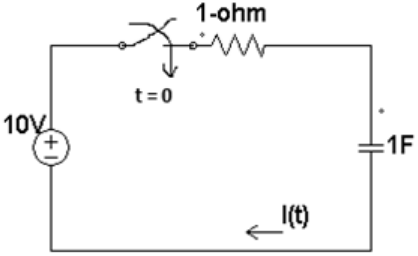
For the given circuit, determine I(t) in Laplace domain i.e. I(s).
The Laplace transform of \(\sin 3t\) is ______.
Find the Laplace transform of \(H(t) = e^{-t} + 2te^{-t}\).
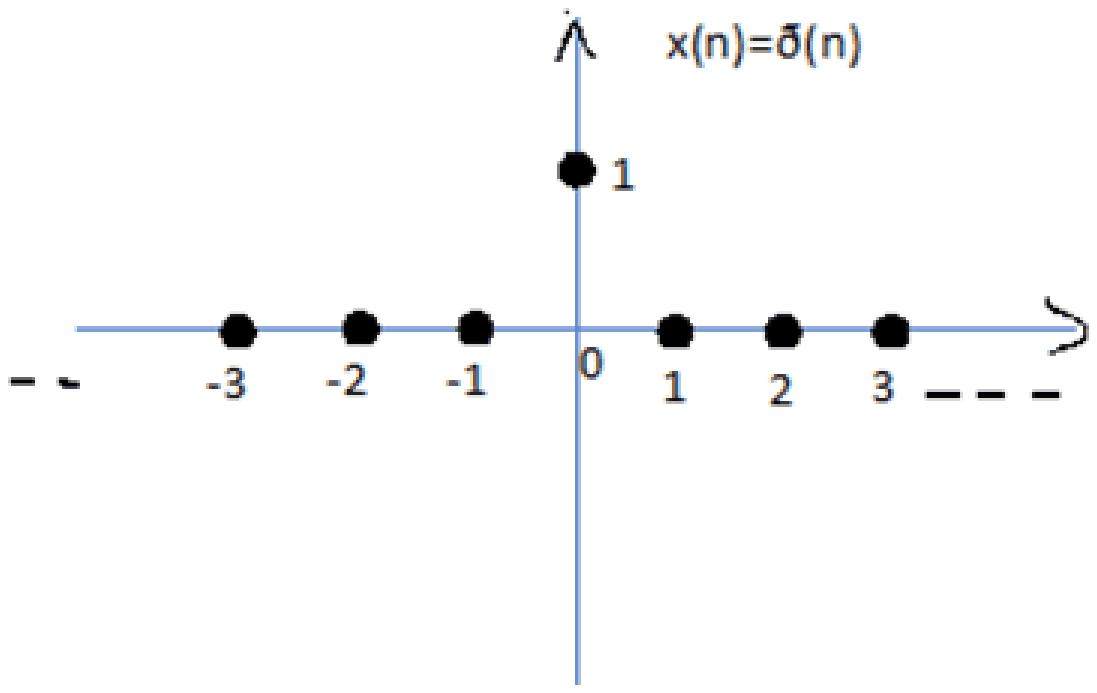
For the given signal, find its discrete time fourier transform.
Find the Fourier transform of a single-sided, exponential pulse \(x(n) = a^n u(n)\).
Determine whether the given signal is a power or energy signal? What is its power or energy level?
\(X(n) = (1/2)^n u(n)\)
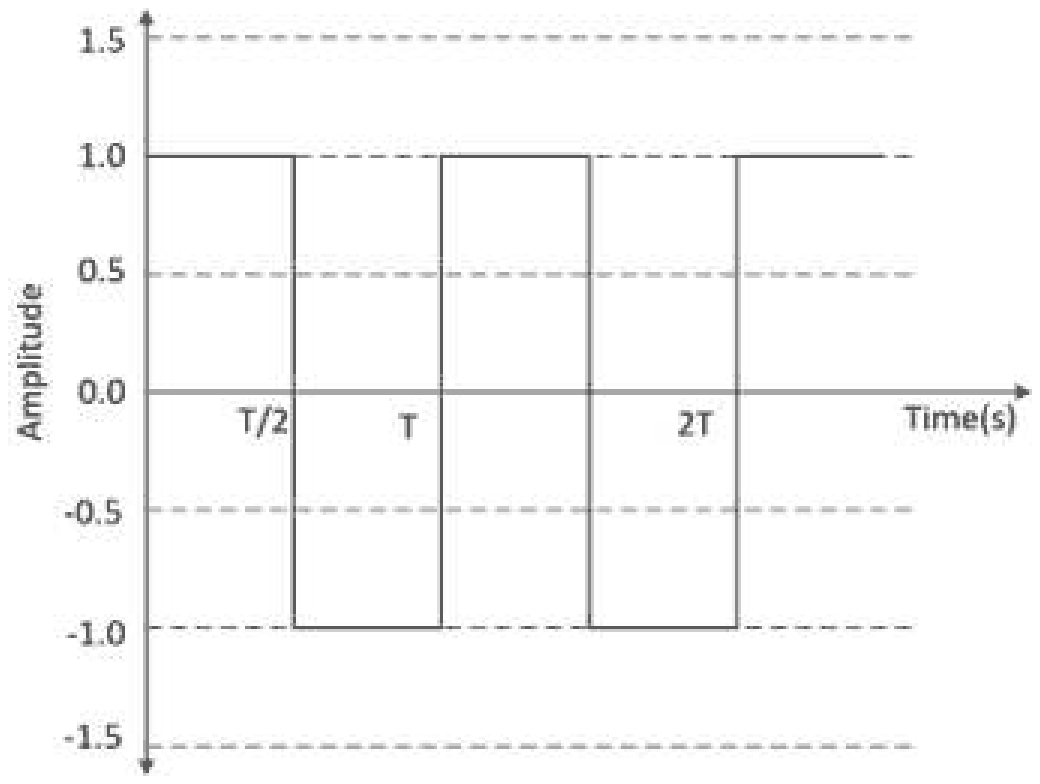
What is the average power of the given signal?
Is the given discrete time signal periodic? If periodic, what is the fundamental period?
\(\cos(3\pi n)\)
Identify whether the given statements are true or false.
1. Amplitude of antisymmetric signal is always zero at origin.
2. For the discrete time signal, the condition for periodicity is \(x(n) = x(n + N)\).
Discrete time sinusoidal signals are identical when their frequencies are separated by the integer multiple of ______.
Determine the fundamental period of the signal \(x(t) = \sin 50\pi t\).
Calculate the minimum sampling rate to avoid aliasing when a continuous-time signal is given by \(x(t) = 20\cos 500\pi t\).
Total number of questions : 20
Number of answered questions : 0
Number of unanswered questions : 20
Signals and Systems [ Question No: 1 To 20 ] :
Differentiation of unit impulse function results ............... function.
Your Answer : (Not Answered)
Correct Answer : D
Differentiating the unit impulse gives the unit doublet.
The singularity functions form a chain in which each is the derivative of the one before it: the unit ramp differentiates to the unit step, the unit step to the unit impulse \(\delta(t)\), and the unit impulse to the unit doublet \(\delta'(t)\), a pair of opposite impulses infinitely close together.
So the unit ramp and unit step come before the impulse in the chain, being its integrals rather than its derivative, and the impulse itself is what is being differentiated, not the result.
A function is said to be even if :
Your Answer : (Not Answered)
Correct Answer : B
A function is even if \(f(t) = f(-t)\).
An even function is symmetrical about the vertical axis: its value at \(-t\) equals its value at \(t\), as for \(\cos t\) or \(t^{2}\). The Fourier series of an even periodic function contains only cosine terms and a constant.
\(f(t) = -f(-t)\) defines an odd function, such as \(\sin t\). \(f(t) = -f(t - T_{0}/2)\) is the condition for half-wave symmetry, under which only odd harmonics appear. \(f(t) = -f(t)\) holds only for the zero function.
Laplace transform of \(\delta(t - T)\) is :
Your Answer : (Not Answered)
Correct Answer : C
The Laplace transform of \(\delta(t - T)\) is \(e^{-sT}\).
Using the sifting property of the impulse, for \(T \gt 0\):
\[ \int_{0}^{\infty} \delta(t - T) e^{-st}\, dt = e^{-sT} \]
This is also the time-shift theorem applied to \(\mathcal{L}\{\delta(t)\} = 1\): delaying by T multiplies the transform by \(e^{-sT}\).
'Constant' is the transform of the undelayed impulse \(\delta(t)\). \(1/e^{-sT} = e^{sT}\) would be an advance, not a delay, and \(s e^{-sT}\) is the transform of the derivative of a delayed impulse.
A signal \(x_{1}(t)\) is bandlimited to 2 kHz while \(x_{2}(t)\) is bandlimited to 3 kHz. The Nyquist sampling rate for signal \(x_{1}(t)\, x_{2}(t)\) shall be :
Your Answer : (Not Answered)
Correct Answer : A
The Nyquist rate is 10 kHz.
Multiplying two signals in time convolves their spectra in frequency, and the bandwidth of the product is the sum of the two bandwidths:
\[ \begin{aligned} B &= 2 + 3 = 5\ \text{kHz} \\ f_{s} &= 2B = 10\ \text{kHz} \end{aligned} \]
Using only the larger bandwidth, 3 kHz, gives 6 kHz, and only the smaller gives 4 kHz; both ignore the widening caused by multiplication. The value 12 kHz is the product 2 times 3 doubled, which has no basis. For a sum of the two signals, the Nyquist rate would indeed be 6 kHz.
The Fourier series of a real periodic function has only :
P : cosine terms if it is even
Q : sine terms if it is odd
R : cosine terms if it is odd
S : sine terms if it is even
Which of the above statements are correct ?
Your Answer : (Not Answered)
Correct Answer : B
The correct statements are P and Q.
An even function satisfies \(f(-t) = f(t)\). The sine terms are odd, so their coefficients \(b_{n}\) all vanish and the series contains only cosine terms (and possibly a constant). An odd function satisfies \(f(-t) = -f(t)\); now the cosine coefficients \(a_{n}\) and the constant vanish, and the series contains only sine terms.
Statements R and S reverse these rules: an odd function cannot be built from cosines, which are even, and an even function cannot be built from sines, which are odd. So any option including R or S is wrong.
What is the convolution of the given two continuous time functions, for all values of t?
\(X(t) = e^{-t^2}\)
\(H(t) = 3t^2\)
Your Answer : (Not Answered)
Correct Answer : B
The convolution is \(y(t) = \int_{-\infty}^{\infty} x(\tau)h(t - \tau)\,d\tau\) with \(h(t) = 3t^2\).
\[ \begin{aligned} y(t) = 3\int e^{-\tau^2}(t - \tau)^2\,d\tau \\ &= 3\int e^{-\tau^2}\left(t^2 - 2t\tau + \tau^2\right)d\tau \end{aligned} \]
Use \(\int e^{-\tau^2}d\tau = \sqrt{\pi}\), \(\int \tau e^{-\tau^2}d\tau = 0\) (odd function) and \(\int \tau^2 e^{-\tau^2}d\tau = \sqrt{\pi}/2\).
\[ \begin{aligned} y(t) \\ &= 3\left(\sqrt{\pi}\,t^2 + \frac{\sqrt{\pi}}{2}\right) \\ &= 5.317\,t^2 + 2.659 \end{aligned} \]
The term in \(t\) vanishes, which removes the options with a power of \(t\) other than \(t^2\) attached to the wrong constants. The answer is \(5.31t^2 + 2.659\), option B.
What is the Z transform of given discrete time signal? Its ROC = \(n\,u(n)\).
Your Answer : (Not Answered)
Correct Answer : A
The Z transform of the unit ramp \(n\,u(n)\) is found from the geometric series by differentiating. Since \(\sum_{n=0}^{\infty} z^{-n} = \dfrac{z}{z - 1}\) for \(|z| \gt 1\), multiplying by \(n\) in the time domain corresponds to \(-z\,\dfrac{d}{dz}\) in the z domain.
\[ \begin{aligned} Z\{n\,u(n)\} \\ &= -z\frac{d}{dz}\left(\frac{z}{z-1}\right) \\ &= \frac{z}{(z-1)^2},\quad |z| \gt 1 \end{aligned} \]
The region of convergence is outside the unit circle because the signal is right sided. The options with \(|z| \lt 1\) are for left sided signals, and \(z/(z-1)\) is the transform of the unit step. The answer is option A.
Find the Z-transform of following function:
\(x(n) = a^n u(n) + b^n u(-n - 1)\)
Your Answer : (Not Answered)
Correct Answer : D
The first term is a right sided sequence and the second is a left sided one, and each has a standard transform.
\[ a^n u(n) \leftrightarrow \frac{z}{z - a},\ |z| \gt |a| \]
\[ b^n u(-n-1) \leftrightarrow -\frac{z}{z - b},\ |z| \lt |b| \]
Adding them gives
\[ X(z) = \frac{z}{z - a} - \frac{z}{z - b} \]
The minus sign comes from the left sided term, so the options with a plus are wrong, and the options without \(z\) in the numerator are the transforms of delayed sequences. The answer is option D.
For the given circuit, determine I(t) in Laplace domain i.e. I(s).
Your Answer : (Not Answered)
Correct Answer : A
When the switch closes at \(t = 0\), a 10 V step is applied to the series combination of the 1 ohm resistor and the 1 F capacitor, with no initial charge. In the Laplace domain the source is \(10/s\) and the impedance is \(R + 1/(sC) = 1 + 1/s\).
\[ \begin{aligned} I(s) = \frac{10/s}{1 + 1/s} \\ &= \frac{10/s}{(s+1)/s} = \frac{10}{s + 1} \end{aligned} \]
In the time domain this is \(i(t) = 10e^{-t}\), the current of the charging capacitor, which starts at 10 A and falls to zero. The option \(10/s\) would be the current in a purely inductive path, and \(10/(s-1)\) would grow without limit. The answer is option A.
The Laplace transform of \(\sin 3t\) is ______.
Your Answer : (Not Answered)
Correct Answer : A
The Laplace transform of \(\sin at\) is \(\dfrac{a}{s^2 + a^2}\). With \(a = 3\):
\[ \mathcal{L}\{\sin 3t\} = \frac{3}{s^2 + 9} \]
The option with \(s^2 + 3\) uses \(a\) where \(a^2\) is needed, the one with numerator 9 is \(a^2\) in place of \(a\), and the last option would be \(\dfrac{3}{3(s^2 + 3)}\), which does not equal the transform. The answer is option A.
Find the Laplace transform of \(H(t) = e^{-t} + 2te^{-t}\).
Your Answer : (Not Answered)
Correct Answer : C
Use the standard transforms \(\mathcal{L}\{e^{-t}\} = \dfrac{1}{s + 1}\) and \(\mathcal{L}\{te^{-t}\} = \dfrac{1}{(s + 1)^2}\).
\[ \begin{aligned} H(s) = \frac{1}{s + 1} + \frac{2}{(s + 1)^2} \\ &= \frac{(s + 1) + 2}{(s + 1)^2} \\ &= \frac{s + 3}{s^2 + 2s + 1} \end{aligned} \]
That is the third option. The denominator \(1 + 2s + s^2\) is \((s + 1)^2\), so the options with \(2 + s + s^2\) are wrong, and the last option, with numerator 3, lacks the \(s\) from the first term. The answer is option C.
For the given signal, find its discrete time fourier transform.
Your Answer : (Not Answered)
Correct Answer : B
The signal is the unit impulse \(x(n) = \delta(n)\): one at \(n = 0\) and zero everywhere else. The discrete time Fourier transform is
\[ \begin{aligned} X(e^{j\omega}) \\ &= \sum_{n=-\infty}^{\infty} x(n)e^{-j\omega n} \\ &= \delta(0)\,e^{0} = 1 \end{aligned} \]
Only the term \(n = 0\) survives, so the transform is 1 for all frequencies: the impulse contains all frequencies equally. The values 0, 2 and 3 would belong to other signals (for example, a zero signal or multiples of the impulse). The answer is 1, option B.
Find the Fourier transform of a single-sided, exponential pulse \(x(n) = a^n u(n)\).
Your Answer : (Not Answered)
Correct Answer : A
The discrete time Fourier transform is the sum \(X(e^{j\omega}) = \sum x(n) e^{-j\omega n}\). For \(x(n) = a^n u(n)\) the sum runs from \(n = 0\) to infinity and is a geometric series.
\[ \begin{aligned} X(e^{j\omega}) \\ &= \sum_{n=0}^{\infty} (a e^{-j\omega})^n \\ &= \frac{1}{1 - ae^{-j\omega}},\quad |a| \lt 1 \end{aligned} \]
The series converges only when \(|a| \lt 1\). The options with a plus sign in the denominator would be the transform of \((-a)^n u(n)\), and those with \(e^{+j\omega}\) have the wrong sign in the exponent of the transform kernel. The answer is option A.
Determine whether the given signal is a power or energy signal? What is its power or energy level?
\(X(n) = (1/2)^n u(n)\)
Your Answer : (Not Answered)
Correct Answer : C
The signal \(x(n) = (1/2)^n u(n)\) decays to zero, so its total energy is finite and its average power is zero. It is an energy signal.
\[ \begin{aligned} E \\ &= \sum_{n=0}^{\infty} \left|\left(\tfrac12\right)^n\right|^2 \\ &= \sum_{n=0}^{\infty} \left(\tfrac14\right)^n \\ &= \frac{1}{1 - 1/4} = \frac{4}{3} \end{aligned} \]
The sum is a geometric series with ratio 1/4. The options calling the signal a power signal are wrong, since a power signal has finite nonzero power and infinite energy. The value 3/4 is the reciprocal of the energy. The answer is energy signal, 4/3, option C.
What is the average power of the given signal?
Your Answer : (Not Answered)
Correct Answer : B
The signal is a square wave that takes only the values +1 and −1 (it is never zero). The average power of a signal is the mean of its squared value over a period.
\[ \begin{aligned} P = \frac{1}{T}\int_0^T x^2(t)\,dt \\ &= \frac{1}{T}\int_0^T (\pm 1)^2\,dt = 1 \end{aligned} \]
Because \((+1)^2 = (-1)^2 = 1\) at every instant, the mean square is 1, whichever the proportion of time spent at each level. The mean value (the dc component) may be zero, but the power is not: a power of 0 would need a zero signal. Powers of 2 and 4 would need amplitudes of about 1.41 and 2. The answer is 1, option B.
Is the given discrete time signal periodic? If periodic, what is the fundamental period?
\(\cos(3\pi n)\)
Your Answer : (Not Answered)
Correct Answer : A
A discrete time sinusoid \(\cos(\omega_0 n)\) is periodic only if \(\omega_0 / 2\pi\) is a rational number, and the fundamental period is the smallest integer \(N\) with \(\omega_0 N = 2\pi k\) for some integer \(k\).
\[ \frac{\omega_0}{2\pi} = \frac{3\pi}{2\pi} = \frac{3}{2} \]
This is a ratio of integers, so the signal is periodic, and the smallest \(N\) is 2, since \(3\pi \times 2 = 6\pi = 2\pi \times 3\). The signal is \(\cos(3\pi n) = (-1)^n\), which repeats every 2 samples. The answer is periodic with fundamental period 2, option A.
Identify whether the given statements are true or false.
1. Amplitude of antisymmetric signal is always zero at origin.
2. For the discrete time signal, the condition for periodicity is \(x(n) = x(n + N)\).
Your Answer : (Not Answered)
Correct Answer : A
Both statements are true. An antisymmetric (odd) signal satisfies \(x(-t) = -x(t)\); putting \(t = 0\) gives \(x(0) = -x(0)\), so \(x(0) = 0\), which means its amplitude is zero at the origin. For a discrete time signal, periodicity means that there is a smallest positive integer \(N\) with \(x(n) = x(n + N)\) for all \(n\), which is the usual definition.
So the pair true and true is correct, and the options calling either statement false are wrong. The answer is option A.
Discrete time sinusoidal signals are identical when their frequencies are separated by the integer multiple of ______.
Your Answer : (Not Answered)
Correct Answer : A
A discrete time sinusoid \(x(n) = \cos(\omega n)\) satisfies
\[ \begin{aligned} \cos((\omega + 2\pi k)n) \\ &= \cos(\omega n + 2\pi k n) = \cos(\omega n) \end{aligned} \]
because \(kn\) is an integer. So two sinusoids whose frequencies differ by an integer multiple of \(2\pi\) are the same signal, which is why the frequency of a discrete time signal is only meaningful in an interval of length \(2\pi\). A difference of \(\pi\), \(\pi/2\) or \(\pi/3\) gives different sequences (for example, a difference of \(\pi\) changes the sign of every other sample). The answer is \(2\pi\), option A.
Determine the fundamental period of the signal \(x(t) = \sin 50\pi t\).
Your Answer : (Not Answered)
Correct Answer : B
For \(x(t) = \sin \omega_0 t\) the fundamental period is \(T = 2\pi / \omega_0\). Here \(\omega_0 = 50\pi\) rad/s.
\[ T = \frac{2\pi}{50\pi} = \frac{1}{25} = 0.04\ \text{s} \]
The frequency is 25 Hz. The value 0.02 s would be the period of a 50 Hz signal, which is what you get if you take \(\omega_0 = 100\pi\), and 0.06 s and 0.08 s have no basis. The answer is 0.04 sec, option B.
Calculate the minimum sampling rate to avoid aliasing when a continuous-time signal is given by \(x(t) = 20\cos 500\pi t\).
Your Answer : (Not Answered)
Correct Answer : C
Write the signal as \(x(t) = 20\cos(2\pi f t)\) with \(2\pi f = 500\pi\), so the frequency is
\[ f = 250\ \text{Hz} \]
To avoid aliasing the sampling rate must be at least twice the highest frequency (the Nyquist rate).
\[ f_s = 2f = 500\ \text{Hz} \]
The value 250 Hz is the signal frequency itself, which is only the Nyquist frequency, and 125 Hz and 375 Hz are not related to it. The answer is 500 Hz, option C.
Marks
Total number of questions : 20
Number of answered questions : 0
Number of unanswered questions : 20