Machine-translated by Google. Questions are authored in English.
Top

Paper Folding and Cutting Questions and Answers

1.

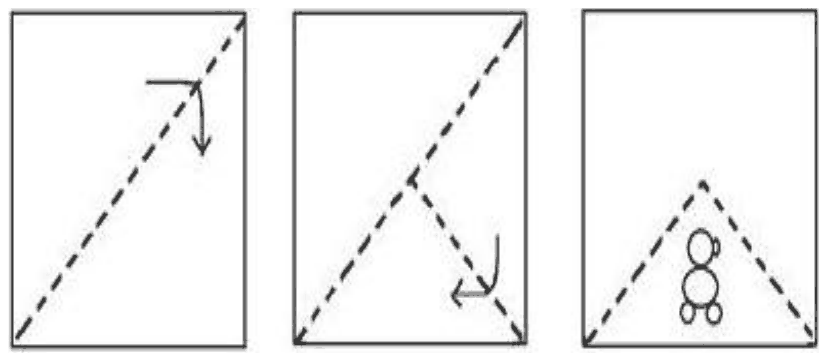
A piece of paper is folded and cut as shown in below question figure. From the given answer figures, choose the option how it will appear when opened?

Three steps: a rectangle with a dotted diagonal fold line, the folded triangle with a second fold, and the folded piece with a small oval holding two circles cut near its edge

Exam Year(s)

DSSSB - 2023,

Answer: D

The official key is option (D). What was confirmed: the sheet is folded twice and the cut, a half-oval holding two small circles, is made at the folded edge, so unfolding joins the cut to its mirror copy into whole ovals. Option (A) shows three ovals and option (B) four, and neither fits the cut made in the figure, while (C) and (D) each show two ovals standing apart at opposite corners. What was not confirmed independently is the exact position and orientation that separates (C) from (D); those follow the printed key, and nothing contradicts it.

Please log in or register to report this question.

2.

Find out from amongst the four alternatives as to how the pattern would appear when the transparent sheet is folded at the dotted line.

A sheet split by a vertical line and a dotted horizontal fold line, with a pentagon holding a downward arrow and a triangle holding an upward arrow below the fold line

Exam Year(s)

DSSSB - 2023,

Answer: A

Option (A) is the answer. The transparent sheet is folded along the horizontal dotted line, so the lower half, holding the pentagon and the triangle, is laid over the upper half. Folding turns each figure over top to bottom. The pentagon with the downward arrow therefore appears point-down with an upward arrow, and the triangle that points up with an upward arrow appears point-down with a downward arrow, each staying in its own column, pentagon on the left and triangle on the right. Option (A) shows exactly this. Option (B) keeps both arrows pointing down and (C) keeps the arrow of the triangle pointing up, while (D) leaves the triangle pointing up and the pentagon upright.

Please log in or register to report this question.

3.

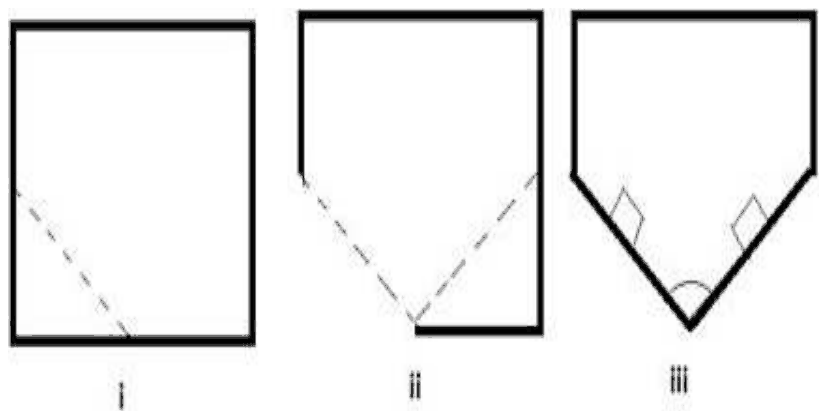
The sequence of folding a piece of paper (figures i and ii) and the manner in which the folded paper has been cut (figure iii) is shown in the following figures. Select a figure from among the given options that would most closely resemble the unfolded form of figure (iii).

Paper folded twice along dashed lines and then cut, figures i, ii and iii

Exam Year(s)

DSSSB - 2023,

Answer: B

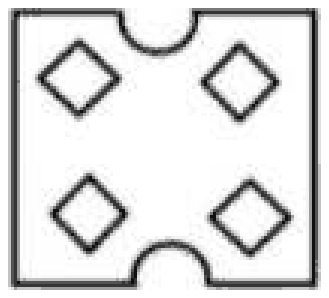
The unfolded paper looks like option 2.

Unfold the paper step by step, reflecting each cut across the fold line it was made over. The cuts in the last figure are on the folded corner of the paper, so after unfolding the cut-outs appear only in the lower part: two diamond-shaped holes and a semicircular notch on the bottom edge, which is what option 2 shows.

Options 1 and 3 show four diamond cuts and option 4 shows an extra notch at the top, none of which can come from the cut in the folded corner.

A useful check is the number of cut-outs. Each cut on a folded sheet is repeated on every layer, and the layers at the cut here make two diamonds and a notch, not four diamonds. The notch lies on the lower edge, because that is the edge where the folded corner sat, and this matches option 2 only.

Please log in or register to report this question.

4.

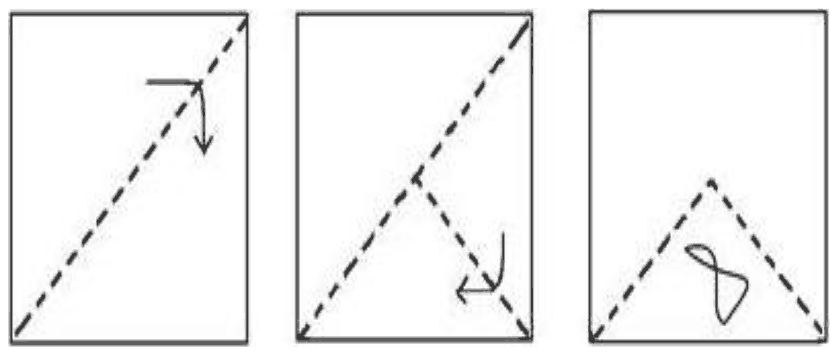
The sequence of folding a piece of paper and the manner in which the folded paper has been cut is shown in the following figures. How would this paper look when unfolded?

Paper folded twice along dashed lines and then cut with a bow-tie shaped hole

Exam Year(s)

DSSSB - 2023,

Answer: C

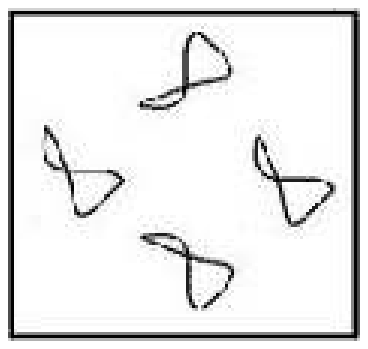
The unfolded paper looks like option 3.

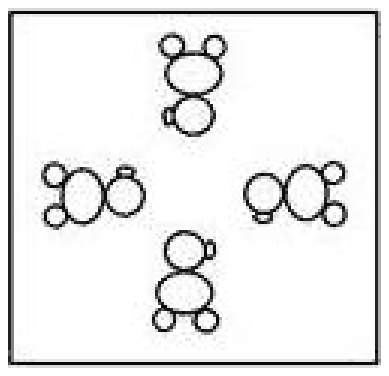
The paper is folded along the diagonal and then again, and a bow-tie shaped hole is cut near the folded point. Unfolding reflects that cut across both fold lines, so four copies appear arranged round the centre of the sheet, each a mirror image of its neighbours. Option 3 shows the four copies turned the way that two reflections produce.

The other options show copies that are turned the wrong way, so they cannot be produced by reflecting the cut across the folds.

To check, imagine opening the second fold first. The cut then appears twice, once on each side of the first fold line, as mirror images. Opening the first fold repeats the pair across the diagonal, giving four copies. The copies in option 3 are mirror images of each other in just that way.

Please log in or register to report this question.

5.

The sequence of folding a piece of paper and the manner in which the folded paper has been cut is shown in the following figures. How would this paper look when unfolded?

Paper folded twice along dashed lines and then cut with a small figure shaped hole

Exam Year(s)

DSSSB - 2023,

Answer: C

The unfolded paper looks like option 3.

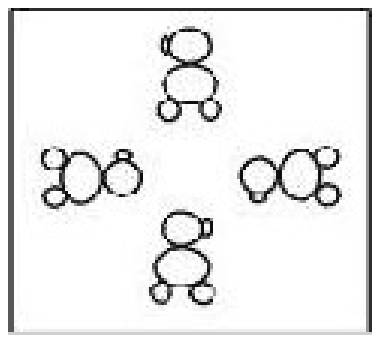
The folds and cut are the same as in the previous question with a small figure in place of the bow-tie. Unfolding reflects the cut across each fold line, so four copies appear round the centre of the sheet, the upper and lower ones facing each other and the left and right ones facing each other. Option 3 shows the four copies placed and turned in that way.

Options 1, 2 and 4 turn one or more of the copies the wrong way, which a reflection cannot do.

The same method works here as in the previous question. Open the last fold to get two mirror images of the cut, and then open the first fold to get four. The copies lie near the centre because the cut was made at the folded point. Only option 3 shows the four copies mirrored correctly.

Please log in or register to report this question.

Loading…