Machine-translated by Google. Questions are authored in English.
Top

Carboxylic Acids and Derivatives Questions and Answers

1.

The major product formed in the following reaction is
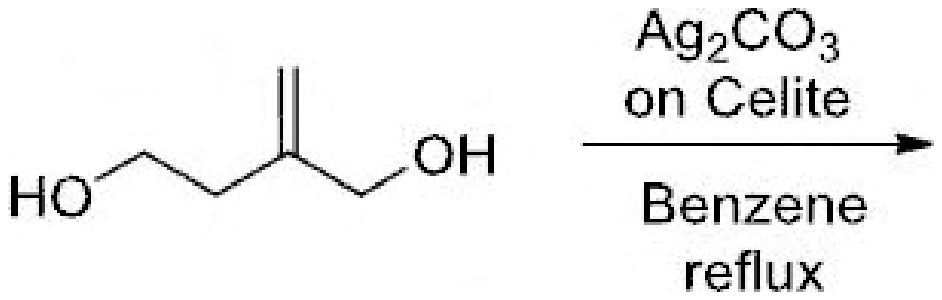
2-Methylenebutane-1,4-diol heated with Ag2CO3 on Celite in refluxing benzene

Exam Year(s)

GATE Chemistry - 2017,

Answer: C

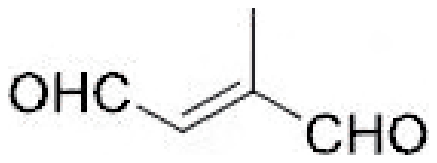
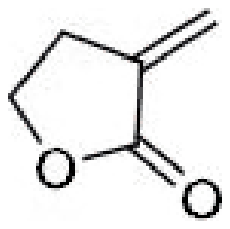
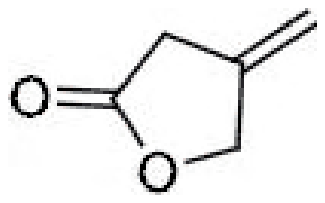
The major product is (C), α-methylene-γ-butyrolactone.

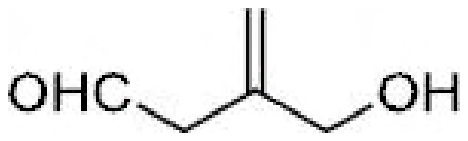
Silver carbonate on Celite (Fetizon's reagent) is a mild oxidant that converts 1,4-diols to γ-lactones. One alcohol is oxidised to the aldehyde, which cyclises with the other OH to a five-membered lactol, and the lactol is oxidised further to the lactone. The reagent oxidises the more reactive allylic CH2OH first, so the carbonyl carbon of the lactone is the one next to the C=CH2 group. That puts the exocyclic methylene α to the carbonyl, as in (C).

(A), the β-methylene lactone, would come from oxidising the other, non-allylic alcohol first. (B) and (D) stop at aldehyde stages; under these conditions the 1,4-hydroxy aldehyde closes to the lactol and goes on to the lactone.

Please log in or register to report this question.

2.

The least acidic among the following compounds

M methyl propiolate, MeO2C-C triple bond C-H; N butanoic acid; O 3-methoxyphenol; P benzenesulfonic acid

is:

Exam Year(s)

GATE Chemistry - 2021,

Answer: A

The least acidic compound is M, methyl propiolate.

Its only acidic hydrogen is the terminal alkyne C-H. Even with the ester pulling electron density, removing it leaves the negative charge on carbon, so it is a far weaker acid than any of the O-H acids here.

The others are all O-H acids whose conjugate bases put the charge on oxygen: 3-methoxyphenol (O) has pKa about 10, butanoic acid (N) about 4.8, and benzenesulfonic acid (P), whose anion is spread over three oxygens, is a strong acid with a negative pKa. So the acid strength order is P \(\gt\) N \(\gt\) O \(\gt\) M.

Please log in or register to report this question.

Answer: C

Aspirin ('Asprin') is acetyl salicylic acid.

It is made by acetylating salicylic acid (2-hydroxybenzoic acid) with acetic anhydride, which turns the phenolic –OH into an acetate ester. It is an analgesic, antipyretic and anti-inflammatory drug.

Methyl salicylate is oil of wintergreen, used in liniments. Sodium benzoate is a food preservative. 2-Methyl salicylic acid and ethyl salicylate are different compounds.

Please log in or register to report this question.

Answer: A

The weakest acid is FCH2COOH.

Electron-withdrawing groups strengthen a carboxylic acid by stabilising the carboxylate anion. Fluoroacetic acid (pKa about 2.6) has only one electron-withdrawing substituent.

The others are stronger: cyanoacetic (about 2.5) and nitroacetic (about 1.7) acids carry groups that withdraw by both inductive and resonance effects, dichloroacetic acid (about 1.3) has two chlorines, and trichloroacetic acid (about 0.7) has three.

Please log in or register to report this question.

5.

Which of the following carboxylic acid is used in rubber, textile, dyeing, leather and electroplating industries?

Exam Year(s)

KEAM - 2025,

Answer: A

The acid is methanoic acid (formic acid).

Methanoic acid is used in the rubber industry (to coagulate latex), and in the textile, dyeing, leather and electroplating industries; this list of uses is given in the NCERT chemistry text.

Ethanoic acid is used mainly as vinegar and as a solvent and chemical feedstock. Benzoic acid and its salts are food preservatives, salicylic acid is used to make aspirin, and butanoic acid has no such industrial role.

Please log in or register to report this question.

6.

Which of the following carboxylic acid is used in the manufacture of nylon-6,6?

Exam Year(s)

KEAM - 2025,

Answer: E

The acid used is Hexanedioic acid (adipic acid).

Nylon-6,6 is a condensation polymer of hexamethylenediamine, H2N(CH2)6NH2, and adipic acid, HOOC(CH2)4COOH. Each monomer has six carbon atoms, which is what the two sixes in the name record. The amide links form with loss of water.

The other dicarboxylic acids have fewer carbon atoms: ethanedioic acid is oxalic acid (C2), propanedioic acid is malonic acid (C3), butanedioic acid is succinic acid (C4) and pentanedioic acid is glutaric acid (C5). None gives a 6,6 polyamide.

Please log in or register to report this question.

7.

Which of the following acid is highly acidic?

Exam Year(s)

KEAM - 2025,

Answer: C

The most acidic is dichloroacetic acid.

Electron-withdrawing halogen atoms near the carboxyl group stabilise the carboxylate anion and increase acidity, and two halogens do more than one. Approximate pKa values:

  • dichloroacetic acid: 1.3
  • fluoroacetic acid: 2.6
  • formic acid: 3.8
  • benzoic acid: 4.2
  • acetic acid: 4.8

Although fluorine is more electronegative than chlorine, two chlorines outweigh one fluorine, so dichloroacetic acid has the lowest pKa.

Please log in or register to report this question.

8.

Which one of the following compounds undergoes HVZ reaction?

Exam Year(s)

KEAM - 2025,

Answer: B

The compound that undergoes the HVZ reaction is \(\mathrm{CH_{3}CH_{2}COOH}\).

The Hell-Volhard-Zelinsky reaction halogenates a carboxylic acid at the alpha carbon, using Cl2 or Br2 with red phosphorus. It needs a hydrogen on the alpha carbon. Propanoic acid has two, and gives 2-halopropanoic acid.

Benzoic acid and formic acid have no alpha carbon bearing hydrogen, and trichloroacetic acid, Cl3C-COOH, has its alpha hydrogens already replaced. Propanal is an aldehyde, not a carboxylic acid, so the reaction does not apply.

Please log in or register to report this question.

9.

Which of the following sodium salt of carboxylic acid is used for the preparation of n-hexane by Kolbe's electrolytic method?

Exam Year(s)

KEAM - 2025,

Answer: E

The salt is \(CH_{3}CH_{2}CH_{2}COONa\) (sodium butanoate).

In Kolbe's electrolysis, two alkyl radicals from the carboxylate (after loss of \(CO_{2}\)) join, so the alkane has twice the carbon chain of the alkyl group. n-Hexane (\(C_{6}H_{14}\)) needs two propyl groups, from butanoate:

\[ \begin{aligned} &2CH_{3}CH_{2}CH_{2}COO^{-} \\ &\rightarrow C_{6}H_{14} + 2CO_{2} + 2e^{-} \end{aligned} \]

Sodium acetate gives ethane and sodium propanoate gives butane. Sodium formate gives hydrogen, not an alkane. The five-carbon salt in option D (as printed) would give octane.

Please log in or register to report this question.

10.

The reagent used for the conversion of carboxylic acids to primary alcohols is

Exam Year(s)

KEAM - 2025,

Answer: B

The reagent is \(LiAlH_{4} / H_{2}O\).

Lithium aluminium hydride is a strong enough reducing agent to reduce a carboxylic acid all the way to the primary alcohol, \(RCOOH \rightarrow RCH_{2}OH\), after hydrolysis of the aluminium alkoxide.

PCC is an oxidising agent (alcohols to aldehydes). \(NaNO_{2}/HCl\) diazotises amines. Catalytic hydrogenation over Pd or Pt reduces C=C bonds but does not reduce the carboxyl group under ordinary conditions.

Please log in or register to report this question.

Loading…

Other Subjects

Tags: Carboxylic Acids and Derivatives Questions and Answers || Carboxylic Acids and Derivatives MCQ Questions and Answers || Carboxylic Acids and Derivatives GK Questions and Answers || Carboxylic Acids and Derivatives GK MCQ Questions || Carboxylic Acids and Derivatives Multiple Choice Questions and Answers || Carboxylic Acids and Derivatives GK || GK on Carboxylic Acids and Derivatives || Organic Chemistry Questions and Answers || Organic Chemistry MCQ Questions and Answers || Organic Chemistry GK Questions and Answers || GK on Organic Chemistry