Machine-translated by Google. Questions are authored in English.
Top

Aromatic Compounds and Reactions Questions and Answers

11.

The major product formed in the following reaction is
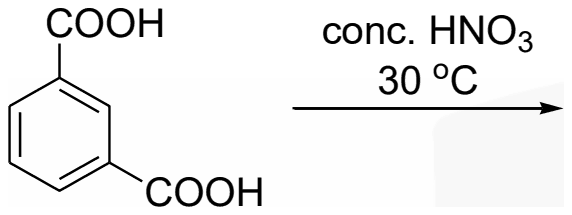
Benzene-1,3-dicarboxylic acid treated with conc. HNO3 at 30 degrees C

Exam Year(s)

GATE Life Sciences - 2026,

Answer: C

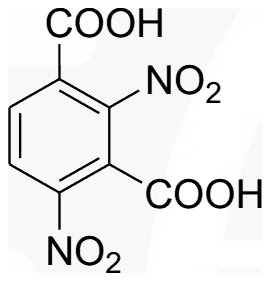
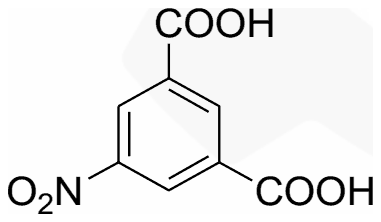
The major product is 5-nitrobenzene-1,3-dicarboxylic acid (5-nitroisophthalic acid), structure (C).

Both carboxyl groups withdraw electrons and deactivate the ring, and each directs an incoming electrophile to the positions meta to itself. In isophthalic acid the only position meta to both carboxyl groups is C5, so the nitronium ion attacks there.

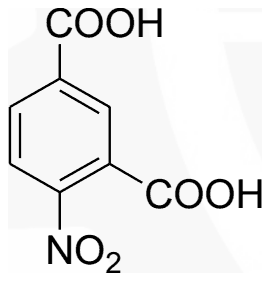
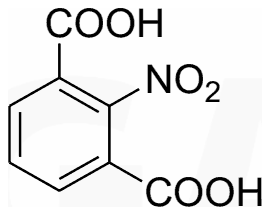
Structure (D) puts the nitro group at C2, ortho to both carboxyl groups, which is electronically disfavoured and sterically crowded. Structure (B) puts it at C4, ortho to one carboxyl and para to the other. Structure (A) is a dinitro product; a strongly deactivated ring does not take a second nitro group under these mild conditions (30 °C), and its positions are wrong as well.

Please log in or register to report this question.

12.

The major product formed in the following reaction is
Reaction scheme: an ortho-chlorophenyl group on a three-carbon chain ending in CN, treated with NaNH2 in liquid NH3

Exam Year(s)

IIT JAM - 2018,

Answer: C

The product is (C), indane-1-carbonitrile.

Sodium amide in liquid ammonia removes HCl from the aryl chloride through a benzyne intermediate. The strong base also removes a proton from the carbon next to the nitrile (the acidic CH2 that bears CN). That carbanion sits three carbons from the ring and attacks the benzyne carbon next to the chain, closing a five-membered ring. Protonation then gives the bicyclic nitrile with CN on the carbon of the new ring.

(A) and (B) are the products of amide ion adding to the benzyne, which loses to the faster intramolecular carbanion attack. (D) is a ketone, and no step in the sequence converts a nitrile into a ketone.

Please log in or register to report this question.

13.

The major product formed in the following reaction is
Reaction scheme: potassium pyrrolide treated with CHCl3 and EtONa

Exam Year(s)

IIT JAM - 2018,

Answer: C

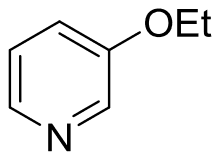
The product is (C), 3-chloropyridine.

Potassium pyrrolide with chloroform and a base is the Ciamician-Dennstedt ring expansion. The base generates dichlorocarbene from CHCl3; the electron-rich pyrrole carbon adds to it, giving a dichlorocyclopropane that opens by loss of chloride and expands the five-membered ring to a six-membered one. The new ring carbon carries one chlorine and sits at the 3-position of the pyridine.

The 2-substituted pyridines in (A) and (B) would need the carbene carbon to end up next to nitrogen, which it does not. The ethoxy compounds (B) and (D) would need ethoxide to substitute the chlorine, which does not happen under these conditions.

Please log in or register to report this question.

14.

The sequence of three steps involved in the following conversion is

(Conversion: benzene into 1-isopropyl-3-propylbenzene, a benzene ring carrying an isopropyl group and an n-propyl group meta to each other.)

Exam Year(s)

IIT JAM - 2018,

Answer: B

The sequence is (i) Friedel-Crafts acylation; (ii) Friedel-Crafts alkylation; (iii) Reduction.

The two groups in the product are meta to each other, so the first group introduced must direct the second to the meta position. An acyl group does that; an alkyl group directs ortho/para.

  1. Friedel-Crafts acylation with propanoyl chloride gives propiophenone; the acyl group also avoids the rearrangement that direct n-propylation would suffer.
  2. Friedel-Crafts isopropylation then places the isopropyl group meta to the acyl group.
  3. Clemmensen or Wolff-Kishner reduction turns C=O into CH2, giving the n-propyl group.

The key rests on this directing-group logic; in the laboratory, alkylating an acyl-deactivated ring is sluggish. Reducing before the second step (option C), or starting with alkylation (A, D), gives an ortho/para product.

Please log in or register to report this question.

15.

The major product W formed in the following reaction is
Anisole treated with Na in liquid NH3 and with Et2O and EtOD gives product W

Exam Year(s)

IIT JAM - 2026,

Answer: B

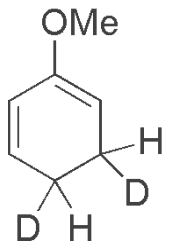
The major product W is the 1-methoxycyclohexa-1,4-diene carrying a hydrogen and a deuterium on each of its two CH2 carbons, which is option (B).

Na in liquid NH3 with an alcohol is the Birch reduction. The methoxy group is electron donating, so the radical anion is protonated at the ortho and meta positions, leaving the methoxy carbon on a double bond in the product. EtOD is the proton source, so the two new hydrogens are deuterium. Two carbons become sp3: the one ortho to OMe and the one meta to it (para to the first), and each ends up as CHD, because one H was already present and one D is added.

Option (A) puts D on the methoxy carbon and reduces the para positions, which is the pattern for an electron-withdrawing substituent. Options (C) and (D) put the new sp3 carbons on the wrong positions, so they are not the 1,4-diene.

Please log in or register to report this question.

16.

The major products X and Y formed in following reaction sequence are

Pyrrole treated with CHCl3 and KOH gives X, which with NaNH2 gives Y

Exam Year(s)

IIT JAM - 2026,

Answer: C

X is 3-chloropyridine and Y is 4-aminopyridine, which is option (C).

Pyrrole with CHCl3 and KOH reacts with dichlorocarbene (the Ciamician-Dennstedt ring expansion). The carbene adds across the 2,3 C=C bond to give a dichlorocyclopropane that opens by loss of chloride and expands the ring, so the product is 3-chloropyridine, not 2-chloropyridine. With NaNH2 the aryl chloride loses HCl by elimination to give 3,4-pyridyne, and amide adds to the aryne mainly at C-4, giving 4-aminopyridine (the 3-amino isomer is the minor product).

Options (A) and (D) have 2-chloropyridine, which carbene ring expansion does not give. Option (B) has the right X but a 3-amino product, which is the minor isomer from the pyridyne.

Please log in or register to report this question.
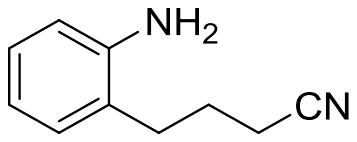
17.

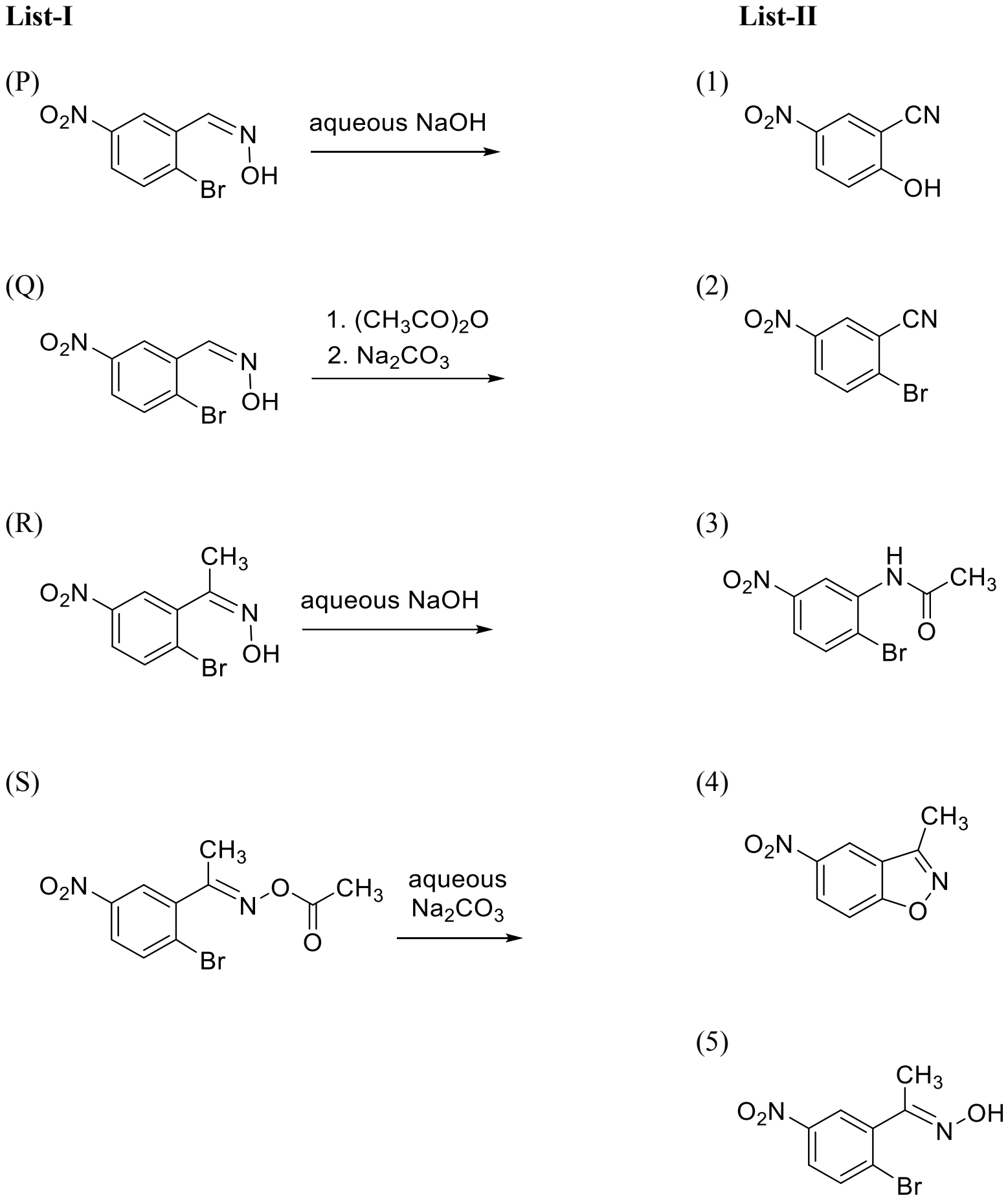
Match the major products obtained in the reactions given in List-I with the corresponding structures in List-II and choose the correct option.

List-I: four reactions of substituted 2-bromo-5-nitrophenyl oximes P, Q, R, S with aqueous NaOH, acetic anhydride then Na2CO3, aqueous NaOH, and aqueous Na2CO3; List-II: five products numbered 1 to 5 including a nitrile phenol, a bromo nitrile, an acetanilide, a benzisoxazole and an oxime

Exam Year(s)

JEE Advanced - 2026,

Answer: B

The correct match is P → 1, Q → 2, R → 4, S → 5.

(P) The aldoxime has its OH on the side nearest the ring bromine. Aqueous NaOH forms the oximate, which displaces the activated bromide (it is ortho to the oxime carbon and para to the nitro group) to give a 1,2-benzisoxazole with no substituent at C-3. With a hydrogen at C-3, base opens it (Kemp elimination) to the 2-cyanophenol: (1).

(Q) Acetic anhydride acetylates the oxime OH, and Na2CO3 then eliminates acetic acid from the aldoxime acetate to give the nitrile with the bromine unchanged: (2).

(R) The ketoxime closes in the same way, but the methyl group at C-3 prevents ring opening, so the benzisoxazole stays: (4).

(S) This oxime acetate has the O-acetyl group on the side away from the ring, so it cannot cyclize. Aqueous carbonate simply hydrolyses the acetate back to the oxime: (5). The anilide (3) would need an acid-catalysed Beckmann rearrangement.

Please log in or register to report this question.

18.

When toluene is treated with Cl2 in the presence of Fe in dark, the product formed is

Exam Year(s)

KEAM - 2025,

Answer: B

The product is a mixture of o- and p-chlorotoluene.

With a Lewis acid catalyst (Fe, which forms FeCl3) and in the dark, chlorine substitutes on the ring by electrophilic aromatic substitution. The methyl group is ortho-para directing, so 2-chlorotoluene and 4-chlorotoluene are formed.

Benzyl chloride and benzal dichloride are side-chain products, formed by free radical chlorination in sunlight or on heating without a catalyst. Di- and trichlorotoluenes need excess chlorine, not the simple monochlorination asked about.

Please log in or register to report this question.

19.

When aryl halide is treated with Na in dry ether, biphenyl is formed. This reaction is called

Exam Year(s)

KEAM - 2025,

Answer: A

This is the Fittig reaction.

Two molecules of an aryl halide coupled by sodium in dry ether give a biaryl: 2C6H5Cl + 2Na → C6H5–C6H5 + 2NaCl.

The Wurtz-Fittig reaction couples an aryl halide with an alkyl halide to give an alkylbenzene. The Swarts reaction makes alkyl fluorides, Williamson's synthesis makes ethers, and Kolbe's reaction makes salicylic acid from sodium phenoxide and CO2.

Please log in or register to report this question.
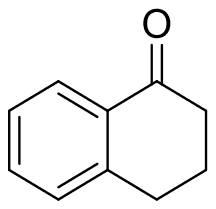
20.

Which one of the following is an example of heterocyclic aromatic compound?

Exam Year(s)

KEAM - 2025,

Answer: E

The heterocyclic aromatic compound is Furan.

A heterocyclic compound has at least one atom other than carbon in its ring. Furan is a five-membered ring of four carbon atoms and one oxygen atom. It is aromatic: the four carbon p electrons and one lone pair from oxygen give a planar ring of six delocalised pi electrons, satisfying Huckel's (4n + 2) rule with n = 1.

Phenol, aniline and toluene are aromatic but homocyclic: their ring is benzene, made of carbon only, and the O, N or CH3 is a substituent outside the ring. Naphthalene has two fused benzene rings, again all carbon.

Please log in or register to report this question.

Loading…

Other Subjects

Tags: Aromatic Compounds and Reactions Questions and Answers || Aromatic Compounds and Reactions MCQ Questions and Answers || Aromatic Compounds and Reactions GK Questions and Answers || Aromatic Compounds and Reactions GK MCQ Questions || Aromatic Compounds and Reactions Multiple Choice Questions and Answers || Aromatic Compounds and Reactions GK || GK on Aromatic Compounds and Reactions || Organic Chemistry Questions and Answers || Organic Chemistry MCQ Questions and Answers || Organic Chemistry GK Questions and Answers || GK on Organic Chemistry