Machine-translated by Google. Questions are authored in English.
Top

Alcohols Phenols and Ethers Questions and Answers

1.

The major product obtained in the following reaction is
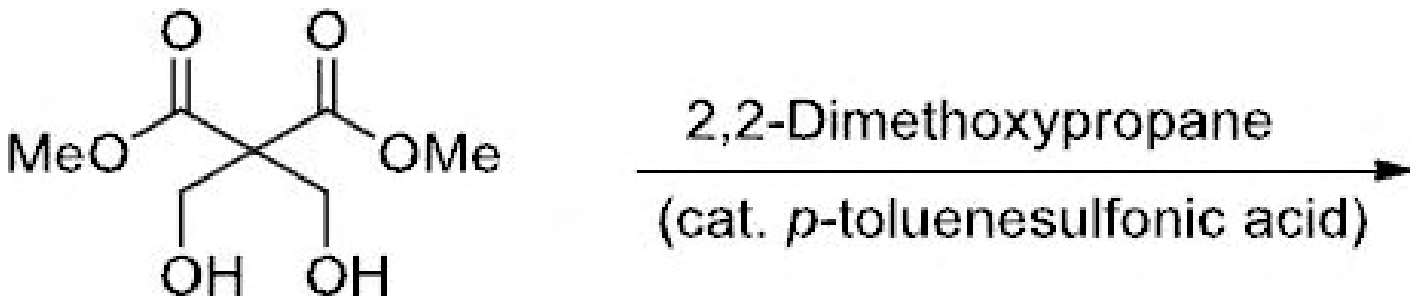
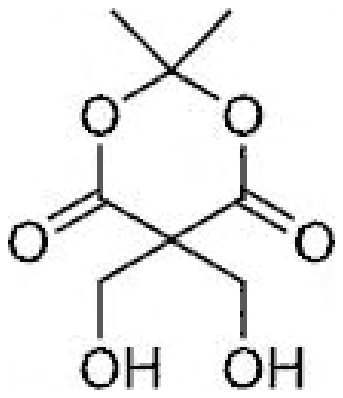
Dimethyl bis(hydroxymethyl)malonate treated with 2,2-dimethoxypropane and catalytic p-toluenesulfonic acid

Exam Year(s)

GATE Chemistry - 2017,

Answer: B

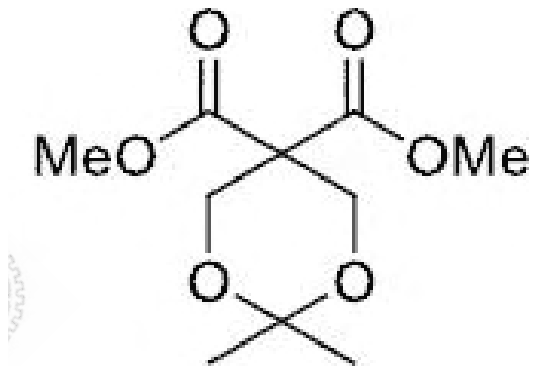
The major product is (B), the acetonide of the diol.

2,2-Dimethoxypropane with an acid catalyst is the standard reagent for protecting a 1,2- or 1,3-diol as an isopropylidene acetal. The two CH2OH groups of the starting diester form a 1,3-diol, and they close with the acetone unit into a six-membered 2,2-dimethyl-1,3-dioxane ring, releasing methanol. The two methyl ester groups are untouched, leaving dimethyl 2,2-dimethyl-1,3-dioxane-5,5-dicarboxylate.

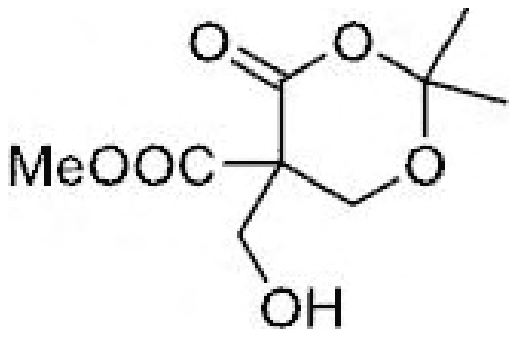
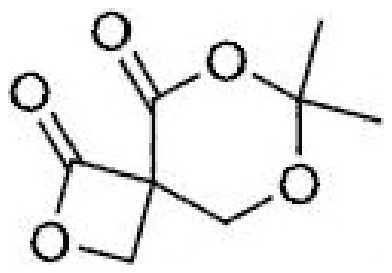
(A) is a Meldrum's-acid-type ring formed from the carboxyl groups, which would need the free diacid. (C) and (D) are lactones formed from an ester and a hydroxyl group; acetal formation under these mild conditions does not convert the esters.

Please log in or register to report this question.

Answer: D

The key gives \(\mathrm{ClCH_{2}OH > BrCH_{2}OH > FCH_{2}OH > CH_{3}OH}\).

Acidity depends on how well the alkoxide ion XCH2O- is stabilised. A halogen on the carbon next to oxygen withdraws electron density inductively and spreads the negative charge, so every halomethanol is more acidic than methanol. That places CH3OH last and rules out the two options that put it, or FCH2OH below it, anywhere else.

Among the halogens, the gas phase removes solvation, and the ranking is no longer set by electronegativity alone: the polarisability of the halogen also helps disperse the charge. The key's order reflects chlorine combining a strong inductive pull with greater polarisability than fluorine, ahead of bromine, with fluorine last of the three. The option headed by FCH2OH is the inductive-effect-only reading that the key does not follow.

Please log in or register to report this question.

3.

A mono-substituted aromatic compound P decolourizes bromine water, gives a purple red colour with aqueous FeCl3 and is also soluble in aqueous NaOH. Compound P undergoes acetylation with reagent Q in the presence of a base to give R as the major product. Reagent Q displays two characteristic bands at 1830 cm−1 and 1750 cm−1 in its IR spectrum. P, Q and R are

Exam Year(s)

IIT JAM - 2026,

Answer: C

The compounds are phenol (P), acetic anhydride (Q) and phenyl acetate (R), which is option (C).

A mono-substituted aromatic compound that decolourises bromine water, gives a purple-red colour with aqueous FeCl3 and dissolves in aqueous NaOH is a phenol. Aniline does not give the last two. The reagent with two C=O stretching bands at about 1830 and 1750 cm−1 is an acid anhydride, whose symmetric and asymmetric C=O stretches give a pair of bands. An acid chloride shows a single band near 1800 cm−1. Acetylation of the phenolic OH with acetic anhydride and a base gives the ester, phenyl acetate.

Options (A) and (B) use acetyl chloride, which does not fit the two-band IR spectrum, and (B) starts with aniline. Option (D) has the right reagents but a ring C-acylated product, which is the Fries product and needs a Lewis acid, not a base.

Please log in or register to report this question.

4.

The major product P formed in the following transformation is

1-(4-methoxyphenyl)propane-1,3-diol treated with MnO2 in acetone at 25 C, then PBr3 in CH2Cl2 at 0 C, then NaOEt in ethanol, gives P

Exam Year(s)

IIT JAM - 2026,

Answer: A

The product P is the aryl vinyl ketone, 1-(4-methoxyphenyl)prop-2-en-1-one, which is option (A).

MnO2 oxidises benzylic alcohols selectively, so the secondary benzylic OH becomes a ketone and the primary alcohol is left alone, giving ArCOCH2CH2OH. PBr3 converts the primary alcohol to the bromide, ArCOCH2CH2Br. NaOEt then removes the acidic alpha hydrogen and expels bromide (E1cB elimination), forming the C=C of the vinyl ketone.

Option (B) would need oxidation of the primary alcohol and loss of the benzylic oxygen. Option (C) needs an alpha bromination that these reagents do not do, and (D) needs an alkyne. None can come from the three steps.

Please log in or register to report this question.

5.

The IUPAC name of phenyl isopentyl ether is

Exam Year(s)

KEAM - 2025,

Answer: A

The IUPAC name is 3-Methtylbutoxybenzene (3-methylbutoxybenzene; the option prints an extra t).

The isopentyl group is \((CH_{3})_{2}CH-CH_{2}-CH_{2}-\). Numbered from the oxygen-bearing carbon, the methyl branch sits on C-3 of a four-carbon chain, so the alkoxy group is 3-methylbutoxy and the ether is named as a substituted benzene.

2-Methylbutoxy is the 'active amyl' group, a different isomer; 4-methylbutoxy is not a valid name (a methyl on C-4 just lengthens the chain to pentyloxy); and 1-methylbutoxy places the branch on the carbon attached to oxygen.

Please log in or register to report this question.

6.

Phenol on treatment with chloroform in the presence of NaOH, a -CHO group is introduced at ortho position of benzene ring. The reaction is known as

Exam Year(s)

KEAM - 2025,

Answer: B

The reaction is the Reimer-Tiemann reaction.

Chloroform and NaOH generate dichlorocarbene, which attacks the phenoxide ion at the ortho position. Hydrolysis then gives salicylaldehyde (2-hydroxybenzaldehyde).

Kolbe's reaction uses \(CO_{2}\) to make salicylic acid; Gattermann-Koch formylates benzene with CO and HCl; the Stephen reaction reduces nitriles to aldehydes; and the Sandmeyer reaction replaces a diazonium group with a halide or cyanide.

Please log in or register to report this question.

7.

Which of the following compound is used for the manufacture of phenol in large scale?

Exam Year(s)

KEAM - 2025,

Answer: D

Phenol is manufactured on a large scale from cumene.

Cumene (isopropylbenzene) is air-oxidised to cumene hydroperoxide, which is then cleaved with dilute acid to phenol and acetone. Most of the world's phenol is made this way, and the acetone is a valuable by-product.

Chlorobenzene (Dow process) and aniline (via diazonium salts) are older or laboratory routes, benzene is the starting point for cumene rather than the compound oxidised, and cyclohexane is not used to make phenol.

Please log in or register to report this question.

8.

Phenol is converted into benzene by heating with

Exam Year(s)

KEAM - 2025,

Answer: B

Phenol is converted into benzene by heating with zinc dust.

Zinc dust removes the oxygen of the phenolic group: C6H5OH + Zn → C6H6 + ZnO.

Sodium amalgam, LiAlH4 and NaBH4 are reducing agents for other groups (carbonyl compounds, for example) and do not remove a phenolic –OH. Cr2O3 is a catalyst for aromatisation, not a reagent for this conversion.

Please log in or register to report this question.

9.

Intramolecular hydrogen bonding is present in

Exam Year(s)

KEAM - 2025,

Answer: D

Intramolecular hydrogen bonding is present in o-nitrophenol.

In o-nitrophenol the –OH and –NO2 groups are on adjacent carbons, so the hydroxyl hydrogen bonds to an oxygen of the nitro group within the same molecule, forming a six-membered ring (chelation). This is why o-nitrophenol is more volatile and less water-soluble than the para isomer.

In p-nitrophenol the groups are too far apart, so it forms intermolecular hydrogen bonds. Water, methanol and phenol also hydrogen bond between molecules, not within one.

Please log in or register to report this question.

Answer: A

Phenetole is Ethoxybenzene, C6H5OC2H5.

Phenetole is the common name of the ethyl phenyl ether: an ethoxy group (-OC2H5) attached to a benzene ring. Its IUPAC name is ethoxybenzene.

Methoxybenzene is anisole, the methyl phenyl ether, the usual confusion with phenetole. Methoxyethane is ethyl methyl ether, and 1-methoxypropane and 2-methoxypropane are methyl propyl and methyl isopropyl ethers; none of these contains a benzene ring.

Please log in or register to report this question.

Loading…

Other Subjects

Tags: Alcohols Phenols and Ethers Questions and Answers || Alcohols Phenols and Ethers MCQ Questions and Answers || Alcohols Phenols and Ethers GK Questions and Answers || Alcohols Phenols and Ethers GK MCQ Questions || Alcohols Phenols and Ethers Multiple Choice Questions and Answers || Alcohols Phenols and Ethers GK || GK on Alcohols Phenols and Ethers || Organic Chemistry Questions and Answers || Organic Chemistry MCQ Questions and Answers || Organic Chemistry GK Questions and Answers || GK on Organic Chemistry