Machine-translated by Google. Questions are authored in English.
Top

Reaction Mechanisms and Intermediates Questions and Answers

1.

Identify the most probable product in the given reaction
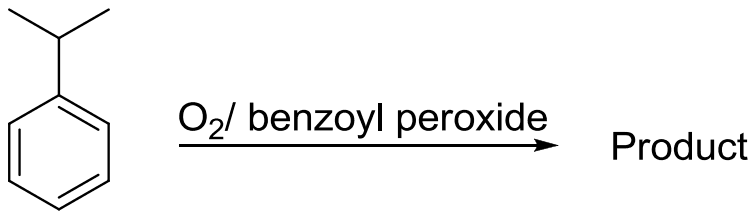
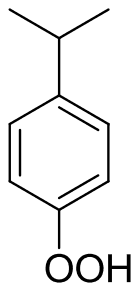
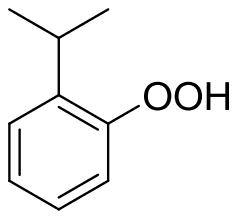
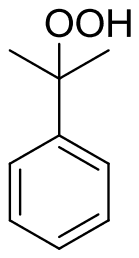
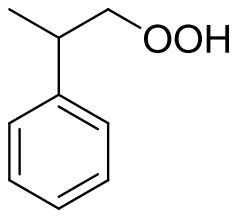
Isopropylbenzene (cumene) treated with O2 and benzoyl peroxide to give the product

Exam Year(s)

GATE Chemistry - 2012,

Answer: C

The product is cumene hydroperoxide, PhC(CH3)2OOH, the structure with OOH on the benzylic carbon (C).

Benzoyl peroxide starts a radical chain. The radical abstracts the weakest C-H bond in isopropylbenzene, the tertiary benzylic C-H, giving a tertiary benzylic radical stabilised by the ring. That radical adds O2 to form a peroxyl radical, which takes a hydrogen from another cumene molecule to give the hydroperoxide and carry the chain on. This is the first step of the cumene process for phenol and acetone.

A and B put OOH on the aromatic ring, but aryl C-H bonds are far too strong for radical abstraction. D puts it on a primary CH2, which would need abstraction of a primary methyl hydrogen instead of the much weaker benzylic one.

Please log in or register to report this question.

2.

In the cyclization reaction given below, the most probable product formed is

3-Bromobutane-1,4-diol, HO-CH2-CH2-CH(Br)-CH2-OH with the C-Br bond drawn hashed, treated with NaH to give the product

Exam Year(s)

GATE Chemistry - 2012,

Answer: C

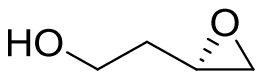
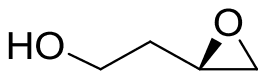
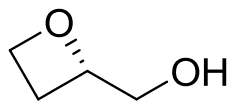
The product is the epoxide formed with inversion at the C-Br carbon, 2-(oxiran-2-yl)ethanol with the ring C-O bond wedged (C).

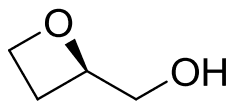
NaH deprotonates a hydroxyl group, and the alkoxide displaces bromide intramolecularly by an SN2 reaction. The CH2O- on the carbon next to C-Br closes a three-membered ring, and 3-exo ring closure is much faster than the 4-exo closure the other OH would need to make an oxetane. So the epoxide forms, not the oxetane of B and D.

Because SN2 attack comes from the side opposite the leaving group, the hashed C-Br bond is replaced by a wedged C-O bond: the configuration at that carbon is inverted. A shows the same epoxide with retention, which an SN2 closure cannot give.

Please log in or register to report this question.
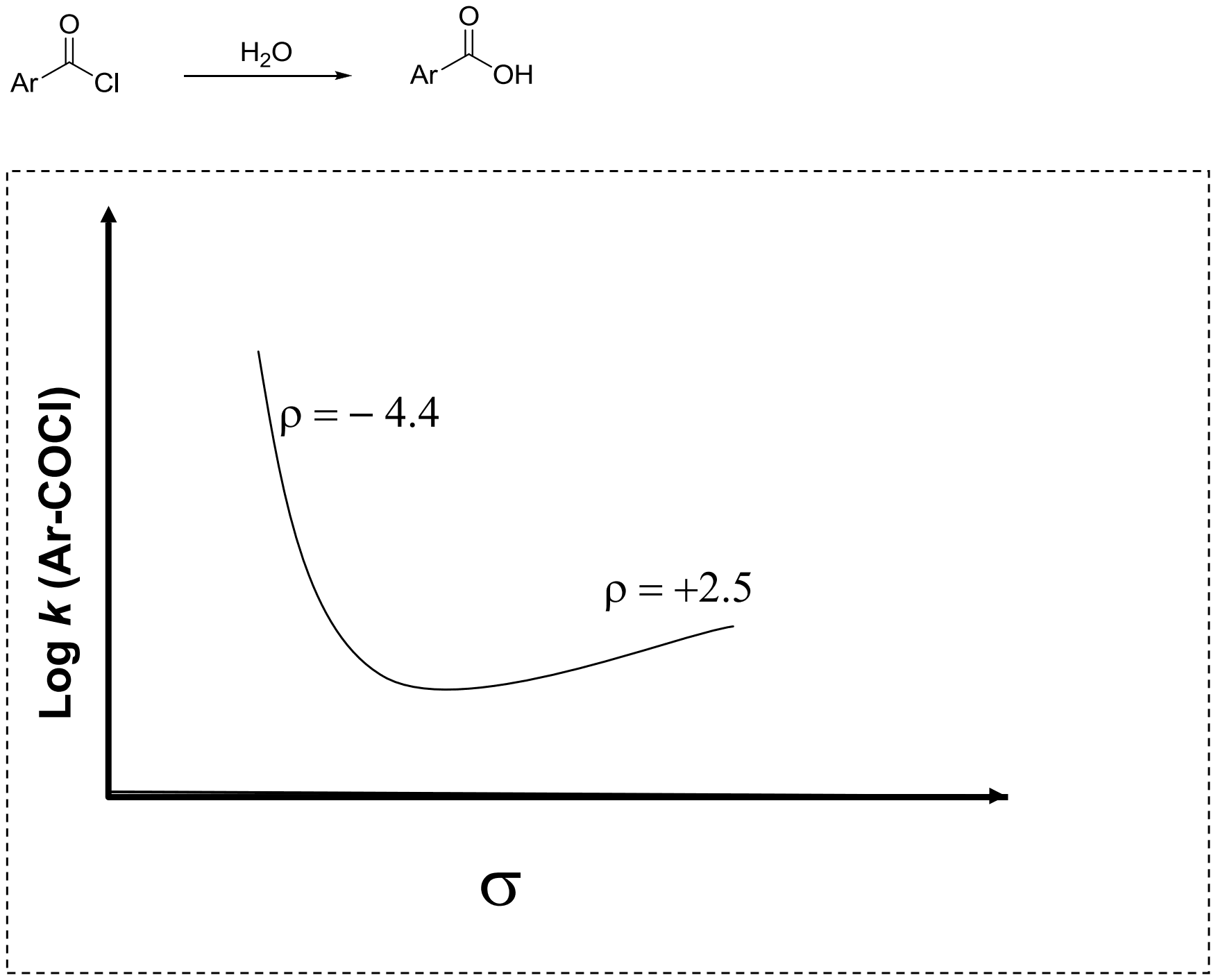
Answer: D

The change in slope shows that the mechanism of the reaction is changing.

The Hammett constant ρ measures how charge develops in the rate-determining step. On the left of the plot, for electron-donating substituents, ρ = -4.4: positive charge builds up at the reaction centre, which fits an ionisation (SN1-like) path through an acylium ion. On the right, for electron-withdrawing substituents, ρ = +2.5: negative charge builds up, which fits nucleophilic addition of water to the carbonyl followed by loss of chloride. A plot that changes from a negative to a positive slope is the classic sign that the rate-determining mechanism switches across the substituent series.

Each branch is still a linear free energy relationship, so A is wrong. B and C each describe only one branch: a single sign of ρ would mean one consistent mechanism, not a change.

Please log in or register to report this question.
4.

Consider the reaction sequence shown below:

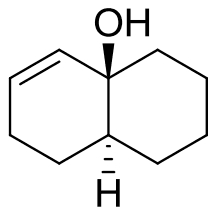
A trans-fused octahydronaphthalene with a ring-fusion double bond is converted by 1. X and 2. TsCl, pyridine into a cis 1-tosyloxy-8a-hydroxydecalin, OTs and OH both wedged, which is then treated with t-BuOK in t-BuOH to give the product

TsCl = p-toluenesulfonyl chloride

The oxidant X used in step 1 is

Exam Year(s)

GATE Chemistry - 2012,

Answer: B

The oxidant X is OsO4.

Step 1 converts the ring-fusion alkene into a 1,2-diol, and the drawing of the tosylate shows the OTs and OH on the same face (both wedged): a cis diol. Tosyl chloride then esterifies only the secondary OH, since the tertiary OH is too hindered.

Osmium tetroxide adds to an alkene through a cyclic osmate ester, delivering both oxygens to the same face, so it gives exactly this cis diol.

m-CPBA followed by NaOH makes an epoxide and then opens it with hydroxide from the back side, giving a trans diol. NaIO4 cleaves 1,2-diols rather than forming them, and CrO3 oxidises alcohols and allylic positions rather than dihydroxylating the alkene.

Please log in or register to report this question.
5.

Consider the reaction sequence shown below:

Reaction sequence: an octahydronaphthalene, then step 1 X and step 2 TsCl in pyridine, gives a decalin bearing a secondary tosylate next to a tertiary OH at the ring fusion; t-BuOK in t-BuOH then gives the product asked for

TsCl = p-toluenesulfonyl chloride

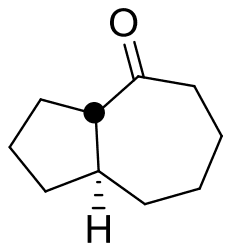
The product is

Exam Year(s)

GATE Chemistry - 2012,

Answer: D

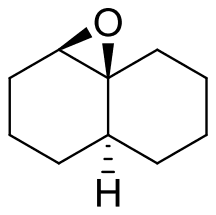
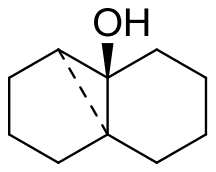
The product is the ring-contracted and ring-expanded ketone, a cyclopentane fused to a cycloheptanone (D).

t-BuOK deprotonates the tertiary OH. The resulting alkoxide pushes a bond on its own carbon across to the neighbouring carbon, which loses tosylate: a semipinacol (pinacol-type) rearrangement. The bond that migrates is the one anti-periplanar to the C-OTs bond. With the tosylate equatorial on the trans-decalin, that is the ring-fusion C-C bond.

When the ring-fusion bond shifts, the ring that held the tosylate loses a member and becomes a cyclopentane, the other ring gains one and becomes a seven-membered ring, and the alkoxide carbon becomes the C=O: a hydroazulenone, structure D.

An epoxide (A) would need the alkoxide to attack from the back of the C-OTs bond, which the cis arrangement prevents. B and C are not products of a base-promoted reaction of this hydroxy tosylate; the anti-periplanar migration outcompetes elimination.

Please log in or register to report this question.
6.

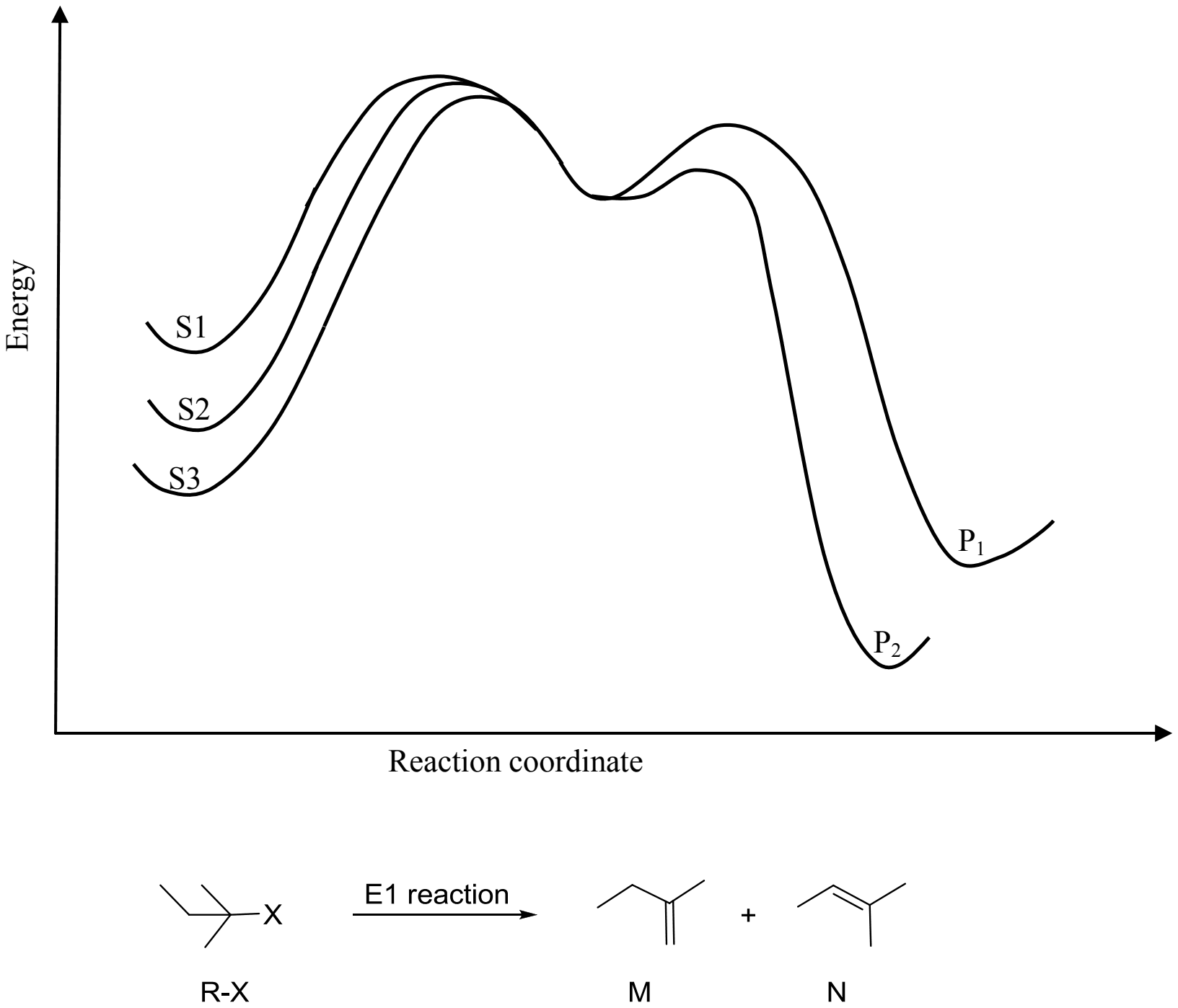
Consider the E1 reaction of tert-amyl halides from the energy profile given below.

Energy profile for three alkyl halides S1, S2 and S3, S1 highest, through one common intermediate to two products, P1 over the higher barrier and higher in energy, P2 lower; below, R-X gives M, 2-methylbut-1-ene, plus N, 2-methylbut-2-ene

In the above reaction, X = Cl, Br or I. Based on the graph, identify the alkyl halides (R-X) as S1, S2 and S3

Exam Year(s)

GATE Chemistry - 2012,

Answer: B

S1 = R-I, S2 = R-Br and S3 = R-Cl.

All three halides ionise to the same tert-amyl cation, so the curves meet at the intermediate. They differ in the energy of the starting halide relative to that cation. The C-X bond is weakest for iodide and strongest for chloride, so R-I lies highest (smallest barrier to ionisation, fastest) and R-Cl lowest (largest barrier, slowest), with R-Br between them.

That matches the plot: S1 starts highest and climbs least, S3 starts lowest and climbs most. The orders that put R-Cl at the top reverse the bond-strength trend, and the mixed orders do not follow it at all.

Please log in or register to report this question.
7.

Consider the E1 reaction of tert-amyl halides from the energy profile given below.

Energy profile for the E1 elimination of tert-amyl halide: from the common carbocation, the product P1 lies above P2 and is reached over a higher barrier; M is the terminal alkene 2-methylbut-1-ene and N the trisubstituted alkene 2-methylbut-2-ene

Identify product P1 and its yield relative to P2

Exam Year(s)

GATE Chemistry - 2012,

Answer: D

P1 is M and is the minor product.

The common carbocation loses a proton in two ways: from the CH3 group to give M, 2-methylbut-1-ene (a disubstituted, terminal alkene), or from the CH2 group to give N, 2-methylbut-2-ene (a trisubstituted alkene). The more substituted alkene N is more stable (Zaitsev's rule), so it is the lower-energy product, P2, and the less stable M is P1.

The plot also shows a higher barrier from the cation to P1 than to P2. P1 is therefore formed more slowly and is the less stable product: by either measure it is the minor one.

Calling P1 N reverses the stabilities, and calling P1 the major product ignores both its higher barrier and its higher energy.

Please log in or register to report this question.

8.

The major product formed in the following photochemical reaction is

An n-octyl nitrite, R-ONO, irradiated with light

Exam Year(s)

GATE Chemistry - 2017,

Answer: B

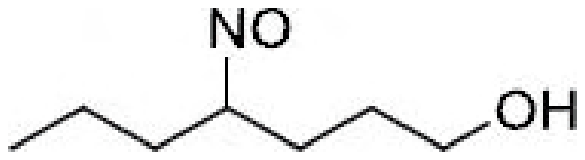
The major product is (B), 4-nitroso-octan-1-ol.

This is the Barton reaction. Light breaks the weak O-NO bond of the alkyl nitrite, giving an alkoxyl radical and nitric oxide. The alkoxyl radical abstracts a hydrogen atom from the δ-carbon (C4) through a six-membered, chair-like transition state, a 1,5-hydrogen shift. The resulting carbon radical at C4 then combines with NO, giving a δ-nitroso alcohol: the NO group on C4, the OH on C1.

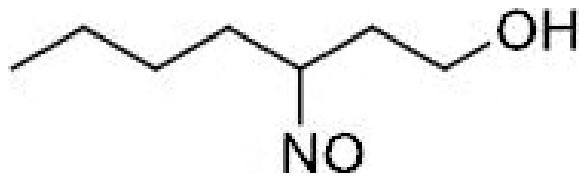
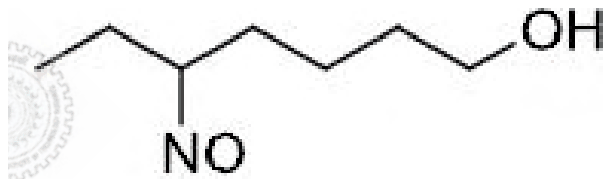
(C) and (D) place the nitroso group on C3 or C5, which would need hydrogen transfer through a five- or seven-membered transition state, both disfavoured. (A), 1-nitro-octane, is an isomer of the nitrite, not the photochemical product.

Please log in or register to report this question.
9.

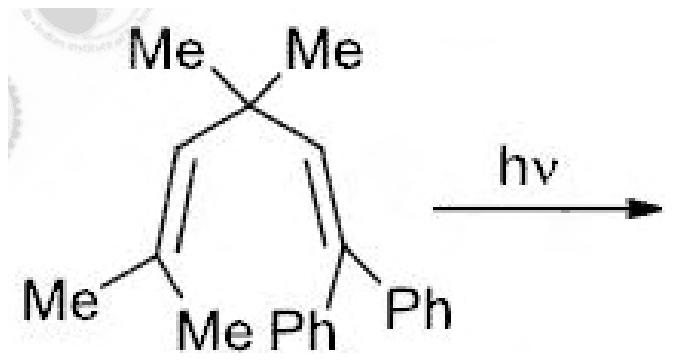
The product formed in the following photochemical reaction is

A 1,4-diene with a central CMe2 group, one end CMe2 and the other end CPh2, irradiated with light

Exam Year(s)

GATE Chemistry - 2017,

Answer: D

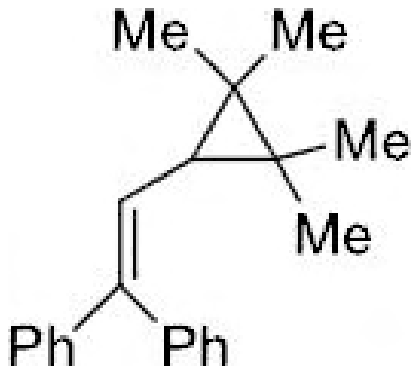
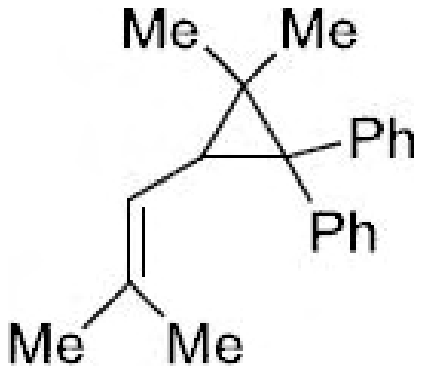
The product is (D), a vinylcyclopropane carrying the two phenyl groups on the ring and an isobutenyl side chain.

A 1,4-diene with an sp3 carbon between the two alkenes undergoes the photochemical di-π-methane rearrangement to a vinylcyclopropane. The excited diene first bonds C2 to C4, giving a cyclopropyl-dicarbinyl diradical with odd electrons on the two terminal carbons. One cyclopropane bond then opens, and the ring closes again to the vinylcyclopropane.

Which way it goes is set by radical stability. The odd electron on the diphenyl-substituted carbon is a stabilised benzhydryl radical and is kept; the cyclopropane opens so that the dimethyl-substituted end re-forms a double bond (Me2C=CH-). The final ring closure then joins the benzhydryl carbon to the central CMe2 carbon, so the cyclopropane contains CMe2 and CPh2, as in (D).

(B) is the product of the opposite opening, which would sacrifice the benzhydryl radical. (A) and (C) are bicyclo[2.1.0]pentanes, the products of an intramolecular [2+2] cycloaddition, not of the di-π-methane rearrangement.

Please log in or register to report this question.
10.

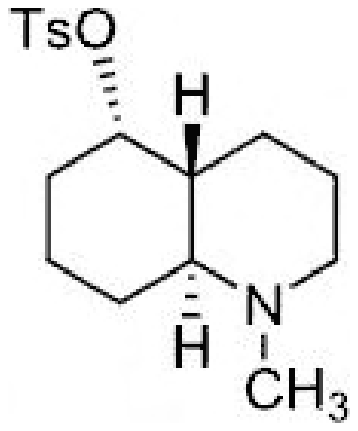
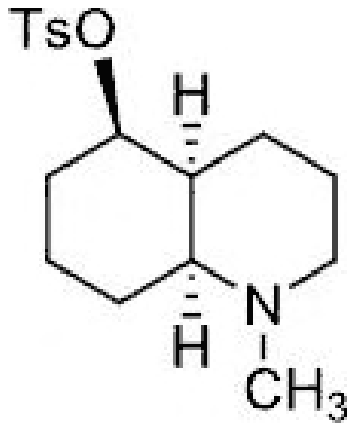
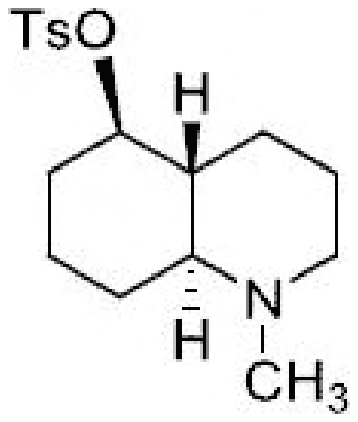
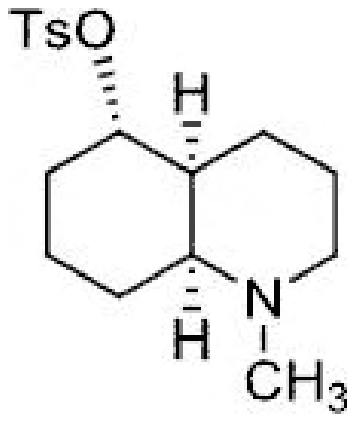
Among the following decahydroquinoline toluenesulfonates (Ts), the one that yields 9-methylamino-E-non-5-enal as a major product upon aqueous solvolysis is

Exam Year(s)

GATE Chemistry - 2017,

Answer: C

The tosylate that fragments to 9-methylamino-E-non-5-enal is (C).

The product comes from a Grob fragmentation. The nitrogen lone pair pushes, the ring-fusion C-C bond (C4a-C8a) breaks, and the tosylate leaves, giving an iminium ion and a new C=C bond in what was the carbocyclic ring. Hydrolysis of the iminium ion in water releases the aldehyde and the methylamino group. The fragmentation is concerted only when the breaking C-C bond is anti-periplanar to the C-OTs bond, which also fixes the alkene as E.

In (C) the ring fusion is trans (one ring-fusion H up, the other down), and the tosylate is on the same side as the adjacent ring-fusion hydrogen, which in a trans-decalin-type ring makes it equatorial. An equatorial leaving group is anti-periplanar to the ring bond C4a-C8a, so it fragments cleanly.

In (A) the tosylate is axial, anti-periplanar to hydrogens rather than to the ring bond, so it undergoes elimination or substitution instead. (B) and (D) are cis-fused, without the rigid alignment that the trans isomer provides.

Please log in or register to report this question.
Loading…
Tags: Reaction Mechanisms and Intermediates Questions and Answers || Reaction Mechanisms and Intermediates MCQ Questions and Answers || Reaction Mechanisms and Intermediates GK Questions and Answers || Reaction Mechanisms and Intermediates GK MCQ Questions || Reaction Mechanisms and Intermediates Multiple Choice Questions and Answers || Reaction Mechanisms and Intermediates GK || GK on Reaction Mechanisms and Intermediates || Organic Chemistry Questions and Answers || Organic Chemistry MCQ Questions and Answers || Organic Chemistry GK Questions and Answers || GK on Organic Chemistry