
Machine-translated by Google. Questions are authored in English.
Top

Spectroscopy in Structure Determination Questions and Answers

11.

The correct match for the protons labeled in compound X in Column M with the corresponding chemical shifts (δ, ppm) in Column N is
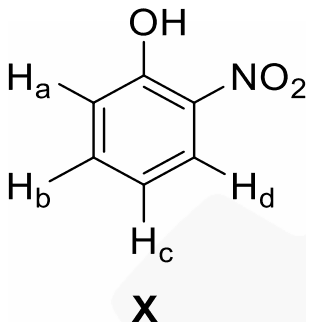
Compound X: a benzene ring with OH and, next to it, NO2; the other four ring hydrogens are labelled Ha (next to OH), Hb, Hc and Hd (next to NO2)

Column MColumn N
PHaI7.00 (ddd, J = 8.4, 7.3, 1.4 Hz, 1H)
QHbII7.17 (dd, J = 8.4, 1.4 Hz, 1H)
RHcIII7.59 (ddd, J = 8.4, 7.3, 1.4 Hz, 1H)
SHdIV8.12 (dd, J = 8.4, 1.4 Hz, 1H)

Exam Year(s)

GATE Chemistry - 2026,

Answer: A

The correct match is P → II; Q → III; R → I; S → IV.

Compound X is 2-nitrophenol. Use the splitting first: a proton with two ortho neighbours appears as a ddd (two ortho couplings, 8.4 and 7.3 Hz, and one meta), while a proton with one ortho neighbour is a dd. Ha and Hd each have only one ortho neighbour, so they are the two dd signals; Hb and Hc are the ddd signals.

  • Hd is ortho to the strongly withdrawing NO2, so it is the most deshielded dd: 8.12 (IV).
  • Ha is ortho to the donating OH, the shielded dd: 7.17 (II).
  • Hb is para to NO2, the deshielded ddd: 7.59 (III).
  • Hc is para to OH, the shielded ddd: 7.00 (I).

Every other option breaks the splitting rule by giving a dd proton a ddd signal (P → I, or Q → IV), or swaps Hb and Hc, ignoring that the para nitro group deshields Hb.

Please log in or register to report this question.
12.

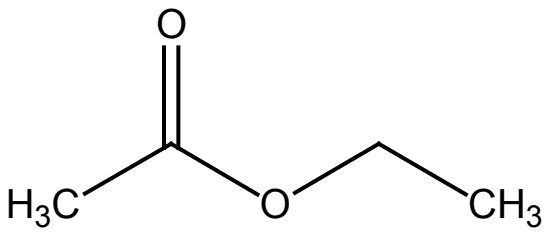
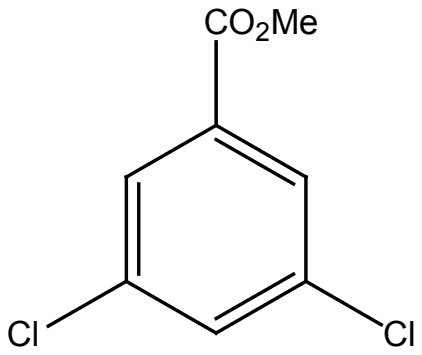
In the 1H NMR spectrum, which one of the following compounds will show a triplet?

Exam Year(s)

IIT JAM - 2018,

Answer: A

The key gives (A), ethyl acetate.

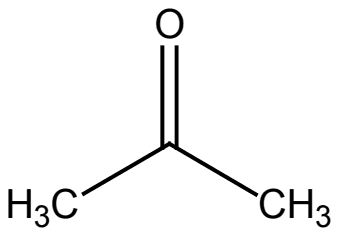
In ethyl acetate the OCH2 protons and the CH3 of the ethyl group are the classic pair: the CH3 is split by two neighbouring protons into a triplet (the CH2 is a quartet), while the acetyl CH3 is a singlet. Acetone (B) gives one singlet for its six equivalent protons. 4-Bromophenol (D) has a symmetrical para ring, which gives two doublets, and an OH singlet.

Option (C), methyl 3,5-dichlorobenzoate, is a doubt. Its 4-H has two equivalent meta neighbours, so it appears as a finely split triplet with a coupling of only about 2 Hz, and it is also a triplet by the splitting rule. The key rests on the textbook reading of "triplet" as the vicinal ethyl triplet, so (A) is the keyed answer.

Please log in or register to report this question.
13.

The CORRECT order of carbonyl stretching frequencies for the following compounds is

(Structures: I is benzoyl chloride, C6H5COCl; II is phenyl acetate, CH3COOC6H5; III is N,N-dimethylbenzamide, C6H5CON(CH3)2; IV is benzaldehyde, C6H5CHO.)

Exam Year(s)

IIT JAM - 2018,

Answer: D

The order of C=O stretching frequency is III < IV < II < I.

The frequency rises with the double-bond character of the carbonyl. Groups that donate electrons by resonance lower it; electronegative groups that withdraw inductively raise it.

  • III, N,N-dimethylbenzamide: the nitrogen lone pair donates strongly into C=O, giving it much single-bond character, so it absorbs lowest (about 1630-1650 cm−1).
  • IV, benzaldehyde: conjugation with the ring lowers it to about 1700 cm−1.
  • II, phenyl acetate: the ester oxygen's lone pair is partly drawn into the ring, so its inductive pull wins and the band rises to about 1765 cm−1.
  • I, benzoyl chloride: chlorine withdraws strongly and donates poorly, giving the highest frequency (about 1775 cm−1).

Please log in or register to report this question.
14.

The 1H-NMR spectral data of a compound X is as follows: δ (ppm): 11.6 (s, 1H, exchangeable with D2O), 7.60 (d, 1H, J = 7.2 Hz), 7.20 (t, 1H, J = 7.2 Hz), 6.90 (d, 1H, J = 7.2 Hz), 3.70 (s, 3H), 3.58 (s, 3H). Based on the spectral data, choose the appropriate structure for compound X.

Exam Year(s)

IIT JAM - 2026,

Answer: B

The compound is 2,3-dimethoxybenzoic acid, option (B).

The 11.6 ppm singlet that exchanges with D2O is the carboxylic acid proton. The two 3H singlets at 3.70 and 3.58 ppm are two different OCH3 groups. The three aromatic signals (doublet, triplet, doublet, all with J = 7.2 Hz) are three adjacent ring protons: a triplet needs a proton with two neighbours, so the ring is 1,2,3-trisubstituted. Only (A) and (B) have three adjacent ring hydrogens.

In (A), 2,6-dimethoxybenzoic acid, the two OCH3 groups are equivalent by symmetry and would give a single 6H singlet. Options (C) and (D) do not have three adjacent ring hydrogens, so neither can show a doublet, triplet, doublet pattern. Only (B) gives two distinct OCH3 singlets and a d, t, d pattern.

Please log in or register to report this question.

15.

Number of signals observed in the 1H NMR and proton decoupled 13C NMR spectrum of the following compound, respectively, are :

A bicyclo[2.2.1]hept-2-ene (norbornene) skeleton with a bromine on each of the two saturated ring carbons C5 and C6, both Br drawn pointing down and both H pointing right

Exam Year(s)

MH SET - 2018, SET Exam - 2018,

Answer: B

The compound gives 5 1H signals and 4 13C signals.

The drawing is a 5,6-dibromonorborn-2-ene with both bromines on the same face (cis). Such a molecule has a mirror plane through C7 and the midpoints of the C2=C3 and C5-C6 bonds, which makes each carbon on one side equivalent to its partner on the other.

Carbons: C2/C3 (alkene), C1/C4 (bridgeheads), C5/C6 (CHBr) and C7, so 4 signals. Protons: the two vinyl H, the two bridgehead H and the two CHBr H each form one signal, while the two hydrogens on C7 are inequivalent (one faces the double bond, the other the bromines), so they give two signals: 5 in all.

8 and 7 would be the counts with no symmetry at all, and 4, 4 misses the inequivalence of the two C7 hydrogens.

Please log in or register to report this question.

16.

Amongst the following, the compound that will show IR absorption band at 1780 cm-1 is :

Exam Year(s)

MH SET - 2018, SET Exam - 2018,

Answer: D

The compound absorbing at 1780 cm-1 is (D), cyclobutanone.

Ring strain raises the C=O stretching frequency of cyclic ketones, because squeezing the ring angle gives the C-C bonds more p character and the C=O bond more s character, stiffening it. Cyclohexanone absorbs near 1715 cm-1, cyclopentanone (A) near 1745 cm-1 and cyclobutanone near 1780 cm-1.

Amides absorb lower than ketones because nitrogen's lone pair gives the C=O partial single-bond character. The six-membered lactam (B) absorbs near 1660 cm-1, and even the strained four-membered beta-lactam (C) comes near 1745 cm-1, so of the four only cyclobutanone reaches 1780 cm-1.

Please log in or register to report this question.

17.

Number of signals observed in the 1H NMR spectrum is p-tolualdehyde is :

Exam Year(s)

MH SET - 2018, SET Exam - 2018,

Answer: B

p-Tolualdehyde shows 4 signals.

In 4-methylbenzaldehyde, CH3C6H4CHO, the para substitution gives the molecule a mirror plane through the CHO and CH3 groups. The protons fall into four sets:

  • the aldehyde H, near δ 9.9;
  • the two ring H ortho to CHO, near δ 7.8;
  • the two ring H ortho to CH3, near δ 7.3;
  • the methyl H, near δ 2.4.

3 would treat all four ring protons as equivalent, which they are not since the two substituents differ. 5 or 6 would split protons that the symmetry makes equivalent.

Please log in or register to report this question.

18.

Multiplicity of the signal expected in the 1H NMR spectrum of the following compound is :

Fischer-style projection of a two-carbon chain: the upper carbon carries I, H and H, the lower carbon carries Br, Cl and I

Exam Year(s)

MH SET - 2018, SET Exam - 2018,

Answer: D

The CH2 protons give an AB quartet.

The compound is ICH2-CBrClI. The carbon bearing Br, Cl and I (and the CH2I group) has four different substituents, so it is a stereocentre. The two hydrogens of the neighbouring CH2 are then diastereotopic: no symmetry operation exchanges them, so they have different chemical shifts.

With no other protons in the molecule, the two hydrogens couple only to each other (geminal coupling). Two coupled protons with a small shift difference give the four-line AB pattern, with the inner lines taller than the outer ones.

A singlet would require the two protons to be equivalent, which the stereocentre prevents. A doublet or triplet would need coupling to one or two other protons, and there are none.

Please log in or register to report this question.

19.

The correct structure of a compound that exhibits the following 1H-NMR spectral data is :

δ3.8(S, 3H), 3.9 (S, 3H) 6.82 (dd, J = 8 and 2 H2, 1H), 7.06 (t, J = 8 H2, 1H), 7.15 (dd, J = 8 and 2 H2, 1H)

Exam Year(s)

MH SET - 2018, SET Exam - 2018,

Answer: C

The compound is 1-chloro-2,3-dimethoxybenzene, C.

The two singlets at δ 3.8 and 3.9 (3H each) are two non-equivalent OCH3 groups. The aromatic region has three protons: a triplet with J = 8 Hz and two doublets of doublets with J = 8 and 2 Hz. A proton with two ortho neighbours gives the triplet, and the two flanking protons each have one ortho (8 Hz) and one meta (2 Hz) partner. Three adjacent ring protons mean a 1,2,3-trisubstituted benzene, which is C.

A (1,3,5) is symmetrical, with equivalent OCH3 groups and no ortho couplings. B and D are 1,2,4-trisubstituted, which would show an isolated proton as a small doublet (meta coupling only) and no triplet. The paper writes Hz as 'H2'.

Please log in or register to report this question.

20.

The number of chemically non-equivalent protons expected in 1H-NMR spectrum of 2-pinene is :

Structure of 2-pinene (alpha-pinene): a bicyclo[3.1.1]heptene with a methyl on the double bond and a gem-dimethyl bridge

Exam Year(s)

MH SET - 2019, SET Exam - 2019,

Answer: B

2-Pinene (α-pinene) shows 10 kinds of non-equivalent protons.

Count the environments in this chiral, unsymmetrical bicyclic alkene:

  • the vinyl H on C-3: 1
  • the methyl on the double bond: 1
  • the two methyls of the gem-dimethyl bridge, one syn and one anti to the double bond: 2
  • the bridgehead H on C-1 and the bridgehead H on C-5: 2
  • the two diastereotopic H on the allylic CH2 (C-4): 2
  • the two diastereotopic H on the CH2 bridge (C-7): 2

That totals 10. Answers of 7 or 6 come from treating the gem-dimethyls or the CH2 protons as equivalent, which they are not in this rigid ring system.

Please log in or register to report this question.

Loading…

Other Subjects

Tags: Spectroscopy in Structure Determination Questions and Answers || Spectroscopy in Structure Determination MCQ Questions and Answers || Spectroscopy in Structure Determination GK Questions and Answers || Spectroscopy in Structure Determination GK MCQ Questions || Spectroscopy in Structure Determination Multiple Choice Questions and Answers || Spectroscopy in Structure Determination GK || GK on Spectroscopy in Structure Determination || Organic Chemistry Questions and Answers || Organic Chemistry MCQ Questions and Answers || Organic Chemistry GK Questions and Answers || GK on Organic Chemistry