Machine-translated by Google. Questions are authored in English.
Top

Amines and Nitrogen Compounds Questions and Answers

Direction for [ Question No: 1 To 1 ] :

SECTION - 1 (One or More Than One Options Correct Type)

This section contains 10 multiple choice type questions. Each question has four choices (A), (B), (C) and (D) out of which ONE or MORE THAN ONE are correct.

1.

In the reaction shown below, the major product(s) formed is/are
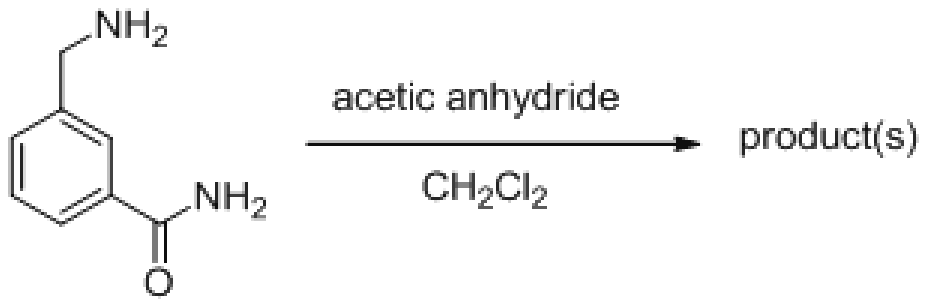
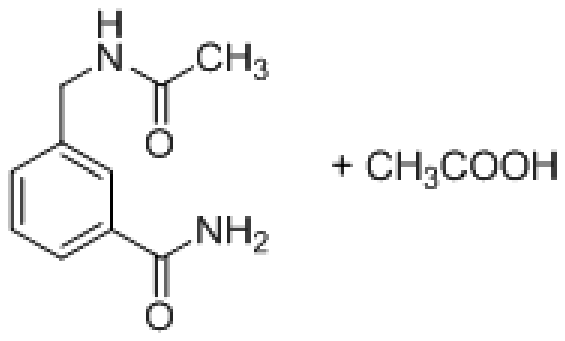
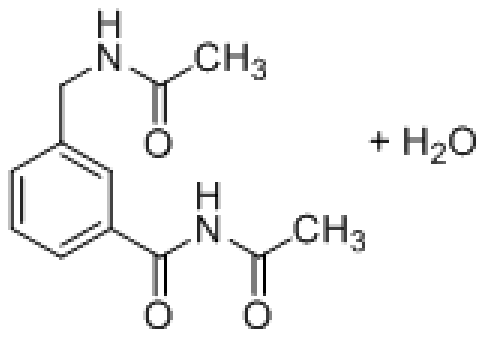
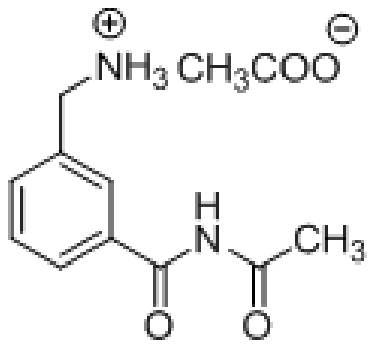
3-(aminomethyl)benzamide treated with acetic anhydride in CH2Cl2 gives product(s)

Exam Year(s)

JEE Advanced - 2014,

Answer: A

The major product is (A): the CH2NH2 group is acetylated, giving CH2NHCOCH3, with acetic acid as by-product.

Acetic anhydride acylates the most nucleophilic nitrogen. The benzylic amine nitrogen has a free lone pair and is strongly nucleophilic. The amide nitrogen of CONH2 is not: its lone pair is delocalised into the C=O group, so it does not react under these mild conditions. One equivalent of acetic anhydride therefore gives the N-acetylated amine and CH3COOH.

(B) acetylates the wrong nitrogen. (C) acetylates both and also gives water, which is not a by-product of acylation by an anhydride. (D) again acetylates the amide nitrogen while leaving the more basic amine as a salt.

Please log in or register to report this question.
2.

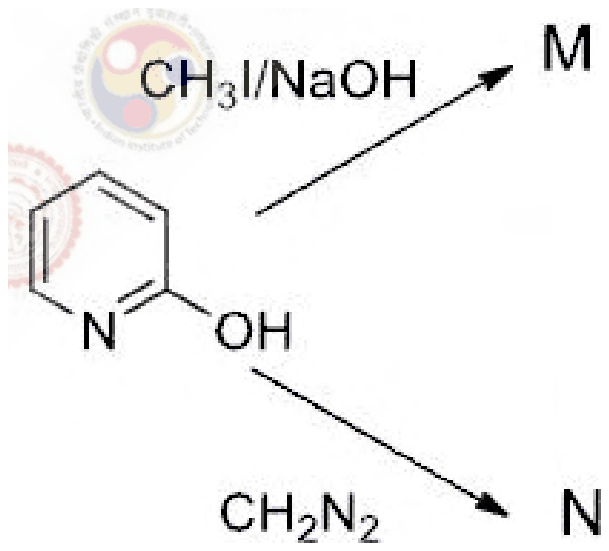
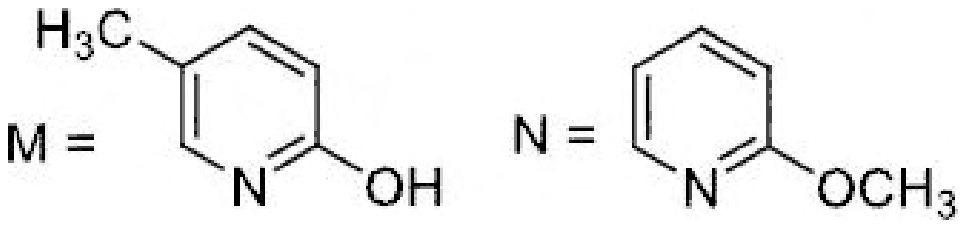
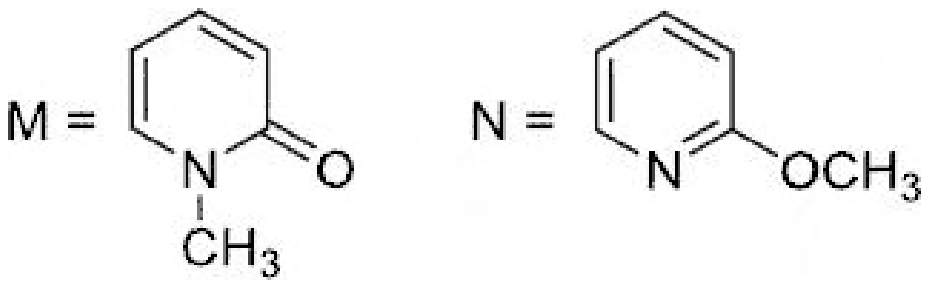
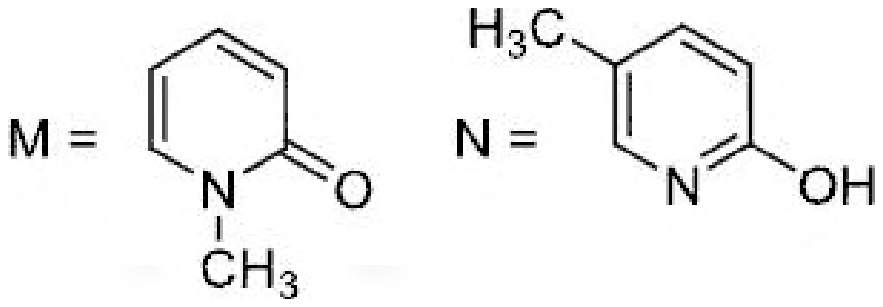
The major products M and N formed in the following reactions are

2-Hydroxypyridine treated with CH3I and NaOH gives M, and with CH2N2 gives N

Exam Year(s)

GATE Chemistry - 2017,

Answer: C

The products are (C): M is N-methyl-2-pyridone and N is 2-methoxypyridine.

2-Hydroxypyridine exists mainly as its tautomer 2-pyridone, and its anion is ambident, able to react at nitrogen or oxygen. With CH3I and NaOH, the anion is alkylated at the softer, more nucleophilic nitrogen, giving the N-methyl pyridone M.

Diazomethane methylates acidic O-H groups: it takes the proton from the OH form to give a methyldiazonium ion, which the resulting oxygen anion attacks directly, so the product N is the O-methyl ether, 2-methoxypyridine.

(B) swaps the two products. (A) and (D) put a methyl group on a ring carbon, which neither reagent does.

Please log in or register to report this question.
3.

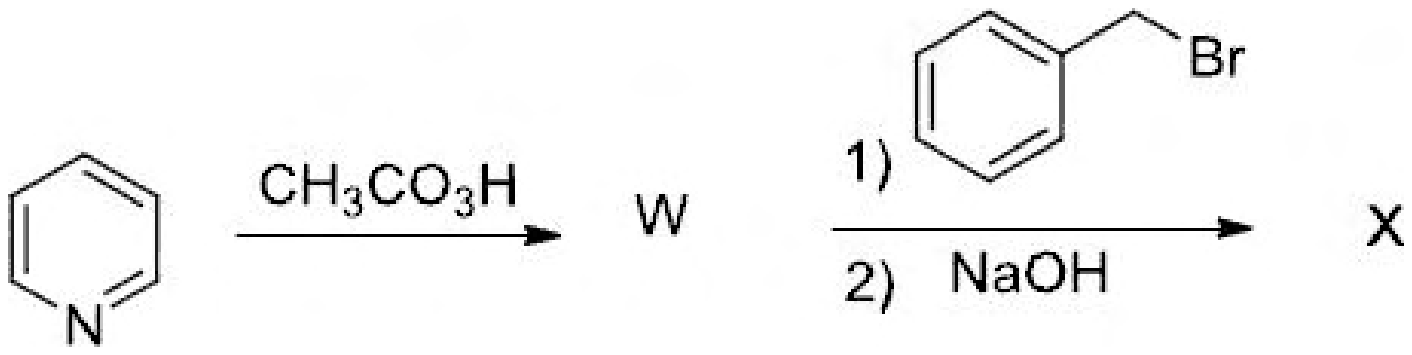
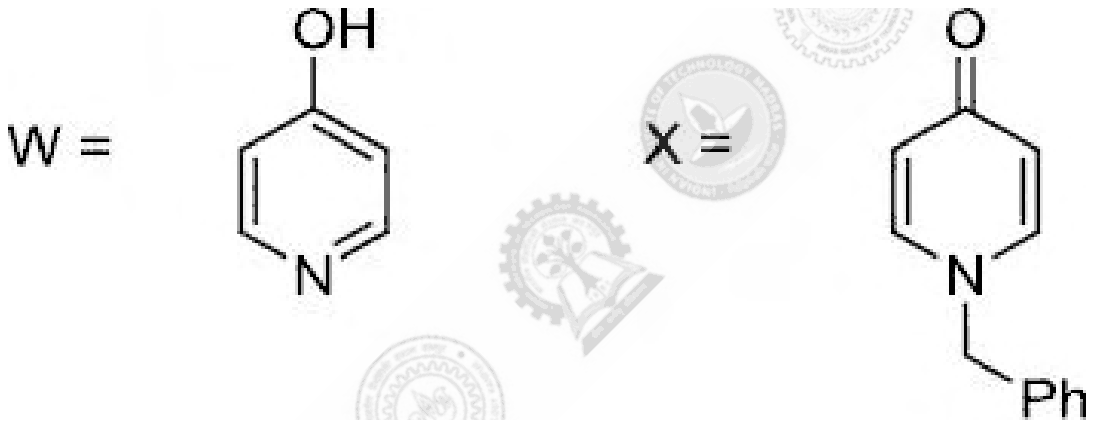
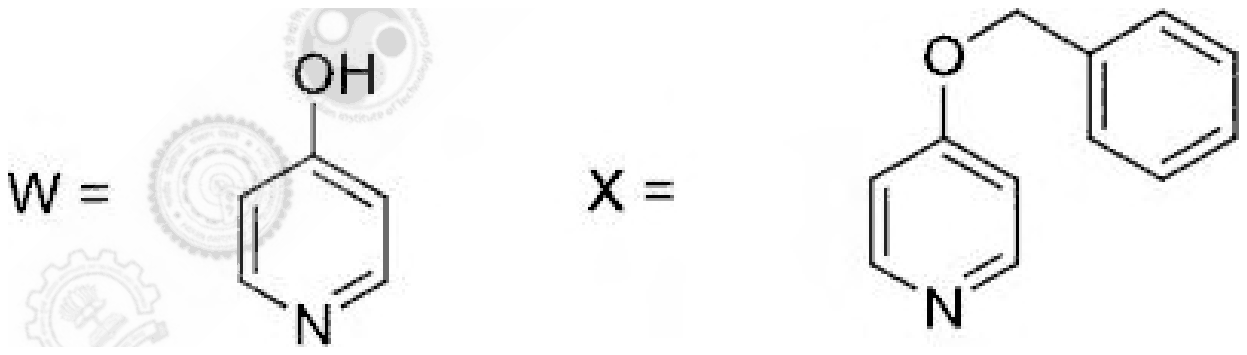
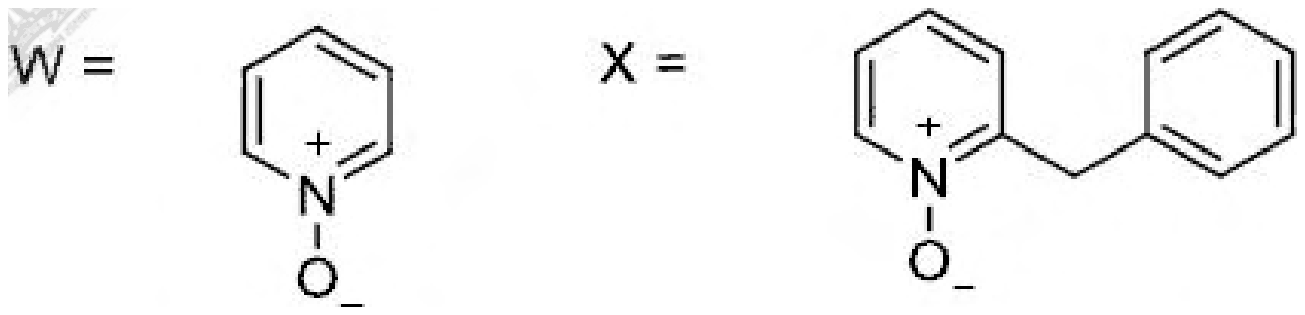
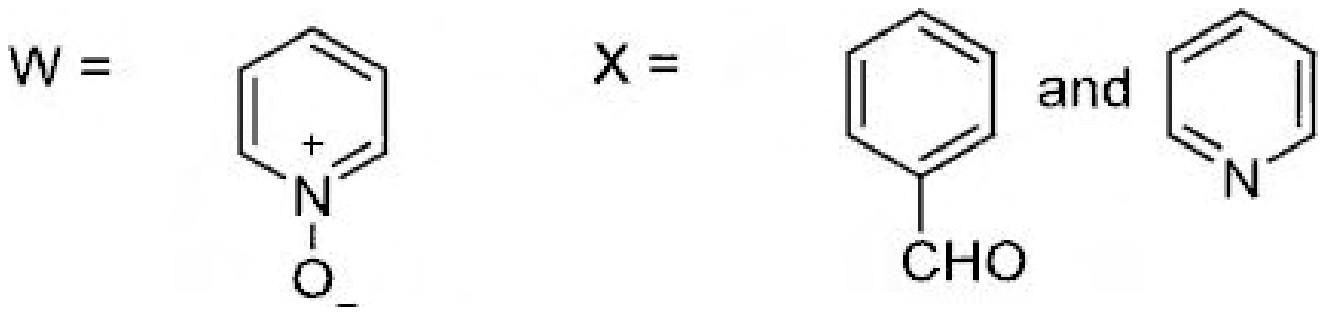
The structures of the major products W and X in the following synthetic scheme are

Pyridine treated with CH3CO3H gives W, which with benzyl bromide and then NaOH gives X

Exam Year(s)

GATE Chemistry - 2017,

Answer: D

The products are (D): W is pyridine N-oxide and X is benzaldehyde together with pyridine.

Peracetic acid oxidises the pyridine nitrogen to give pyridine N-oxide, W. The N-oxide oxygen is nucleophilic and is benzylated by benzyl bromide, giving an N-benzyloxypyridinium salt. Sodium hydroxide then removes a benzylic proton; the electrons move to form a C=O bond while the weak N-O bond breaks, releasing pyridine and leaving benzaldehyde. The N-oxide has acted as an oxidant, converting the benzyl halide to the aldehyde.

A peracid does not hydroxylate the ring, so W is not 4-hydroxypyridine, which rules out (A) and (B). (C) would need benzylation at a ring carbon, but the benzyl group goes onto oxygen, and the base then fragments that intermediate.

Please log in or register to report this question.

4.

The major products Y and Z in the following reaction sequence are

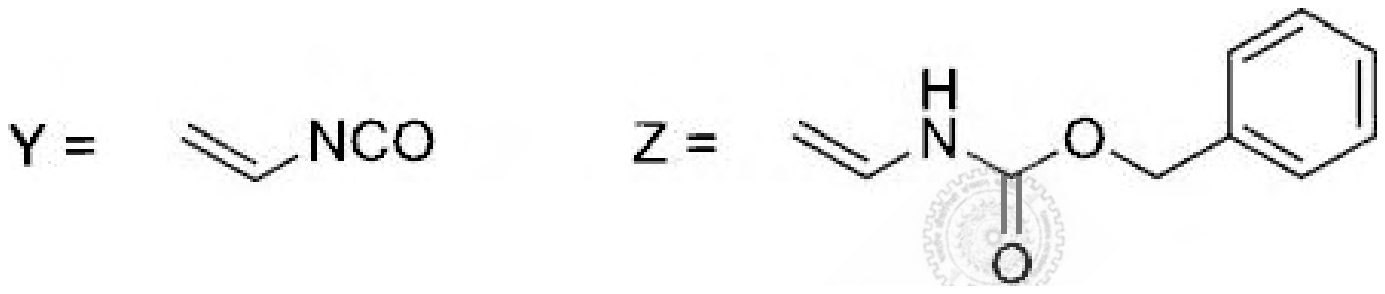
Acryloyl chloride and NaN3 in aqueous toluene, then heat, give Y, which with benzyl alcohol gives Z

Exam Year(s)

GATE Chemistry - 2017,

Answer: A

The products are (A): Y is vinyl isocyanate and Z is benzyl N-vinylcarbamate.

Sodium azide replaces the chloride of acryloyl chloride to give acryloyl azide. On heating, the acyl azide undergoes the Curtius rearrangement: nitrogen gas is lost and the vinyl group migrates from carbon to nitrogen, giving vinyl isocyanate, CH2=CH-N=C=O (Y). Benzyl alcohol then adds across the C=N bond of the isocyanate to give the carbamate CH2=CH-NH-C(O)-OCH2Ph (Z).

(B) assumes azide adds to the C=C bond (conjugate addition) instead of replacing the chloride, and ignores the heating step. (C) is a 1,3-dipolar cycloaddition product, a triazoline. (D) keeps the acyl azide after heating, which is the condition that makes it rearrange, and then has benzyl alcohol add to the alkene instead of reacting with the isocyanate.

Please log in or register to report this question.
5.

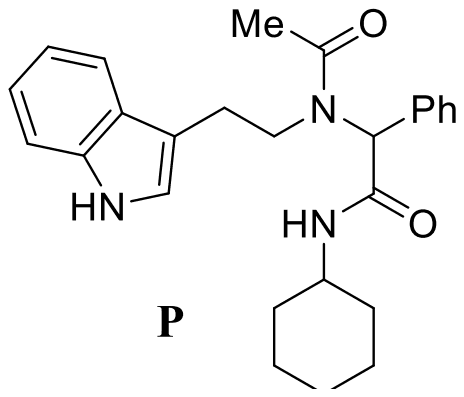
Compound P was prepared based on a four-component reaction at room temperature in methanol. The required starting materials for the synthesis are

Compound P: tryptamine nitrogen acylated with acetyl and bonded to CH(Ph)C(O)NH-cyclohexyl

Exam Year(s)

GATE Chemistry - 2023,

Answer: A

The starting materials are (A): tryptamine, benzaldehyde, acetic acid and cyclohexyl isocyanide.

A four-component reaction in methanol at room temperature giving a bis-amide is the Ugi reaction: an amine and an aldehyde form an imine, the isocyanide carbon adds to the protonated imine, the carboxylate traps the resulting nitrilium ion, and a Mumm rearrangement moves the acyl group onto nitrogen.

Mapping P back onto these parts: the nitrogen carrying the indolylethyl group and the acetyl group comes from tryptamine (amine) and acetic acid (acid); the CH(Ph) carbon comes from benzaldehyde; and the C(O)NH-cyclohexyl amide comes from cyclohexyl isocyanide.

The options with cyclohexanecarbonitrile fail because a nitrile (C≡N bonded through carbon) cannot play the isocyanide's role. The options using indole-3-acetaldehyde and benzylamine would put a benzyl group on the amide nitrogen and the indolylmethyl group on the α-carbon, a different product.

Please log in or register to report this question.
6.

The major product formed in the given reaction sequence is

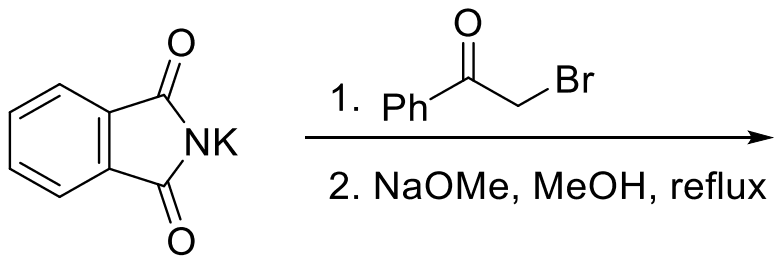
Potassium phthalimide treated with 1. phenacyl bromide (PhCOCH2Br), 2. NaOMe in refluxing MeOH

Exam Year(s)

GATE Chemistry - 2023,

Answer: B

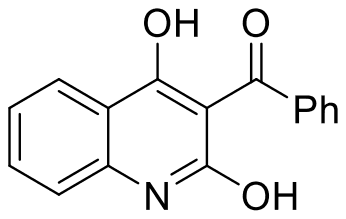
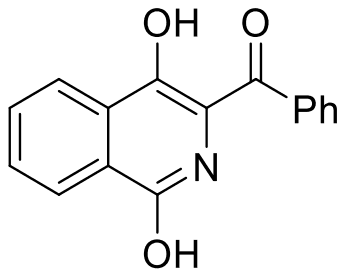
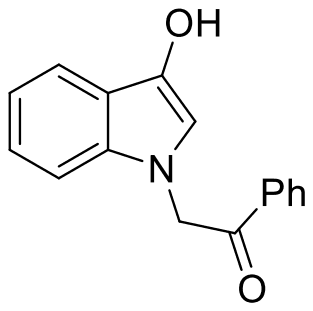
The major product is (B), 3-benzoylisoquinoline-1,4-diol.

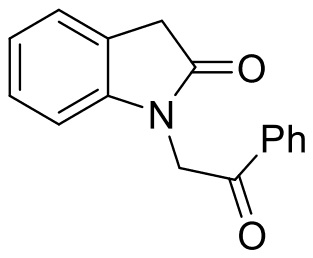
Step 1 is a Gabriel alkylation: potassium phthalimide displaces bromide from phenacyl bromide to give N-phenacylphthalimide. Step 2 is the Gabriel-Colman rearrangement. Methoxide opens one imide carbonyl, and the enolate of the now acidic CH2 (flanked by nitrogen and the benzoyl group) attacks the remaining ester carbonyl, closing a six-membered ring. The result is the isoquinoline skeleton with OH groups at C1 and C4 (the enol and lactam tautomers drawn as diols) and the benzoyl group at C3.

(A) is a quinoline, with the nitrogen attached to the benzene ring, which this ring expansion cannot give since nitrogen stays between the two former carbonyl carbons. (C) and (D) are indole and oxindole products with an N-phenacyl group, which would need loss of a carbon from the phthalimide.

Please log in or register to report this question.
7.

The major product formed in the following reaction is

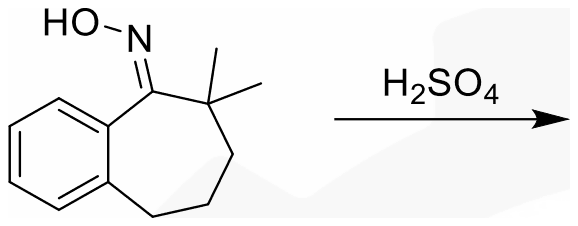
Oxime of a benzo-fused cycloheptanone whose C=N-OH carbon lies between the benzene ring and a CMe2 carbon, treated with H2SO4

Exam Year(s)

GATE Chemistry - 2026,

Answer: C

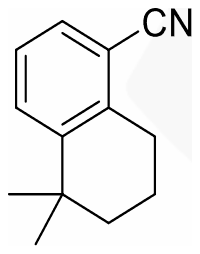
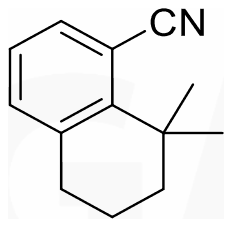
The major product is (C), the tetralin nitrile with the gem-dimethyl group at the far ring-fusion side.

The oxime carbon is bonded to a quaternary CMe2 carbon. In strong acid the protonated oxime does not undergo a normal Beckmann rearrangement; instead it undergoes a Beckmann fragmentation: the C-C bond to the CMe2 carbon breaks, because that releases a stable tertiary carbocation, and the oxime carbon becomes an aryl nitrile (Ar-C≡N).

The cation sits at the end of a three-carbon chain on the ring carbon next to the new CN group. It is captured intramolecularly by the benzene ring (Friedel-Crafts alkylation) at the free ortho position on the far side of that chain, closing a six-membered ring. The product is a 1,1-dimethyltetralin with the CN on the aromatic carbon beside the CH2-bearing ring fusion, as drawn in (C).

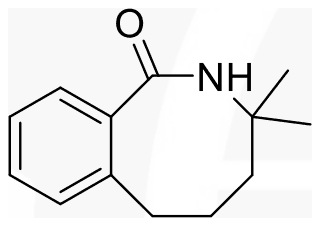
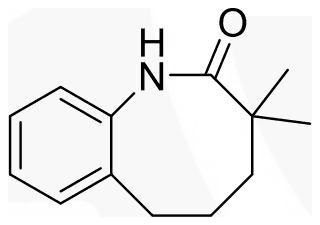
(D) places the CMe2 next to the CN, which would need the cation to attack the carbon already carrying the nitrile. (A) and (B) are the lactams of an ordinary Beckmann rearrangement (alkyl or aryl migration), which the fragmentation to a tertiary cation outcompetes.

Please log in or register to report this question.
8.

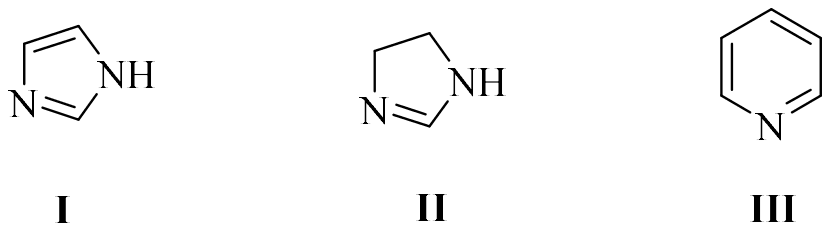
The CORRECT order of basicity for the following compounds is

Three ring structures: I is imidazole, a five-membered aromatic ring with N and NH; II is the same ring with the C4-C5 bond saturated (2-imidazoline); III is pyridine

Exam Year(s)

GATE Life Sciences - 2022,

Answer: C

The order of basicity is II \(\gt\) I \(\gt\) III.

II is 2-imidazoline, a cyclic amidine. Protonating its C=N nitrogen gives a cation whose positive charge is shared equally by both nitrogens through resonance, so it is a strong base, with a conjugate acid pKa around 11, far above the other two.

I is imidazole. Its pyridine-like nitrogen is protonated to give the symmetric imidazolium ion, which is also stabilised by resonance between the two nitrogens, so imidazole (conjugate acid pKa about 7) is a stronger base than pyridine.

III is pyridine. Its lone pair sits in an sp2 orbital and its conjugate acid gains no such resonance sharing, so it is the weakest base of the three (pKa about 5.2). Orders that put pyridine above imidazole or the imidazoline anywhere but first are wrong.

Please log in or register to report this question.
9.

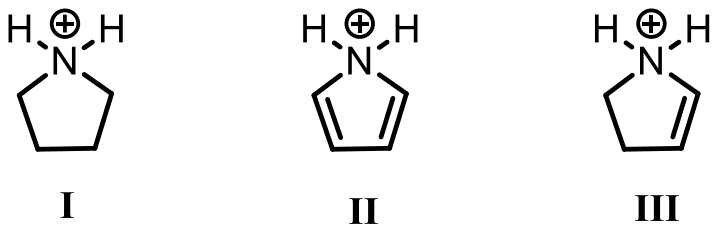
The CORRECT order of acidity of the following compounds is

Three N-protonated five-membered rings, each bearing NH2+: I pyrrolidinium (saturated); II pyrrole protonated on N (two ring C=C bonds); III a ring with one C=C bond next to the protonated N.

Exam Year(s)

GATE Life Sciences - 2024,

Answer: B

The order of acidity is II \(\gt\) III \(\gt\) I.

These are conjugate acids, so the weaker the parent base, the stronger the acid. Pyrrolidine (I) is a saturated amine with a localised sp3 lone pair, a strong base, so its cation is the weakest acid. In III the nitrogen sits next to a C=C bond, so its lone pair is partly delocalised (an enamine) and the base is weaker. In pyrrole (II) the lone pair is part of the aromatic sextet; protonating nitrogen destroys aromaticity, so pyrrole is an extremely weak base and II is the strongest acid.

Any order placing I first reverses the effect of delocalising the lone pair, and III \(\gt\) II overlooks the loss of aromaticity in II.

Please log in or register to report this question.
10.

The major products Y and Z in the following reaction sequence are

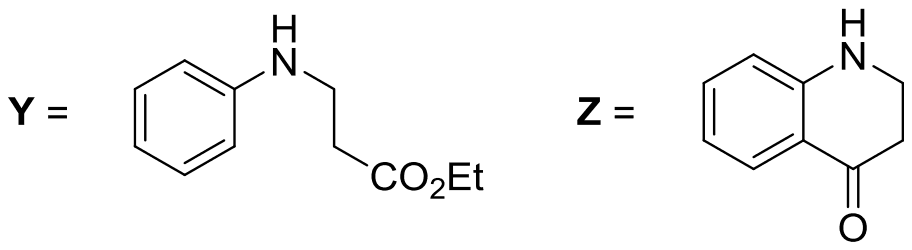
Reaction scheme: aniline treated with excess ethyl acrylate to give Y, then 1) EtONa then H3O+, 2) NaOH then H3O+ and heat to give Z

Exam Year(s)

IIT JAM - 2018,

Answer: B

The answer is (B): Y is the N,N-bis(2-ethoxycarbonylethyl)aniline, Z is 1-phenylpiperidin-4-one.

With excess ethyl acrylate, the aniline nitrogen adds twice in a Michael reaction, giving the tertiary amine with two CH2CH2CO2Et arms (Y). Sodium ethoxide then drives a Dieckmann condensation: the carbon next to one ester attacks the other ester, closing a six-membered ring and forming a β-keto ester. Hydrolysis with NaOH, acidification and heating then loses CO2 (decarboxylation) and leaves the 4-piperidone.

(A) and (C) show only a single addition, which excess acrylate rules out. (D) has the right Y but closes a five-membered ring, which does not form here.

Please log in or register to report this question.
Loading…
Tags: Amines and Nitrogen Compounds Questions and Answers || Amines and Nitrogen Compounds MCQ Questions and Answers || Amines and Nitrogen Compounds GK Questions and Answers || Amines and Nitrogen Compounds GK MCQ Questions || Amines and Nitrogen Compounds Multiple Choice Questions and Answers || Amines and Nitrogen Compounds GK || GK on Amines and Nitrogen Compounds || Organic Chemistry Questions and Answers || Organic Chemistry MCQ Questions and Answers || Organic Chemistry GK Questions and Answers || GK on Organic Chemistry